
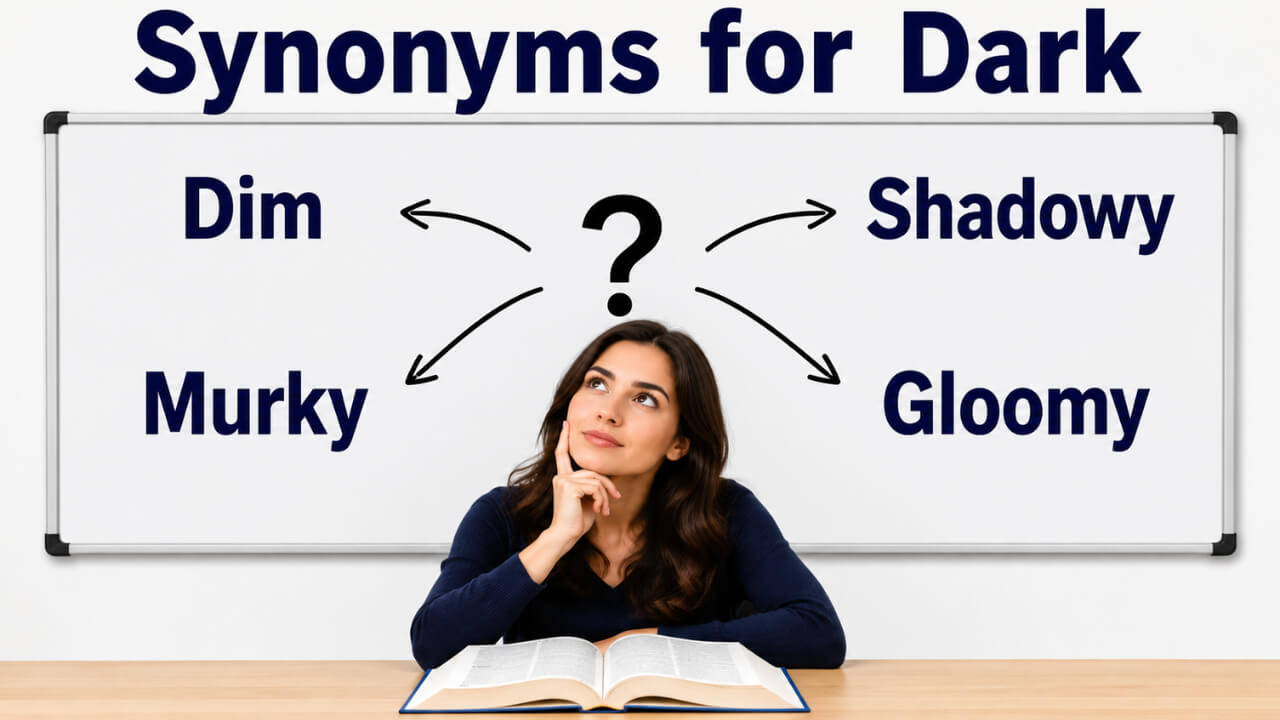
Quick Answer: Synonyms for dark include dim, shadowy, black, dusky, gloomy, somber, murky, obscure, mysterious, and sinister. The best synonym depends on context. Use dim for weak light, black for color, gloomy for mood, murky for unclear water or vision, obscure for unclear meaning, mysterious for unknown details, and sinister when dark suggests danger or evil.
Pronunciation and Word Details
Word: Dark.
Pronunciation: /dɑːrk/
Part of Speech: Adjective and noun.
Meaning: Dark means having little or no light, deep in color, sad in mood, hidden in meaning, or connected with danger.
US Pronunciation:
UK Pronunciation:
What Does “Dark” Mean?
Dark means lacking light, having a deep color, or creating a serious, sad, hidden, or frightening feeling. It is most often used as an adjective, as in dark room, dark blue, dark mood, or dark secret.
As a noun, dark can mean the absence of light, as in children can be afraid of the dark. The word changes meaning based on the sentence. It can describe physical light, color shade, emotional atmosphere, mystery, danger, or unclear information.
Meaning, Tone, and Context of “Dark”
Dark is a common, neutral word, but its tone changes with context. In everyday speech, it can simply mean not bright, as in a dark hallway. In color description, it means deep or strong, as in dark green.
In emotional writing, dark can sound heavy, sad, serious, or dramatic. In storytelling and descriptive writing, it may suggest fear, mystery, danger, secrecy, or moral evil. In academic or technical contexts, more precise words like dim, low light, obscure, or opaque may work better.
When and How to Use “Dark”
For Low Light: Use dark when a place has little or no light.
Example: The room became dark after the lamp stopped working.
For Deep Color: Use dark when a color is strong, deep, or close to black.
Example: She wore a dark red coat to the dinner.
For Mood: Use dark when describing sadness, seriousness, fear, or heaviness.
Example: The story has a dark mood from the opening scene.
For Mystery: Use dark when something feels hidden, secret, or unknown.
Example: The old house had a dark history.
For Danger: Use dark when suggesting something threatening, evil, or morally troubling.
Example: The character followed a dark path after losing hope.
Best Synonyms for Dark
Dim: Having little light.
Example: A dim lamp glowed in the corner.
Shadowy: Full of shadows or partly hidden from light.
Example: A shadowy figure stood near the gate.
Black: Very dark in color, with little or no lightness.
Example: The sky turned black before the storm.
Dusky: Slightly dark, especially at evening.
Example: The hills looked dusky as the sun disappeared.
Gloomy: Dark, sad, or depressing in feeling.
Example: The gloomy weather made the street feel empty.
Somber: Serious, sad, and dark in tone.
Example: His speech carried a somber message.
Murky: Dark, cloudy, or hard to see through.
Example: The boat moved across murky water.
Obscure: Not clear, not well known, or difficult to understand.
Example: The poem used obscure language.
Mysterious: Strange, hidden, or not fully explained.
Example: A mysterious sound came from the attic.
Sinister: Dark in a threatening or evil way.
Example: The smile on his face seemed sinister.
50 Synonyms for Dark with Short Meanings
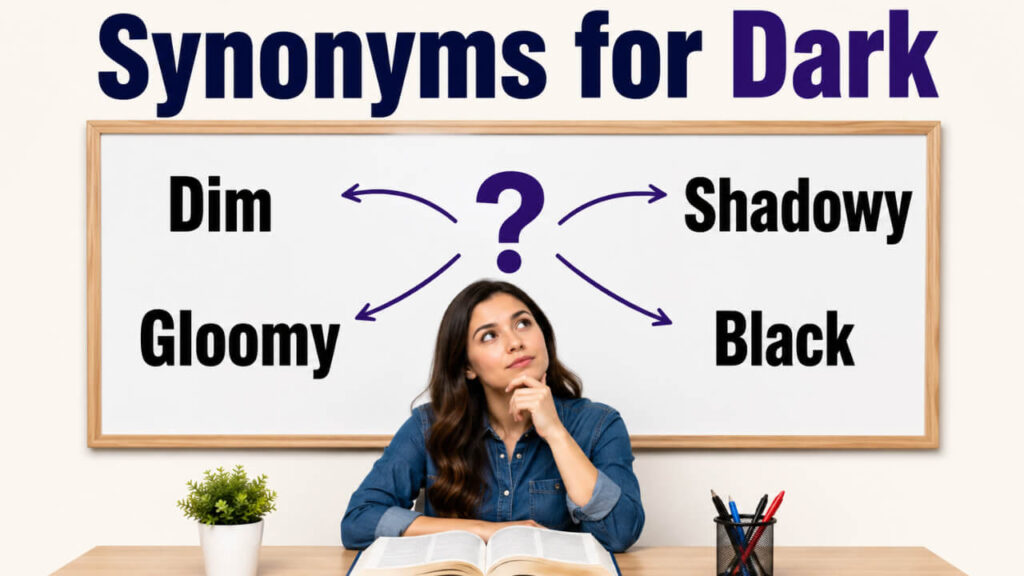
- Dim: Low in light.
- Shadowy: Covered with shadows.
- Black: Very deep in color.
- Dusky: Slightly dark, often near evening.
- Gloomy: Dark and sad.
- Somber: Serious and heavy in mood.
- Murky: Dark, cloudy, and unclear.
- Obscure: Hard to see or understand.
- Mysterious: Hidden or difficult to explain.
- Sinister: Threatening or evil in feeling.
- Dull: Lacking brightness or shine.
- Unlit: Without light.
- Lightless: Completely without light.
- Shaded: Protected or covered from light.
- Moonless: Without moonlight.
- Starless: Without visible stars.
- Pitch black: Completely dark.
- Inky: Deep black like ink.
- Sooty: Dark like soot.
- Charcoal: Dark gray or blackish.
- Ebony: Deep black and smooth in appearance.
- Jet black: Pure deep black.
- Swarthy: Dark in complexion.
- Tanned: Darkened by sun exposure.
- Bronzed: Browned or darkened by the sun.
- Overcast: Cloudy and lacking brightness.
- Clouded: Covered or made unclear.
- Misty: Slightly dark or unclear because of mist.
- Foggy: Hard to see through because of fog.
- Hazy: Unclear or slightly dark.
- Dismal: Dark, sad, and unpleasant.
- Bleak: Cold, empty, and gloomy.
- Dreary: Dull, dark, and depressing.
- Melancholy: Sad and thoughtful.
- Mournful: Full of sadness.
- Grim: Serious, harsh, and dark in mood.
- Ominous: Suggesting something bad may happen.
- Menacing: Threatening or dangerous.
- Evil: Morally bad or harmful.
- Wicked: Morally wrong or cruel.
- Macabre: Disturbing because of death or horror.
- Morbid: Unpleasantly focused on death or sadness.
- Cryptic: Hidden or difficult to understand.
- Enigmatic: Puzzling and mysterious.
- Secretive: Keeping things hidden.
- Hidden: Kept out of sight or knowledge.
- Concealed: Covered or not shown.
- Unknown: Not known or recognized.
- Ambiguous: Having more than one unclear meaning.
- Opaque: Not transparent or not easy to understand.
Read Also:
Synonyms for Mean

Synonyms for Dark by Context
When Dark Means Low in Light
Use these synonyms when describing rooms, streets, nights, corners, or places with little brightness.
Dim: The dim hallway made it hard to read the signs.
Shadowy: The shadowy path looked quiet and empty.
Unlit: The unlit room felt cold and silent.
Lightless: The cave was lightless after the torch went out.
When Dark Means Deep in Color
Use these synonyms when describing color, clothing, hair, paint, skin tone, or visual appearance.
Black: He chose a black jacket for the event.
Inky: The lake looked inky under the night sky.
Jet black: Her jet black hair shone in the light.
Charcoal: The wall was painted charcoal for a modern look.
When Dark Means Sad or Serious
Use these synonyms when writing about mood, tone, emotion, weather, stories, or atmosphere.
Gloomy: The gloomy ending made the film feel heavy.
Somber: The room became somber after the news.
Dismal: The dismal weather kept everyone indoors.
Melancholy: The song had a melancholy beauty.
When Dark Means Unclear or Hidden
Use these synonyms when discussing ideas, meanings, secrets, records, motives, or information.
Obscure: The message was obscure and difficult to follow.
Cryptic: His cryptic answer confused the whole group.
Hidden: The hidden meaning became clear later.
Opaque: The rule was opaque to new readers.
When Dark Means Dangerous or Evil
Use these synonyms when dark suggests fear, harm, threat, cruelty, or moral corruption.
Sinister: A sinister voice came from behind the door.
Ominous: The clouds gave the morning an ominous feeling.
Menacing: His menacing stare made everyone quiet.
Wicked: The story describes a wicked plan.
Another Word for Dark
Another word for dark is dim when you mean low light. However, the best single replacement depends on the meaning. Use black for color, gloomy for mood, obscure for unclear meaning, and sinister for danger.
Original: The hallway was dark.
Better Option: The hallway was dim.
Original: She wore a dark dress.
Better Option: She wore a black dress.
Original: The novel has a dark tone.
Better Option: The novel has a gloomy tone.
Original: His reason was dark and difficult to understand.
Better Option: His reason was obscure and difficult to understand.
When Not to Use “Dark”
Do not use dark when a more exact word would help the reader. The word can sound too general if you are writing about color, mood, light level, or unclear meaning. It can also become repetitive if used too often in descriptive writing.
Weak: The room was dark, and the dark curtains made it darker.
Better: The room was dim, and the black curtains blocked most of the light.
Weak: The article had a dark explanation.
Better: The article had an obscure explanation.
Weak: The painting used dark colors.
Better: The painting used deep blue, charcoal, and black shades.
Weak: The story had a dark villain.
Better: The story had a sinister villain.
Words Commonly Confused With Dark
Dark vs Dim: Dark means little or no light, while dim means low but still visible light.
Dark vs Black: Dark can describe many deep colors, while black is one specific color.
Dark vs Gloomy: Dark may describe light or mood, while gloomy mainly describes sadness or a depressing atmosphere.
Dark vs Murky: Dark means lacking light, while murky means dark and cloudy, often with unclear water, air, or details.
Dark vs Obscure: Dark can mean hidden or unclear, but obscure is more precise for difficult ideas, meanings, or facts.
Dark vs Sinister: Dark can be neutral, while sinister strongly suggests danger, evil, or threat.
Which Synonym Should You Choose?
Choose dim when writing about rooms, lamps, streets, or soft light.
Choose shadowy when something is partly hidden by shadows.
Choose black when you mean the actual color.
Choose dusky when describing evening light, soft darkness, or twilight.
Choose gloomy when the mood feels sad, dull, or depressing.
Choose somber when the tone is serious, respectful, or heavy.
Choose murky when water, air, memory, or information is unclear.
Choose obscure when a meaning, fact, or idea is difficult to understand.
Choose mysterious when something is unknown in an interesting way.
Choose sinister when the meaning includes danger, threat, or evil.
Real Life Examples of “Dark” in Sentences
Original: The room was dark after sunset.
Better Option: The room was dim after sunset.
Original: A dark shape moved across the wall.
Better Option: A shadowy shape moved across the wall.
Original: She painted the door a dark color.
Better Option: She painted the door charcoal.
Original: The lake looked dark after the storm.
Better Option: The lake looked murky after the storm.
Original: His answer had a dark meaning.
Better Option: His answer had an obscure meaning.
Original: The film has a dark ending.
Better Option: The film has a somber ending.
Original: A dark cloud covered the mountain.
Better Option: An ominous cloud covered the mountain.
Original: The old road looked dark at night.
Better Option: The old road looked shadowy at night.
Original: The secret revealed a dark part of the family story.
Better Option: The secret revealed a hidden part of the family story.
Original: The villain made a dark plan.
Better Option: The villain made a sinister plan.
Synonym Groups and Usage Differences
Low Light Group
Words like dim, unlit, shadowy, and lightless describe places where light is weak or missing. Use this group for rooms, roads, nights, caves, and corners.
Example: The unlit stairway made every step feel uncertain.
Color Group
Words like black, jet black, charcoal, inky, and ebony describe deep shades. Use this group when exact color matters more than general darkness.
Example: The artist used charcoal and inky tones for the background.
Mood Group
Words like gloomy, somber, dismal, dreary, and melancholy describe sadness, seriousness, or emotional heaviness.
Example: The letter had a melancholy tone that stayed with her.
Mystery Group
Words like obscure, cryptic, enigmatic, hidden, and secretive describe unclear meaning, unknown facts, or concealed information.
Example: The speaker gave an enigmatic reply.
Danger Group
Words like sinister, ominous, menacing, wicked, and grim suggest fear, threat, danger, or moral darkness.
Example: The silence felt ominous before the storm arrived.
Antonyms of Dark
Bright: Full of light.
Light: Not dark in color or brightness.
Clear: Easy to see or understand.
Luminous: Producing or reflecting light.
Radiant: Shining strongly or warmly.
Sunny: Full of sunlight or cheerful feeling.
Cheerful: Happy and positive in mood.
Hopeful: Showing optimism or positive expectation.
Transparent: Easy to see through or understand.
Plain: Easy to understand and not hidden.
Good: Morally right or positive.
Innocent: Free from guilt or harmful intent.
Comparison: Dark vs Related Words
Dark vs Dim
Dark can mean little or no light. Dim usually means weak light is still present.
Example With Dark: The basement was dark after the power cut.
Example With Dim: A dim bulb lit the basement steps.
Dark vs Black
Dark is broader and can describe many deep colors. Black is a specific color with no lightness.
Example With Dark: She chose a dark shade for the wall.
Example With Black: She chose black paint for the wall.
Dark vs Gloomy
Dark can describe light, color, mood, or mystery. Gloomy mostly describes sadness, dullness, or a depressing atmosphere.
Example With Dark: The room looked dark in the evening.
Example With Gloomy: The room felt gloomy after the bad news.
Dark vs Murky
Dark describes low light or deep color. Murky describes something dark and unclear, especially water, air, memory, or explanation.
Example With Dark: The pond looked dark at night.
Example With Murky: The pond looked murky after the rain.
Dark vs Obscure
Dark can be physical or emotional. Obscure is better when meaning, language, or information is hard to understand.
Example With Dark: The poem has a dark message.
Example With Obscure: The poem has an obscure message.
Dark vs Sinister
Dark may be neutral or emotional. Sinister clearly suggests threat, evil, or danger.
Example With Dark: The story has a dark atmosphere.
Example With Sinister: The story has a sinister atmosphere.
Common Phrases and Expressions With Dark
Dark Room: A room with little or no light.
Dark Night: A night with little natural light.
Dark Color: A deep or low brightness color.
Dark Blue: A deep shade of blue.
Dark Mood: A sad, serious, or heavy emotional state.
Dark Secret: A hidden truth that may be troubling.
Dark History: A past connected with sadness, harm, or shame.
Dark Side: A negative, hidden, or harmful part of something.
Dark Clouds: Clouds that look heavy, stormy, or threatening.
In the Dark: Without knowledge or information.
Common Mistakes to Avoid
Using Dark Too Often: Repeating dark can make writing sound flat. Replace it with dim, shadowy, gloomy, black, or obscure when the meaning is more specific.
Choosing the Wrong Synonym: Do not use sinister for ordinary low light. Sinister adds a strong sense of danger or evil.
Confusing Color and Mood: Black works for color, while gloomy works for mood. A black room and a gloomy room do not always mean the same thing.
Using Obscure for Light: Obscure usually means unclear or hard to understand. It is not the best choice for a room with no light.
Making Phrases Unnatural: Say a dim hallway, a dark night, or a gloomy mood. Avoid forced wording like an obscure hallway unless you mean the hallway is not well known or difficult to identify.
Ignoring Context: The right synonym depends on whether you mean light, color, mood, mystery, or danger.
Conclusion
Synonyms for dark help you describe light, color, mood, mystery, and danger with more accuracy. Use dim for weak light, black for color, gloomy for sadness, somber for seriousness, murky for unclear vision, obscure for unclear meaning, mysterious for hidden details, and sinister for threat or evil. Choosing the right synonym makes your writing clearer, more natural, and more expressive for readers.
FAQs About Synonyms for Dark
What are the best synonyms for dark?
The best synonyms for dark are dim, shadowy, black, dusky, gloomy, somber, murky, obscure, mysterious, and sinister.
What is another word for dark in low light?
Another word for dark in low light is dim. You can also use shadowy, unlit, or lightless, depending on how little light is present.
What is another word for dark color?
Another word for dark color is black. More specific options include charcoal, inky, ebony, jet black, and deep before a color name.
What is a formal synonym for dark?
A formal synonym for dark can be obscure, somber, opaque, or murky, depending on context. Use obscure for unclear meaning and somber for serious tone.
What is a stronger word than dark?
A stronger word than dark is pitch black for complete lack of light, sinister for danger, gloomy for sadness, and opaque for unclear meaning.
Is gloomy the same as dark?
Gloomy is not exactly the same as dark. Dark can describe light, color, or mood, while gloomy mainly describes sadness, dullness, or a depressing atmosphere.
What is the opposite of dark?
The opposite of dark can be bright, light, clear, luminous, sunny, or cheerful, depending on whether you mean light, color, meaning, or mood.
