
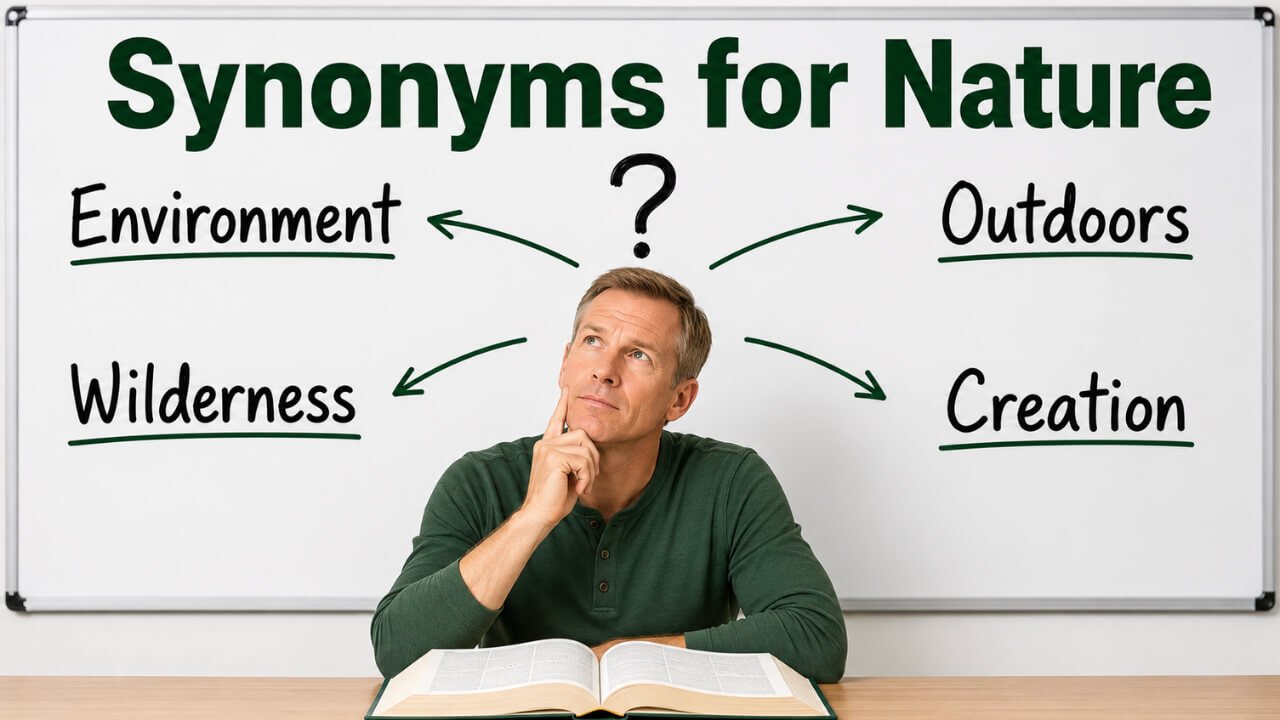
Quick Answer: Synonyms for nature include environment, natural world, outdoors, wilderness, countryside, landscape, scenery, ecosystem, character, and essence. Use environment for formal or academic writing, natural world for clear general meaning, outdoors for casual speech, wilderness for wild places, landscape for visible land, and character or essence when nature means the basic quality of a person, thing, or situation.
Pronunciation and Word Details
Word: Nature
Pronunciation: /ˈneɪtʃər/
Part of Speech: Noun
Meaning: Nature means the natural world, the basic character of something, or the usual qualities of a person, place, or thing.
US Pronunciation:
UK Pronunciation:
What Does “Nature” Mean?
Direct Answer: Nature means the physical world that is not made by people, or the basic character and qualities of someone or something.
As a noun, nature can refer to trees, rivers, animals, weather, mountains, land, and the environment. It can also describe the inner quality of a person, object, problem, or situation. For example, “the beauty of nature” means the beauty of the natural world, while “the nature of the problem” means the basic type or character of the problem.
Nature works in many sentence contexts. It can describe the environment, personality, behavior, origin, quality, type, or essential meaning of something.
Meaning, Tone, and Context of “Nature”
Tone: Nature is usually neutral, clear, and widely understood.
Emotional Context: Nature can sound peaceful, beautiful, and reflective when it refers to forests, flowers, rivers, birds, and open spaces.
Formal Context: Nature works well in essays, reports, science writing, environmental topics, and academic discussion.
Conversational Context: In everyday speech, nature often means the outdoors or natural surroundings.
Abstract Context: Nature can also mean essence, character, type, or quality. This use appears in formal writing, explanations, analysis, and thoughtful discussion.
Technical Context: In environmental and scientific writing, nature may connect with ecology, habitat, biodiversity, ecosystem, climate, landscape, and conservation.
When and How to Use “Nature”
For The Natural World: Use nature when talking about land, plants, animals, weather, and the environment.
Example: Spending time in nature helps many people feel calm.
For Character: Use nature when describing the basic quality of a person, situation, or thing.
Example: The nature of the task requires patience.
For Personality: Use nature when talking about someone’s usual behavior or inner qualities.
Example: Kindness is part of her nature.
For Type or Kind: Use nature when explaining what kind of issue, activity, or event something is.
Example: The meeting was private in nature.
For Beauty and Scenery: Use nature when describing natural beauty, views, and peaceful surroundings.
Example: The valley showed the quiet beauty of nature.
Best Synonyms for Nature
Environment: The surroundings or natural conditions of a place.
Example: The environment needs careful protection.
Natural World: The world of plants, animals, land, water, and weather.
Example: Children should learn to respect the natural world.
Outdoors: Open air and natural places outside buildings.
Example: He enjoys spending weekends outdoors.
Wilderness: A wild natural area with little human development.
Example: The hikers explored the quiet wilderness.
Countryside: Rural land away from cities and towns.
Example: They moved to the countryside for a slower life.
Landscape: The visible features of land, such as hills, fields, and rivers.
Example: The landscape changed after the heavy rain.
Scenery: Natural views that are beautiful or pleasant to look at.
Example: The mountain scenery was breathtaking.
Ecosystem: A community of living things and their environment.
Example: Pollution can damage an entire ecosystem.
Character: The basic quality or nature of a person or thing.
Example: The character of the neighborhood has changed.
Essence: The most important quality of something.
Example: Trust is the essence of a strong friendship.
50 Synonyms for Nature with Short Meanings
- Environment: Natural or surrounding conditions.
- Natural World: Plants, animals, land, water, and weather.
- Outdoors: Open air and outside spaces.
- Wilderness: Wild land with little human change.
- Countryside: Rural land away from cities.
- Landscape: Visible land features and views.
- Scenery: Beautiful natural views.
- Ecosystem: Living things and their surroundings.
- Habitat: Natural home of a plant or animal.
- Ecology: Relationships between living things and surroundings.
- Biosphere: All living parts of the earth.
- Earth: The planet and its natural systems.
- Creation: The natural world as a whole.
- Wildlife: Animals living in natural conditions.
- Greenery: Plants, trees, and green growth.
- Flora: Plant life in an area.
- Fauna: Animal life in an area.
- Terrain: Physical features of land.
- Land: Ground, soil, or natural area.
- Open Air: Outdoor space with fresh air.
- Wilds: Remote natural places.
- Backcountry: Remote countryside or wilderness.
- Woodlands: Areas covered with trees.
- Forest: Large area filled with trees.
- Fields: Open land used by nature or farming.
- Rural Areas: Places outside cities and towns.
- Surroundings: Things around a place or person.
- Setting: Place or conditions around something.
- Character: Basic quality of someone or something.
- Essence: Most important quality.
- Quality: A feature or characteristic.
- Trait: A personal or natural feature.
- Attribute: A quality or feature.
- Feature: A noticeable part or quality.
- Disposition: Usual mood or behavior.
- Temperament: Natural emotional style.
- Personality: Usual character of a person.
- Makeup: The parts or qualities forming something.
- Constitution: Basic structure or character.
- Inclination: Natural tendency or preference.
- Tendency: Usual direction of behavior.
- Habit: Regular way of acting.
- Instinct: Natural behavior or feeling.
- Type: Kind or category.
- Kind: Sort or class.
- Sort: General type or category.
- Form: Shape, type, or structure.
- Variety: A particular kind.
- Manner: Way something happens or is done.
- Order: Natural arrangement or system.
Read Also:
Synonyms for White
Synonyms for Nature by Context
When Nature Means The Natural World
Useful Synonyms: Environment, natural world, outdoors, earth, creation.
Example: The natural world offers beauty, balance, and life.
Explanation: These synonyms work when nature refers to plants, animals, land, water, weather, and natural systems.
When Nature Means Wild Places
Useful Synonyms: Wilderness, wilds, backcountry, forest, woodlands.
Example: The group walked deep into the wilderness.
Explanation: These words are best when nature means an undeveloped or less controlled outdoor place.
When Nature Means Beauty or View
Useful Synonyms: Landscape, scenery, countryside, greenery, terrain.
Example: The countryside looked peaceful after the rain.
Explanation: These synonyms fit travel writing, descriptive writing, and visual descriptions of land or natural beauty.
When Nature Means Character
Useful Synonyms: Character, essence, quality, trait, attribute.
Example: The essence of the problem is poor communication.
Explanation: These words work when nature describes what something truly is.
When Nature Means Personality
Useful Synonyms: Disposition, temperament, personality, makeup, inclination.
Example: Her gentle temperament made people feel comfortable.
Explanation: These choices fit writing about behavior, emotions, habits, and personal qualities.
When Nature Means Type or Kind
Useful Synonyms: Type, kind, sort, form, variety.
Example: The issue is legal in nature.
Explanation: These synonyms are useful when nature means category, form, or general kind.
Another Word for Nature
Direct Answer: Another word for nature is environment when the meaning is the natural world. The best alternative depends on context. Use natural world for clear general writing, outdoors for casual speech, landscape for visible scenery, and character when nature means the basic quality of something.
Original: She loves walking in nature.
Better Option: She loves walking outdoors.
Original: The article explains the importance of nature.
Better Option: The article explains the importance of the natural world.
Original: The nature of the problem is serious.
Better Option: The character of the problem is serious.
Original: The village is surrounded by nature.
Better Option: The village is surrounded by beautiful scenery.
When Not to Use “Nature”
Repetition: Do not repeat nature too often when more specific words would sound clearer.
Weak: Nature is beautiful, and nature gives us peace.
Better: The natural world is beautiful, and the outdoors gives us peace.
Unclear Meaning: Nature can mean the environment, character, personality, or type, so choose a clearer word when the meaning may confuse readers.
Weak: The nature of the place was impressive.
Better: The landscape of the place was impressive.
Too General: Nature may sound vague when you mean a specific natural element.
Weak: Nature was damaged by the storm.
Better: The forest and nearby habitat were damaged by the storm.
Wrong Tone: Do not use wilderness when you simply mean a city park, garden, or small outdoor area.
Weak: We sat in the wilderness behind the house.
Better: We sat in the garden behind the house.
Words Commonly Confused With Nature
Nature vs Environment: Nature often means the natural world or basic character, while environment means the surroundings or conditions around a person, animal, or place.
Nature vs Outdoors: Nature can refer to the whole natural world or inner character. Outdoors simply means outside buildings.
Nature vs Wilderness: Nature is broad, while wilderness means wild land with little human development.
Nature vs Landscape: Nature includes living systems, land, water, weather, and character. Landscape refers mainly to visible land features.
Nature vs Scenery: Nature is the natural world. Scenery means the attractive view of a place.
Nature vs Character: Nature can mean character, but character usually focuses on the qualities of a person, place, problem, or thing.
Nature vs Essence: Nature can be broad, while essence means the most important inner quality of something.
Which Synonym Should You Choose?
Choose environment when writing about natural conditions, surroundings, pollution, protection, or environmental topics.
Choose natural world when you want a clear and reader friendly replacement for nature.
Choose outdoors when writing casually about being outside, walking, hiking, or spending time away from buildings.
Choose wilderness when describing wild, remote, or undeveloped land.
Choose countryside when writing about rural areas, fields, villages, farms, or peaceful land away from cities.
Choose landscape when describing visible land, mountains, valleys, fields, rivers, and views.
Choose scenery when the focus is beauty or visual appeal.
Choose ecosystem when writing about plants, animals, habitats, and natural balance.
Choose character when nature means the basic quality of a person, place, issue, or situation.
Choose essence when you mean the deepest or most important quality of something.
Real Life Examples of “Nature” in Sentences
Original: I enjoy spending time in nature.
Better Option: I enjoy spending time outdoors.
Original: Nature teaches us patience.
Better Option: The natural world teaches us patience.
Original: The nature of the job is demanding.
Better Option: The character of the job is demanding.
Original: The park helps people connect with nature.
Better Option: The park helps people connect with the environment.
Original: The nature around the lake is peaceful.
Better Option: The scenery around the lake is peaceful.
Original: Her kind nature made her easy to trust.
Better Option: Her kind personality made her easy to trust.
Original: The nature of the disease is complex.
Better Option: The form of the disease is complex.
Original: Nature was damaged by careless waste.
Better Option: The ecosystem was damaged by careless waste.
Original: The children learned about nature in class.
Better Option: The children learned about wildlife and habitats in class.
Original: The nature of his answer was unclear.
Better Option: The meaning of his answer was unclear.
Synonym Groups and Usage Differences
Environment Group
Words: Environment, natural world, earth, biosphere, ecosystem.
Use: Choose these words when nature means the larger system of land, water, air, plants, animals, and life.
Example: The ecosystem depends on clean water and healthy soil.
Outdoor Places Group
Words: Outdoors, wilderness, countryside, forest, woodlands.
Use: Choose these words when nature refers to physical outdoor spaces.
Example: The family spent the afternoon in the countryside.
Scenery Group
Words: Landscape, scenery, terrain, greenery, fields.
Use: Choose these words when describing what people see in a natural place.
Example: The landscape looked calm in the evening light.
Character Group
Words: Character, essence, quality, attribute, trait.
Use: Choose these words when nature means the basic quality or identity of something.
Example: The essence of the plan is simple cooperation.
Personality Group
Words: Disposition, temperament, personality, makeup, inclination.
Use: Choose these words when nature describes a person’s usual behavior or emotional style.
Example: His calm temperament helped during the crisis.
Type Group
Words: Type, kind, sort, form, variety.
Use: Choose these words when nature means category or general form.
Example: The report describes a different type of problem.
Antonyms of Nature
Artificiality: Something made or shaped by human design rather than natural processes.
Unnaturalness: Quality of seeming not natural or not normal.
Culture: Human customs, learning, and social development, often contrasted with nature.
Civilization: Organized human society, cities, and institutions.
Urbanization: Growth of cities and human built areas.
Industry: Human production, factories, and manufactured systems.
Technology: Tools, machines, and systems created by people.
Syntheticness: Quality of being made by artificial processes.
Abnormality: A quality that differs from what is usual or natural.
Nurture: Upbringing, training, and environment, often contrasted with natural qualities.
Comparison: Nature vs Related Words
Nature vs Environment
Difference: Nature can mean the natural world or the basic character of something. Environment means the surroundings or conditions around a person, place, plant, or animal.
Example With Nature: She finds peace in nature.
Example With Environment: A clean environment supports healthy living.
Nature vs Outdoors
Difference: Nature is broader and can include the natural world, character, and essence. Outdoors simply means outside buildings.
Example With Nature: Nature plays an important role in human life.
Example With Outdoors: The children played outdoors all afternoon.
Nature vs Wilderness
Difference: Nature can include gardens, parks, rivers, forests, and abstract qualities. Wilderness means wild land with little human control.
Example With Nature: The poem celebrates the beauty of nature.
Example With Wilderness: They camped in the wilderness for three nights.
Nature vs Landscape
Difference: Nature includes living systems and natural forces. Landscape means the visible shape and appearance of land.
Example With Nature: Nature changes with every season.
Example With Landscape: The landscape was covered with green hills.
Nature vs Character
Difference: Nature can refer to the natural world or inner qualities. Character mainly refers to qualities, behavior, or identity.
Example With Nature: The nature of the issue is sensitive.
Example With Character: The character of the issue is sensitive.
Nature vs Essence
Difference: Nature can mean broad quality, type, or the natural world. Essence means the core quality that makes something what it is.
Example With Nature: The nature of friendship requires trust.
Example With Essence: The essence of friendship is trust.
Common Phrases and Expressions With Nature
Human Nature: Common qualities, feelings, or behaviors found in people.
Mother Nature: The natural world described as a powerful force.
By Nature: As part of someone’s usual character.
In Nature: Existing in the natural world or having a certain type.
Nature Lover: A person who enjoys plants, animals, and outdoor places.
Call of Nature: A polite phrase for needing to use the bathroom.
Force of Nature: A powerful person, event, or natural force.
Nature Reserve: Protected land for plants, animals, and habitats.
Natural Beauty: Beauty found in land, people, or things without artificial changes.
The Nature of Things: The usual way life, situations, or systems work.
Common Mistakes to Avoid
Mistake 1: Using nature when the meaning is too broad. Choose environment, landscape, ecosystem, or character when you need more detail.
Mistake 2: Confusing nature with outdoors. Outdoors means outside, while nature can also mean character, essence, or type.
Mistake 3: Using wilderness for every natural place. Wilderness should describe wild or remote land, not a garden, street tree, or small park.
Mistake 4: Repeating nature too often in one paragraph. Use natural world, environment, scenery, countryside, or landscape when the meaning changes.
Mistake 5: Choosing scenery when you mean ecology. Scenery is about appearance, while ecology is about relationships between living things and surroundings.
Mistake 6: Using character and essence as exact replacements in every sentence. They only work when nature means inner quality, not trees, rivers, animals, or land.
Conclusion
Synonyms for nature can describe the natural world, outdoor places, scenery, ecosystems, character, personality, or type. Use environment for formal writing, natural world for clear general meaning, outdoors for casual speech, wilderness for wild land, and landscape or scenery for visual beauty. When nature means inner quality, choose character, essence, trait, or temperament. The right synonym makes your meaning more exact and your writing more natural.
FAQs About Synonyms for Nature
What is the best synonym for nature?
Answer: The best synonym for nature is environment when you mean the natural world. Use character when nature means the basic quality of something.
What are simple synonyms for nature?
Answer: Simple synonyms for nature include outdoors, environment, natural world, countryside, landscape, and scenery.
What is another word for nature in writing?
Answer: Another word for nature in writing is natural world. It is clear, natural, and useful in many general sentences.
What is a formal synonym for nature?
Answer: Formal synonyms for nature include environment, ecosystem, ecology, character, essence, and constitution.
What is a synonym for nature meaning personality?
Answer: Good synonyms include character, personality, temperament, disposition, makeup, and inclination.
What is the difference between nature and environment?
Answer: Nature can mean the natural world or inner quality. Environment means the conditions or surroundings around a person, place, plant, or animal.
Can nature mean type or kind?
Answer: Yes. Nature can mean type, kind, or form, as in “a problem of a serious nature.”
