
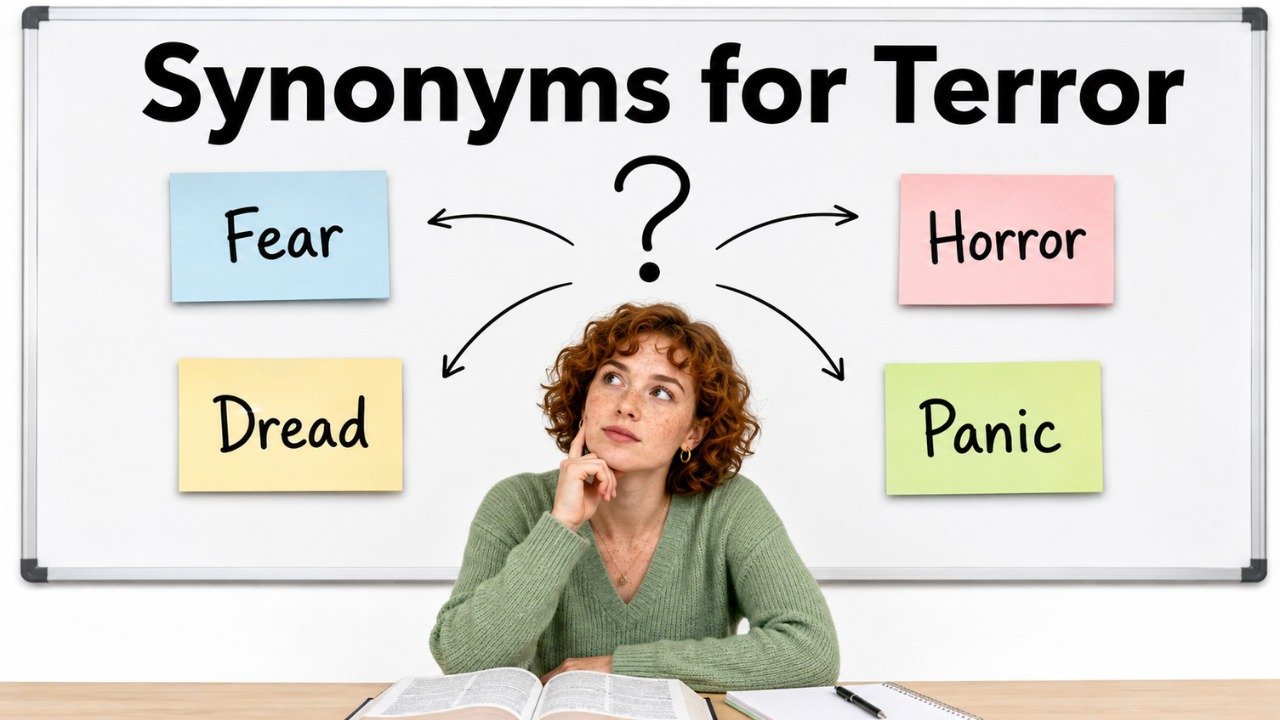
Quick Answer: The best synonyms for terror are fear, horror, dread, panic, fright, alarm, trepidation, consternation, apprehension, and shock. Fear is the most flexible replacement in general writing. Horror works for intense fear mixed with disgust or shock. Dread describes fear about something expected to happen, while panic refers to sudden and uncontrolled fear. Trepidation suits formal writing, and fright is common in everyday conversation.
Pronunciation and Word Details
Word: Terror.
Pronunciation: /ˈter.ər/
Part of Speech: Noun.
Meaning: An extremely strong feeling of fear caused by danger, threat, or a frightening experience.
US Pronunciation:
UK Pronunciation:
What Does “Terror” Mean?
Terror means an intense and overwhelming feeling of fear. It is mainly used as a noun and usually describes fear that is much stronger than ordinary worry, nervousness, or concern.
A person may experience terror during a dangerous event, after seeing something frightening, or while expecting serious harm. The word can describe an emotional reaction, a frightening situation, or a person or thing that causes fear.
Emotional Feeling: Terror can describe extreme fear that makes someone freeze, scream, run, or lose control.
Dangerous Situation: It can describe the fear created by violence, danger, darkness, or an unexpected threat.
Source of Fear: Terror can also refer to someone or something that causes great fear.
Informal Use: A troublesome or badly behaved child may jokingly be called a little terror, although this meaning is much less serious.
The meaning of terror depends on the sentence. In emotional writing, it describes a powerful feeling. In historical or formal writing, it may describe a period when people were controlled through fear.
Meaning, Tone, and Context of “Terror”
Terror is a strong and emotionally intense word. It is more powerful than fear, concern, unease, or anxiety. It often suggests that a person feels helpless, threatened, or unable to think calmly.
Tone: The tone of terror is serious, dramatic, emotional, and powerful.
Formality: Terror can appear in both formal and informal language. It is common in news reports, historical writing, fiction, personal stories, and serious conversations.
Emotional Strength: Terror represents one of the highest levels of fear. Writers should not normally use it for mild nervousness or everyday worry.
Literary Context: In stories and descriptive writing, terror creates suspense and shows that a character feels overwhelmed by danger.
Historical Context: In historical writing, terror can describe a period of widespread fear, punishment, or violent control.
Conversational Context: In everyday speech, people sometimes use terror dramatically, even when the actual danger is limited.
Psychological Context: Terror may describe an immediate emotional response to a serious or perceived threat. However, it should not be used as a medical diagnosis unless a qualified context supports that meaning.
Because terror is such a forceful word, it creates a vivid mental image. It is most effective when the situation truly involves intense fear.
When and How to Use “Terror”
For Extreme Fear
Use terror when someone experiences fear so intense that it affects movement, thought, or self control.
Example: She stood in terror as the enormous wave approached the shore.
For Sudden Danger
Terror works well when fear begins immediately because of an unexpected threat.
Example: The passengers screamed in terror when the lights suddenly went out.
For an Ongoing Threat
Use terror when people live with continuous fear because they expect harm or danger.
Example: The villagers lived in terror of the wild animal that appeared each night.
For Suspenseful Writing
Terror can make a scene more dramatic by showing the emotional effect of danger.
Example: A feeling of terror spread through him as the footsteps came closer.
For Historical Situations
Use terror to describe widespread fear created by punishment, violence, or oppressive control.
Example: The ruler maintained power by creating terror throughout the region.
For a Frightening Experience
Terror can describe the main emotion connected with a deeply frightening event.
Example: She still remembered the terror of being trapped in the burning building.
For a Source of Fear
Terror may refer to a person, animal, object, or situation that frightens others.
Example: The aggressive dog had become a terror to everyone in the neighborhood.
For Informal Description
In casual speech, terror can jokingly describe someone who causes trouble.
Example: That playful puppy is a little terror when guests arrive.
Best Synonyms for Terror
Fear: A general feeling caused by danger, pain, or threat.
Example: Fear spread through the crowd when the warning sounded.
Horror: Intense fear mixed with shock, disgust, or disbelief.
Example: She watched in horror as smoke filled the building.
Dread: Strong fear about something unpleasant that may happen.
Example: He felt dread as the date of the difficult meeting approached.
Panic: Sudden, overwhelming fear that makes calm thinking difficult.
Example: Panic began when people noticed that the exit was blocked.
Fright: A sudden experience of fear, often caused by surprise.
Example: The loud crash gave everyone a terrible fright.
Alarm: Fear or concern caused by the discovery of possible danger.
Example: The unusual sound caused alarm among the residents.
Trepidation: Nervous fear about something that may happen.
Example: She entered the interview room with considerable trepidation.
Consternation: Sudden anxiety, confusion, or dismay caused by an unexpected problem.
Example: The announcement caused consternation throughout the office.
Apprehension: Anxiety or fear about a future event.
Example: He felt apprehension before beginning the difficult journey.
Shock: A strong emotional reaction to something sudden, disturbing, or frightening.
Example: The family was in shock after hearing the unexpected news.
50 Synonyms for Terror with Short Meanings
- Fear: An unpleasant feeling caused by danger or threat.
- Horror: Extreme fear mixed with shock or disgust.
- Dread: Strong fear of something expected to happen.
- Panic: Sudden fear that causes uncontrolled reactions.
- Fright: A sudden and powerful feeling of fear.
- Alarm: Fear or concern caused by possible danger.
- Trepidation: Nervous fear about a future event.
- Consternation: Sudden anxiety and confusion after an unexpected event.
- Apprehension: Worry or fear about what may happen.
- Anxiety: Uneasy concern about danger or uncertainty.
- Unease: A mild feeling of discomfort or worry.
- Foreboding: A feeling that something bad is going to happen.
- Distress: Severe emotional pain, worry, or fear.
- Anguish: Extreme emotional suffering or pain.
- Shock: A powerful reaction to something frightening or disturbing.
- Dismay: Distress caused by an upsetting discovery.
- Intimidation: Fear created by threats or aggressive behavior.
- Menace: A person or thing that presents danger.
- Threat: A sign or source of possible harm.
- Nightmare: A terrifying experience or frightening dream.
- Ordeal: A painful, frightening, or difficult experience.
- Trauma: Deep emotional shock caused by a disturbing event.
- Scare: A sudden experience that causes fear.
- Fearfulness: The state of feeling easily afraid.
- Agitation: Emotional disturbance caused by fear or worry.
- Perturbation: Formal anxiety or mental disturbance.
- Hysteria: Extreme and uncontrolled emotional excitement or fear.
- Frenzy: Wild and uncontrolled emotional activity.
- Phobia: An intense fear of a particular thing or situation.
- Awe: Fearful wonder inspired by something powerful or immense.
- Paralyzing Fear: Fear so strong that movement or action becomes difficult.
- Mortal Fear: Extreme fear of death or serious harm.
- Sheer Fear: Complete and unmistakable fear.
- Cold Fear: A deep fear that produces a chilling sensation.
- Extreme Fear: Fear at the highest level of intensity.
- Overwhelming Fear: Fear that becomes difficult to control.
- Deep Dread: Powerful fear about an approaching event.
- Acute Panic: A sudden and severe state of fear.
- Sudden Fright: Fear caused by an unexpected event.
- Severe Alarm: Strong concern caused by immediate danger.
- Sense of Doom: A feeling that disaster is approaching.
- Fearful Suspense: Anxious waiting for something frightening.
- Haunting Fear: Fear that remains in the mind for a long time.
- Intense Anxiety: Severe worry connected with danger or uncertainty.
- Nervous Dread: Fearful anticipation mixed with nervousness.
- Terrible Shock: A deeply upsetting and frightening reaction.
- Emotional Turmoil: A confused state of powerful emotions and fear.
- State of Panic: A condition in which fear controls behavior.
- State of Alarm: A condition of heightened fear and awareness.
- Horrified Fear: Intense fear combined with shock or revulsion.
Read Also:
Synonyms for Calming

Synonyms for Terror by Context
When Terror Means Extreme Fear
Fear, horror, mortal fear, paralyzing fear, and overwhelming fear describe a very strong emotional response to danger.
Example With Terror: He stared in terror at the approaching flames.
Example With Fear: He stared in fear at the approaching flames.
Example With Horror: He stared in horror as the flames reached the house.
Horror is especially useful when fear is combined with disgust, disbelief, or emotional shock.
When Terror Means Fear of What May Happen
Dread, apprehension, trepidation, foreboding, and nervous dread describe fear connected with the future.
Example With Terror: She felt terror while waiting for the final decision.
Example With Dread: She felt dread while waiting for the final decision.
Example With Trepidation: She awaited the final decision with trepidation.
Dread is usually stronger than apprehension. Trepidation sounds more formal and controlled.
When Terror Means Sudden Uncontrolled Fear
Panic, fright, alarm, hysteria, and acute panic describe fear that begins quickly.
Example With Terror: Terror spread through the station after the explosion.
Example With Panic: Panic spread through the station after the explosion.
Example With Alarm: The explosion caused widespread alarm at the station.
Panic emphasizes uncontrolled behavior. Alarm emphasizes awareness of danger.
When Terror Means a Frightening Experience
Nightmare, ordeal, trauma, scare, and terrible shock can describe an event that produces terror.
Example With Terror: The journey through the storm was pure terror.
Example With Ordeal: The journey through the storm was a frightening ordeal.
Example With Nightmare: The journey through the storm was a complete nightmare.
Ordeal emphasizes difficulty and suffering. Nightmare emphasizes how frightening or unpleasant the experience felt.
When Terror Means a Source of Danger
Menace, threat, intimidation, and source of fear can replace terror when the word refers to something that frightens people.
Example With Terror: The violent gang became a terror to local residents.
Example With Menace: The violent gang became a menace to local residents.
Example With Threat: The violent gang became a serious threat to local residents.
Menace suggests continuing danger. Threat is often more neutral and suitable for formal reports.
When Terror Means Fearful Confusion
Consternation, dismay, agitation, distress, and perturbation describe fear mixed with confusion or emotional discomfort.
Example With Terror: The sudden evacuation order filled the guests with terror.
Example With Consternation: The sudden evacuation order caused consternation among the guests.
Example With Distress: The sudden evacuation order caused considerable distress.
Consternation is less intense than terror and often includes confusion or surprise.
Another Word for Terror
Fear is usually the best single replacement for terror because it is natural, widely understood, and suitable for many situations. However, the best alternative depends on the intensity, timing, and cause of the emotion.
Use horror when fear includes shock or disgust. Use dread when the fear concerns a future event. Use panic when the fear begins suddenly and affects behavior. Use trepidation when you need a formal word for nervous fear.
Original: She felt terror as the footsteps moved closer.
Better Option: She felt overwhelming fear as the footsteps moved closer.
Original: He waited in terror for the results.
Better Option: He waited with dread for the results.
Original: Terror spread when the alarm began ringing.
Better Option: Panic spread when the alarm began ringing.
Original: She looked at the destruction in terror.
Better Option: She looked at the destruction in horror.
When Not to Use “Terror”
Do not use terror when the feeling is only mild concern, ordinary nervousness, or temporary discomfort. The word may sound exaggerated when the situation does not involve serious fear.
When the Feeling Is Mild
Weak: I felt terror before introducing myself to the new employee.
Better: I felt nervous before introducing myself to the new employee.
Terror is too strong for ordinary social nervousness.
When You Mean General Worry
Weak: She experienced terror about arriving a few minutes late.
Better: She felt anxious about arriving a few minutes late.
Anxiety is more natural when the concern is ongoing but not overwhelming.
When You Mean Future Fear
Weak: He felt terror about the examination scheduled for next week.
Better: He felt dread about the examination scheduled for next week.
Dread more clearly expresses fear of an approaching event.
When You Mean Sudden Confusion
Weak: The missing document caused terror in the office.
Better: The missing document caused consternation in the office.
Consternation is more accurate when people feel surprised, worried, and confused rather than terrified.
When You Mean a Possible Danger
Weak: The damaged bridge is a terror to drivers.
Better: The damaged bridge is a serious threat to drivers.
Threat is clearer in practical, professional, and safety related writing.
When Repetition Weakens the Writing
Weak: Terror filled the room, and everyone stared in terror as the terror continued.
Better: Fear filled the room, and everyone stared in horror as the panic continued.
Changing the vocabulary makes the description clearer and less repetitive.
Words Commonly Confused With Terror
Terror vs Fear: Fear is a broad term for an emotional response to danger. Terror is an extreme form of fear that may feel overwhelming.
Terror vs Horror: Terror often focuses on fear before or during danger. Horror often combines fear with shock, disgust, or revulsion.
Terror vs Panic: Terror describes the feeling itself, while panic often describes the uncontrolled reaction caused by sudden fear.
Terror vs Dread: Terror is immediate and intense. Dread develops when someone expects something frightening or unpleasant.
Terror vs Alarm: Terror is stronger and more emotional. Alarm describes concern or fear caused by noticing danger.
Terror vs Anxiety: Terror usually has an immediate and identifiable cause. Anxiety may continue even when the danger is uncertain or distant.
Terror vs Trepidation: Terror suggests overwhelming fear. Trepidation suggests nervous fear that a person can usually control.
Terror vs Threat: Terror is mainly a feeling, while a threat is something that may cause harm or fear.
Terror vs Trauma: Terror is an emotional state during a frightening experience. Trauma is the lasting emotional or physical harm that may follow such an experience.
Terror vs Terrorism: Terror is intense fear. Terrorism refers to violent acts or threats intended to frighten people for political, ideological, or social purposes. The two words are related but are not interchangeable.
Which Synonym Should You Choose?
Choose fear when you need a general, natural, and flexible word.
Choose horror when the person feels intense fear mixed with shock, disgust, or disbelief.
Choose dread when the fear concerns something unpleasant that has not happened yet.
Choose panic when fear begins suddenly and causes people to act without thinking calmly.
Choose fright when describing a brief and unexpected scare in everyday conversation.
Choose alarm when writing about awareness of danger, public concern, or a warning.
Choose trepidation in formal writing when describing nervousness before an event.
Choose apprehension when the fear is moderate and connected with uncertainty.
Choose consternation when an unexpected problem causes worry, confusion, and surprise.
Choose anxiety when the feeling involves continued worry rather than immediate danger.
Choose threat when referring to the source of danger instead of the emotional reaction.
Choose menace when describing a person or thing that creates continuing fear or risk.
Choose trauma when discussing the harmful effects that remain after a frightening event.
In essays and descriptive writing, horror, dread, and panic can make emotional differences clear. In reports, alarm, threat, concern, and apprehension are often more precise. In emails and professional communication, avoid terror unless the situation is genuinely severe. In casual conversation, fear, fright, scare, and panic usually sound more natural.
Real Life Examples of “Terror” in Sentences
Original: She screamed in terror when the snake appeared beside her.
Better Option: She screamed in fright when the snake appeared beside her.
Original: Terror spread through the building when the fire alarm sounded.
Better Option: Panic spread through the building when the fire alarm sounded.
Original: He felt terror as the dark figure approached.
Better Option: He felt overwhelming fear as the dark figure approached.
Original: The children watched the violent storm in terror.
Better Option: The children watched the violent storm in alarm.
Original: She waited in terror for the medical results.
Better Option: She waited with dread for the medical results.
Original: The passengers froze in terror during the sudden drop.
Better Option: The passengers froze in panic during the sudden drop.
Original: He stared in terror at the damage caused by the accident.
Better Option: He stared in horror at the damage caused by the accident.
Original: The strange warning filled the residents with terror.
Better Option: The strange warning filled the residents with apprehension.
Original: The criminal became a terror to the entire community.
Better Option: The criminal became a menace to the entire community.
Original: The memory of the incident still caused terror years later.
Better Option: The memory of the incident still caused distress years later.
Synonym Groups and Usage Differences
Extreme Fear Group
Fear, horror, mortal fear, paralyzing fear, and overwhelming fear describe powerful emotional reactions to serious danger.
Terror is stronger than ordinary fear. Horror adds shock or disgust, while paralyzing fear emphasizes the inability to act.
Example: Paralyzing fear prevented him from calling for help.
Anticipatory Fear Group
Dread, apprehension, trepidation, foreboding, and nervous dread describe fear about a possible future event.
Dread is emotionally strong. Apprehension is more moderate. Trepidation is formal, while foreboding suggests a belief that something bad will happen.
Example: A sense of foreboding followed her throughout the evening.
Sudden Fear Group
Panic, fright, alarm, scare, and acute panic describe fear that begins unexpectedly.
Panic often produces uncontrolled behavior. Fright is usually brief. Alarm may lead to caution rather than loss of control.
Example: A sudden fright made him drop the glass.
Emotional Suffering Group
Distress, anguish, anxiety, agitation, and emotional turmoil describe emotional discomfort that may include fear.
Anguish is severe emotional pain. Anxiety involves continuing worry. Agitation describes visible restlessness or disturbance.
Example: The long period of uncertainty caused considerable anguish.
Fearful Confusion Group
Consternation, dismay, shock, perturbation, and hysteria combine fear with surprise, confusion, or emotional disturbance.
Consternation is useful in formal writing. Shock emphasizes the immediate reaction. Hysteria suggests extreme and uncontrolled emotion.
Example: The unexpected cancellation caused consternation among the travelers.
Danger and Threat Group
Menace, threat, intimidation, and source of fear describe something that causes terror rather than the emotion itself.
Threat is direct and neutral. Menace suggests an ongoing danger. Intimidation describes fear deliberately created through pressure or aggression.
Example: The unstable structure remained a serious threat to nearby homes.
Frightening Experience Group
Nightmare, ordeal, trauma, and scare describe events connected with terror.
A nightmare is frightening and deeply unpleasant. An ordeal is difficult and painful. Trauma describes lasting harm after a disturbing experience.
Example: Escaping the flooded vehicle was a terrifying ordeal.
Antonyms of Terror
The opposite of terror depends on whether the writer means emotional fear, physical danger, or a threatening situation. Words such as calm, courage, safety, and reassurance express different types of opposition.
Calm: A peaceful emotional state without fear or agitation.
Courage: The ability to face fear or danger bravely.
Confidence: A feeling of trust in oneself or a positive outcome.
Reassurance: Words or actions that reduce fear and uncertainty.
Safety: Protection from danger, injury, or threat.
Security: A condition of being protected and free from fear.
Peace: Freedom from conflict, disturbance, or anxiety.
Composure: Calm control of emotions during difficulty.
Comfort: A state of physical or emotional ease.
Relief: The positive feeling that comes when fear or worry ends.
Hope: A belief that something good may happen.
Bravery: Willingness to act despite danger or fear.
Serenity: A deeply calm and peaceful emotional condition.
Trust: Confidence that a person or situation is dependable and safe.
Fearlessness: The state of showing little or no fear.
Comparison: Terror vs Related Words
Terror vs Fear
Fear can range from mild concern to strong emotional distress. Terror describes the highest and most overwhelming level of fear.
Example With Terror: She froze in terror when the intruder entered the room.
Example With Fear: She felt fear when she heard an unfamiliar sound outside.
Terror vs Horror
Terror focuses mainly on intense fear. Horror includes fear but often adds disgust, shock, or revulsion.
Example With Terror: The hikers ran in terror from the charging animal.
Example With Horror: The hikers watched in horror as the bridge collapsed.
Terror vs Panic
Terror is the emotional experience of extreme fear. Panic is a sudden state in which fear disrupts clear thinking and controlled behavior.
Example With Terror: He felt terror when he realized he was trapped.
Example With Panic: He began to panic and pushed desperately against the locked door.
Terror vs Dread
Terror is usually immediate and intense. Dread is the fear of something that may happen in the future.
Example With Terror: She felt terror when the ceiling began to collapse.
Example With Dread: She felt dread before returning to the damaged building.
Terror vs Alarm
Terror suggests overwhelming fear. Alarm suggests concern caused by recognizing possible danger.
Example With Terror: The trapped passengers cried out in terror.
Example With Alarm: The passengers looked at one another in alarm when the train stopped.
Terror vs Anxiety
Terror is intense and often connected with an immediate threat. Anxiety may be less intense but can continue for a longer period.
Example With Terror: The sudden explosion filled him with terror.
Example With Anxiety: Uncertainty about the investigation caused him anxiety.
Terror vs Trepidation
Terror is forceful and difficult to control. Trepidation is nervous fear about an upcoming action or event.
Example With Terror: She ran in terror when the animal chased her.
Example With Trepidation: She approached the unfamiliar animal with trepidation.
Terror vs Consternation
Terror is extreme fear. Consternation is a mixture of worry, surprise, and confusion.
Example With Terror: The earthquake sent residents into terror.
Example With Consternation: The sudden change in instructions caused consternation among the staff.
Common Phrases and Expressions With “Terror”
Sheer Terror: Complete and overwhelming fear.
Example: She looked at the approaching wave in sheer terror.
Mortal Terror: Extreme fear of death or serious injury.
Example: The trapped climber was in mortal terror.
Reign of Terror: A period in which people are controlled through widespread fear.
Example: The cruel leader created a reign of terror across the region.
Strike Terror Into Someone: To cause someone to feel extreme fear.
Example: The sound of approaching footsteps struck terror into the prisoners.
Live in Terror: To experience continuous fear over a period of time.
Example: The family lived in terror of another attack.
Scream in Terror: To cry out loudly because of extreme fear.
Example: She screamed in terror when the figure appeared behind the door.
Flee in Terror: To escape quickly because of overwhelming fear.
Example: The animals fled in terror from the spreading fire.
Frozen With Terror: Unable to move because of intense fear.
Example: He stood frozen with terror as the vehicle moved toward him.
Terror of the Unknown: Fear caused by uncertainty about what may happen.
Example: The terror of the unknown made the journey feel more difficult.
Night Terror: A frightening sleep episode involving intense fear and sudden movement or crying.
Example: The child woke suddenly after experiencing a night terror.
Fill Someone With Terror: To make someone experience extreme fear.
Example: The warning message filled the residents with terror.
Little Terror: An informal and often humorous description of a badly behaved child or animal.
Example: Their energetic puppy is a little terror around new furniture.
Common Mistakes to Avoid
Using Terror for Mild Nervousness
Terror is much stronger than nervousness, concern, or unease. Using it for a small inconvenience can make a sentence sound exaggerated.
Incorrect: I felt terror when I had to answer a simple question.
Improved: I felt nervous when I had to answer a simple question.
Treating Fear and Terror as Equal
Fear has many levels, but terror always suggests extreme intensity.
Incorrect: She had a little terror about speaking in public.
Improved: She had a little anxiety about speaking in public.
The phrase little terror usually refers to a troublesome person or animal, not a mild amount of fear.
Confusing Terror With Horror
Use horror when the reaction includes disgust, shock, or revulsion.
Less Accurate: He looked in terror at the disturbing scene.
More Accurate: He looked in horror at the disturbing scene.
Confusing Terror With Dread
Use dread for fear about something expected in the future.
Less Accurate: She felt terror about the meeting next month.
More Accurate: She felt dread about the meeting next month.
Confusing Terror With Panic
Terror describes intense fear, while panic often emphasizes uncontrolled behavior.
Less Precise: Terror caused everyone to rush toward the door.
More Precise: Panic caused everyone to rush toward the door.
Repeating Terror Too Often
Repeated use can weaken emotional writing. Use related words to show changes in intensity and meaning.
Repetitive: Terror filled him as he entered the room, and he cried in terror when the lights failed.
Improved: Dread filled him as he entered the room, and he cried out in panic when the lights failed.
Using the Wrong Preposition
The most natural expression is usually in terror.
Incorrect: The crowd ran with terror.
Correct: The crowd ran in terror.
The phrase with terror can appear in some constructions, but in terror is normally more natural when describing someone’s condition.
Confusing a Feeling With Its Cause
Terror is usually the emotion. Threat or menace usually names the source of danger.
Unclear: The broken electrical cable was a terror.
Clearer: The broken electrical cable was a serious threat.
Using Terrorism as a Direct Synonym
Terror and terrorism are not interchangeable. Terror is an emotional state. Terrorism is a specific type of violence or threat intended to frighten a population for ideological or political purposes.
Ignoring Context and Intensity
Before choosing a synonym, decide whether the fear is immediate, anticipated, sudden, lasting, controlled, or overwhelming. Panic, dread, apprehension, and horror are not perfect substitutes in every sentence.
Conclusion
The most useful synonyms for terror include fear, horror, dread, panic, fright, alarm, trepidation, apprehension, and consternation. Choose fear for a general meaning, horror for fear mixed with shock, dread for an expected danger, and panic for a sudden loss of control. Stronger phrases such as mortal fear and overwhelming fear suit dramatic situations. Understanding the intensity and cause of the emotion will help you select the most accurate synonyms for terror in conversation, essays, reports, and descriptive writing.
FAQs About Synonyms for Terror
What Is the Best Synonym for Terror?
Fear is the best general synonym for terror. However, terror is much stronger than ordinary fear and often suggests an overwhelming reaction.
What Is a Stronger Word for Fear?
Terror, horror, panic, and mortal fear are stronger alternatives to fear. The best choice depends on whether the emotion is immediate, shocking, or connected with future danger.
Are Terror and Horror the Same?
No. Terror mainly describes extreme fear, while horror often combines fear with shock, disgust, or revulsion.
What Is the Difference Between Terror and Dread?
Terror usually describes immediate and overwhelming fear. Dread describes strong fear about something expected to happen later.
Can Panic Be Used as a Synonym for Terror?
Yes, especially when the fear begins suddenly and causes uncontrolled behavior. Terror focuses on the feeling, while panic often focuses on the reaction.
Is Trepidation a Formal Synonym for Terror?
Trepidation is a formal word for nervous fear about a future action or event. It is normally less intense than terror.
What Is the Opposite of Terror?
Common opposites include calm, courage, confidence, safety, reassurance, peace, composure, and relief.
