
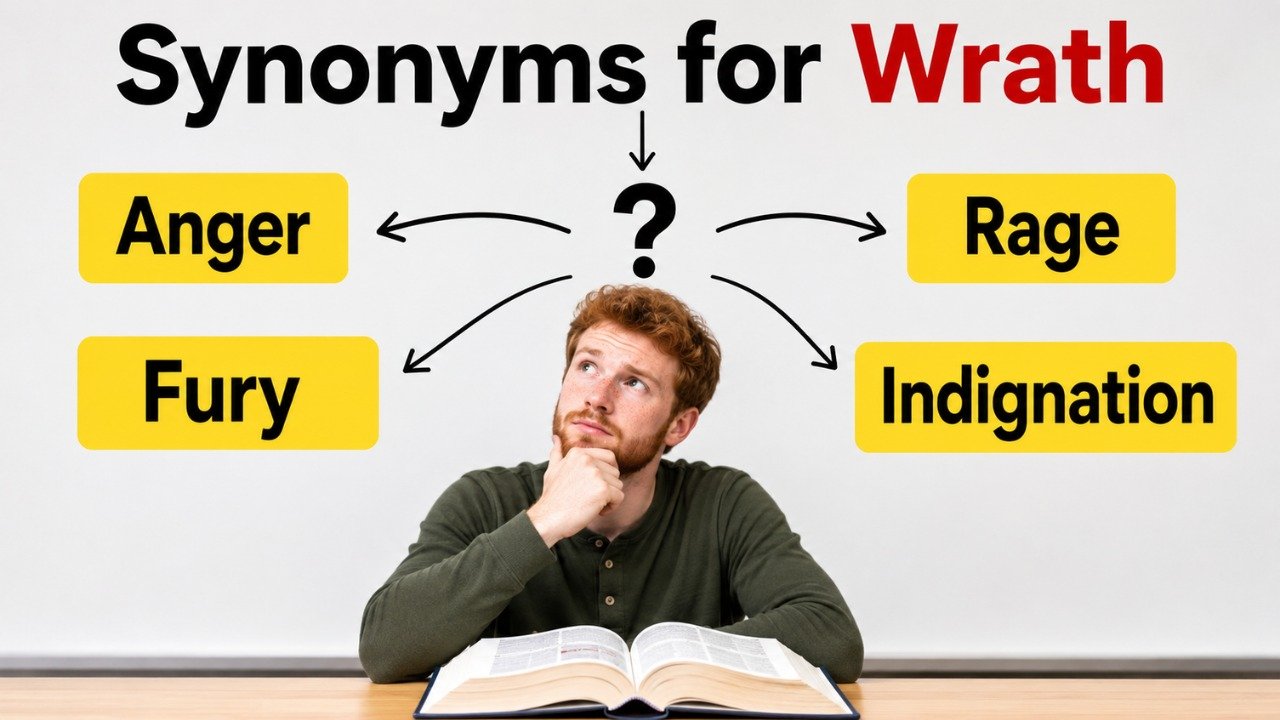
Quick Answer: The best synonyms for wrath include anger, rage, fury, outrage, indignation, ire, resentment, hostility, displeasure, and bitterness. Use anger as the most general replacement, rage or fury for extremely powerful emotion, outrage for anger caused by something shocking or unjust, indignation for anger over unfair treatment, ire for a formal or literary tone, and resentment or bitterness when anger lasts over time.
Pronunciation and Word Details
Word: Wrath
Pronunciation: /ræθ/
Part of Speech: Noun
Meaning: Intense anger, especially anger that is powerful, severe, or directed toward someone because of wrongdoing.
US Pronunciation:
UK Pronunciation:
What Does “Wrath” Mean?
Wrath means extremely strong anger, often connected with punishment, revenge, injustice, or serious wrongdoing. It is a noun and usually describes a deeper and more forceful emotion than ordinary anger.
The word often appears when someone’s anger has become intense enough to influence actions or consequences. A person may fear someone’s wrath, provoke wrath, face wrath, or become the target of wrath.
In everyday conversation, wrath can sound dramatic or literary. In formal writing, historical descriptions, storytelling, and emotional narratives, it can express severe anger more vividly than the basic word anger.
Example: The dishonest decision brought the wrath of the entire community.
In this sentence, wrath suggests more than mild annoyance. It describes powerful collective anger.
Meaning, Tone, and Context of “Wrath”
Wrath has a strong, serious, and emotionally intense tone. It is usually more dramatic than anger and less common in casual everyday speech.
Formal Tone: Wrath can work well in formal descriptions when the writer wants to emphasize serious anger or consequences.
Literary Tone: The word is especially effective in stories, historical writing, dramatic descriptions, and emotionally powerful passages.
Emotional Tone: Wrath expresses intense anger rather than irritation or mild displeasure.
Conversational Tone: In ordinary conversation, people are more likely to say anger, rage, or fury unless they intentionally want a dramatic effect.
Moral Context: Wrath can describe anger caused by betrayal, wrongdoing, injustice, or offensive behavior.
Punishment Context: It frequently appears when severe anger may lead to punishment, retaliation, or consequences.
Because wrath is a powerful word, it should be used when the emotional intensity truly deserves it.
When and How to Use “Wrath”
For Intense Anger: Use wrath when ordinary anger is not strong enough to describe the emotion.
Example: The betrayal awakened his wrath.
For Severe Disapproval: Wrath can describe powerful anger directed at someone who has behaved badly.
Example: The officials faced public wrath after ignoring repeated warnings.
For Dramatic Writing: Use wrath to create emotional intensity in stories or descriptions.
Example: The ruler’s wrath terrified everyone in the hall.
For Anger With Consequences: Wrath works well when anger is connected with punishment or retaliation.
Example: He feared his father’s wrath after breaking the valuable object.
For Collective Anger: Wrath can describe intense anger shared by a community or group.
Example: The unfair decision attracted the wrath of local residents.
Best Synonyms for Wrath
Anger: A strong feeling of displeasure caused by something wrong, unfair, or frustrating.
Example: Her anger grew when she learned the truth.
Rage: Extremely powerful and uncontrolled anger.
Example: He shouted in rage after discovering the betrayal.
Fury: Intense and sometimes explosive anger.
Example: The decision filled the crowd with fury.
Outrage: Strong anger caused by something considered shocking, offensive, or unjust.
Example: The unfair policy caused widespread outrage.
Indignation: Anger caused by unfair or insulting treatment.
Example: She responded with indignation when her honesty was questioned.
Ire: Strong anger, usually used in formal or literary writing.
Example: The careless remark drew the ire of several members.
Resentment: Lasting anger caused by unfair treatment or a sense of injury.
Example: Years of unfair treatment created deep resentment.
Hostility: Angry or unfriendly feelings toward someone.
Example: The disagreement increased hostility between the two groups.
Displeasure: A feeling of annoyance or dissatisfaction that is usually less intense than wrath.
Example: The manager expressed displeasure with the careless work.
Bitterness: Deep and lasting anger mixed with disappointment or hurt.
Example: His bitterness remained long after the argument ended.
50 Synonyms for Wrath with Short Meanings
- Anger: A strong feeling of displeasure.
- Rage: Extreme and often uncontrolled anger.
- Fury: Fierce and intense anger.
- Outrage: Strong anger caused by something offensive or unjust.
- Indignation: Anger caused by unfair treatment.
- Ire: Strong anger expressed in a formal or literary way.
- Resentment: Lasting anger caused by perceived unfairness.
- Hostility: Angry and unfriendly feeling toward someone.
- Displeasure: Annoyance or dissatisfaction.
- Bitterness: Long lasting anger mixed with hurt.
- Furor: A strong and excited public reaction involving anger.
- Infuriation: The state of being extremely angry.
- Exasperation: Intense annoyance caused by continued difficulty.
- Irritation: Mild or moderate anger caused by annoyance.
- Annoyance: A feeling of slight anger or frustration.
- Aggravation: Increased irritation or frustration.
- Vexation: Annoyance caused by difficulty or trouble.
- Enmity: Deep and lasting hostility.
- Animosity: Strong dislike mixed with hostility.
- Rancor: Bitter and lasting resentment.
- Malice: A desire to harm someone because of hostile feelings.
- Hatred: Extremely strong dislike.
- Hate: Intense dislike or hostility.
- Loathing: Very strong dislike or disgust.
- Detestation: Intense hatred or dislike.
- Antagonism: Active hostility or opposition.
- Belligerence: Aggressive and confrontational hostility.
- Ferocity: Fierce emotional intensity.
- Fierceness: Powerful and aggressive intensity.
- Temper: A state of anger or tendency to become angry.
- Hotheadedness: A tendency toward quick and intense anger.
- Impatience: Irritation caused by delays or difficulties.
- Frustration: Annoyance caused by being unable to achieve something.
- Offense: Hurt or anger caused by disrespect.
- Umbrage: Offense or resentment caused by an insult.
- Choler: Strong anger, especially in older or literary usage.
- Gall: Bitter resentment or anger.
- Spleen: Ill temper or spiteful anger in literary usage.
- Vehemence: Powerful emotional force or intensity.
- Frenzy: Wild emotional excitement that may involve anger.
- Fuming: A state of visible anger.
- Seething: Intense anger that is controlled but strongly felt.
- Crossness: Irritability or mild anger.
- Irateness: The state of being very angry.
- Discontent: Dissatisfaction that may produce anger.
- Grievance: Resentment caused by a perceived wrong.
- Pique: Irritation caused by wounded pride.
- Spite: A desire to hurt or annoy because of resentment.
- Vindictiveness: A desire for revenge caused by anger.
- Maddening anger: Extremely powerful anger that feels difficult to control.
Read Also:
Synonyms for Generate

Synonyms for Wrath by Context
When Wrath Means Extreme Anger
Use rage, fury, infuriation, or irateness when the emotion is exceptionally strong.
Rage Example: His rage became obvious when he heard the accusation.
Fury Example: She reacted with fury to the dishonest claim.
Infuriation Example: His infuriation increased as the delays continued.
Irateness Example: The customer’s irateness was clear from his response.
When Wrath Means Anger Over Injustice
Outrage and indignation are better when anger comes from unfairness, disrespect, or wrongdoing.
Outrage Example: The cruel treatment caused public outrage.
Indignation Example: She spoke with indignation after being falsely blamed.
These words often communicate a moral reason for the anger.
When Wrath Means Lasting Anger
Resentment, bitterness, rancor, and grievance fit situations where anger continues for a long time.
Resentment Example: His resentment grew after years of unequal treatment.
Bitterness Example: She carried bitterness from the old disagreement.
Rancor Example: Political differences created lasting rancor.
Grievance Example: He still had a grievance about the unfair decision.
When Wrath Means Hostile Feeling
Hostility, animosity, antagonism, and enmity describe anger that has developed into opposition or deep dislike.
Hostility Example: The argument created open hostility between them.
Animosity Example: Years of competition produced deep animosity.
Antagonism Example: Their disagreement soon turned into antagonism.
Enmity Example: The dispute created lasting enmity between the families.
When Wrath Means Irritation or Annoyance
When the emotion is weaker, irritation, annoyance, vexation, and exasperation are usually more accurate.
Irritation Example: The constant noise caused irritation.
Annoyance Example: She hid her annoyance during the meeting.
Vexation Example: The repeated error became a source of vexation.
Exasperation Example: He sighed in exasperation after another delay.
Another Word for Wrath
The best general alternative to wrath is anger because it works naturally in formal writing, conversation, essays, and everyday descriptions. However, the strongest replacement depends on how intense the emotion is and what caused it.
Choose rage or fury when the anger is extreme. Choose outrage when injustice causes the reaction. Choose resentment when the emotion develops over time.
Original: The unfair ruling caused the wrath of the residents.
Better Option: The unfair ruling caused the outrage of the residents.
Original: He struggled to control his wrath.
Better Option: He struggled to control his rage.
Original: Years of mistreatment filled her with wrath.
Better Option: Years of mistreatment filled her with resentment.
Original: The leader’s wrath frightened everyone nearby.
Better Option: The leader’s fury frightened everyone nearby.
When Not to Use “Wrath”
Wrath can sound excessively dramatic when the situation involves only mild annoyance or inconvenience.
Weak: She felt wrath because her coffee was cold.
Better: She felt annoyed because her coffee was cold.
Wrath may also sound unnatural in casual conversation when anger communicates the idea more simply.
Weak: I experienced great wrath when the bus arrived late.
Better: I became frustrated when the bus arrived late.
Avoid wrath when the emotion is specifically caused by injustice and outrage or indignation would communicate the cause more clearly.
Weak: The unfair treatment caused her wrath.
Better: The unfair treatment caused her indignation.
Wrath is also less suitable for long lasting emotional wounds when bitterness, resentment, or rancor is more precise.
Weak: He carried wrath about the insult for years.
Better: He carried resentment about the insult for years.
Words Commonly Confused With Wrath
Wrath vs Anger: Anger is the broad and neutral term. Wrath describes much stronger and more dramatic anger.
Wrath vs Rage: Both describe intense anger, but rage often suggests loss of emotional control, while wrath can suggest powerful anger that may be controlled or directed.
Wrath vs Fury: Fury is close to wrath and often suggests explosive emotional intensity. Wrath can sound more formal, serious, or literary.
Wrath vs Outrage: Outrage usually results from something shocking, offensive, or unjust. Wrath does not require a specific moral cause.
Wrath vs Indignation: Indignation is anger caused specifically by unfairness, insult, or improper treatment. Wrath is broader and usually stronger.
Wrath vs Resentment: Wrath is intense anger that may be immediate. Resentment usually develops and remains over time.
Wrath vs Hostility: Wrath describes an emotion, while hostility often describes an unfriendly or aggressive attitude toward someone.
Wrath vs Bitterness: Wrath is intense anger. Bitterness is lasting resentment mixed with hurt, disappointment, or unhappiness.
Which Synonym Should You Choose?
Choose anger when you need a general, natural word suitable for nearly every context.
Choose rage when someone is extremely angry and may be losing emotional control.
Choose fury for dramatic or powerful descriptions of fierce anger.
Choose outrage when the anger is caused by injustice, cruelty, shocking behavior, or an offensive action.
Choose indignation in formal writing when someone becomes angry because they have been treated unfairly or disrespectfully.
Choose ire when you want a concise, formal, or literary alternative.
Choose resentment when anger continues because someone feels unfairly treated.
Choose bitterness when anger combines with emotional pain or disappointment.
Choose hostility when the emotion appears as unfriendly behavior, opposition, or aggression.
Choose irritation or annoyance for everyday situations where wrath would sound much too strong.
Real Life Examples of “Wrath” in Sentences
Original: The dishonest decision brought the wrath of the community.
Better Option: The dishonest decision brought the outrage of the community.
Original: He feared his manager’s wrath after admitting the mistake.
Better Option: He feared his manager’s anger after admitting the mistake.
Original: Her wrath grew when she discovered the deception.
Better Option: Her fury grew when she discovered the deception.
Original: The unfair accusation filled him with wrath.
Better Option: The unfair accusation filled him with indignation.
Original: The betrayal awakened years of wrath within her.
Better Option: The betrayal awakened years of resentment within her.
Original: His wrath was obvious from the force of his response.
Better Option: His rage was obvious from the force of his response.
Original: The decision attracted the wrath of disappointed residents.
Better Option: The decision attracted the ire of disappointed residents.
Original: She tried to hide her wrath during the discussion.
Better Option: She tried to hide her anger during the discussion.
Original: The cruel remark provoked his wrath immediately.
Better Option: The cruel remark provoked his fury immediately.
Original: The repeated injustice eventually turned her wrath into lasting resentment.
Better Option: The repeated injustice eventually turned her anger into lasting bitterness.
Synonym Groups and Usage Differences
Extreme Anger Group
Rage, fury, infuriation, and irateness describe very intense anger. They work best when anger has reached a powerful emotional level.
Example: His fury became impossible to hide.
Moral Anger Group
Outrage and indignation describe anger caused by behavior considered wrong, unjust, insulting, or offensive.
Example: The unfair punishment caused widespread outrage.
Lasting Resentment Group
Resentment, bitterness, rancor, grievance, and gall describe anger that remains because of a past injury or unfair experience.
Example: Years of neglect created deep resentment.
Hostility Group
Hostility, animosity, antagonism, and enmity describe negative feelings that can develop into conflict or opposition.
Example: The dispute created hostility between the two sides.
Mild Anger Group
Irritation, annoyance, vexation, crossness, and displeasure describe emotions weaker than wrath.
Example: The repeated interruption caused irritation.
Aggressive Anger Group
Belligerence, spite, malice, and vindictiveness describe anger that may involve aggression, harmful intentions, or a desire for revenge.
Example: His vindictiveness made reconciliation difficult.
Antonyms of Wrath
The opposite of wrath depends on whether the contrast involves emotion, behavior, or attitude.
Calmness: A peaceful emotional state without strong anger.
Peace: A state free from conflict or hostility.
Patience: The ability to remain calm despite difficulty or delay.
Composure: Emotional control during a stressful situation.
Serenity: A deep state of calm and peacefulness.
Contentment: Satisfaction without resentment or anger.
Goodwill: Friendly and positive feelings toward others.
Kindness: Caring and considerate behavior toward another person.
Forgiveness: The willingness to release anger or resentment toward someone.
Compassion: Concern and understanding toward another person’s difficulties.
Gentleness: Calm and considerate behavior without aggression.
Tolerance: Willingness to accept differences or difficulties without becoming hostile.
Comparison: Wrath vs Related Words
Wrath vs Anger
Anger is the broadest term and can range from mild displeasure to strong emotion. Wrath almost always suggests intense anger.
Example With Wrath: The betrayal provoked his wrath.
Example With Anger: The repeated delays caused his anger.
Wrath vs Rage
Wrath and rage both describe powerful anger. Rage often suggests emotional loss of control, while wrath can sound more deliberate or dramatic.
Example With Wrath: The ruler’s wrath frightened his advisers.
Example With Rage: He screamed in rage after hearing the accusation.
Wrath vs Fury
Fury is one of the closest synonyms for wrath. Both communicate intense anger, but fury is common in descriptions of explosive reactions.
Example With Wrath: She feared the wrath of the offended leader.
Example With Fury: She responded with fury when she discovered the deception.
Wrath vs Outrage
Wrath focuses mainly on intensity. Outrage focuses more strongly on why the anger exists, particularly injustice or offensive conduct.
Example With Wrath: His wrath grew as the confrontation continued.
Example With Outrage: The discriminatory rule caused public outrage.
Wrath vs Indignation
Indignation is usually morally motivated anger. It communicates the belief that something is unfair, insulting, or improper.
Example With Wrath: The insult filled him with wrath.
Example With Indignation: She expressed indignation at being falsely accused.
Wrath vs Resentment
Wrath is intense and can be immediate. Resentment is usually quieter and lasts longer.
Example With Wrath: He reacted with wrath when he discovered the betrayal.
Example With Resentment: He carried resentment for years after the betrayal.
Wrath vs Ire
Both words can sound formal or literary. Ire is generally shorter and may feel slightly less dramatic than wrath.
Example With Wrath: The dishonest act provoked the committee’s wrath.
Example With Ire: The dishonest act drew the committee’s ire.
Common Phrases and Expressions With Wrath
Face Someone’s Wrath: Experience the consequences of another person’s intense anger.
Fear Someone’s Wrath: Feel afraid of how an angry person may react.
Provoke Wrath: Cause someone to become extremely angry.
Incur Wrath: Cause another person or group to become angry with you.
Unleash Wrath: Suddenly express powerful anger.
Feel the Wrath: Experience another person’s severe anger or its consequences.
Draw Wrath: Attract criticism or powerful anger.
Escape Wrath: Avoid being punished or confronted by someone who is angry.
Wrath Descended Upon Someone: A dramatic expression meaning that someone became the target of severe anger.
Full Wrath: The complete force of someone’s anger or retaliation.
Common Mistakes to Avoid
One common mistake is using wrath for emotions that are too mild. If someone is only slightly bothered, words such as irritation, annoyance, or displeasure are more accurate.
Another mistake is treating all strong anger words as completely interchangeable. Rage suggests intense and sometimes uncontrolled anger. Outrage usually has a moral cause. Resentment lasts over time. Hostility describes an unfriendly or aggressive attitude.
Repetition can also weaken writing. Using wrath several times in one paragraph can make the passage sound unnatural. Alternate with anger, fury, outrage, rage, or resentment when the meaning allows it.
Writers should also avoid selecting a dramatic synonym simply because it sounds stronger. The word must fit the emotional level of the situation.
Be careful with vague phrasing as well. Instead of writing that someone felt wrath without explaining why, provide enough context for readers to understand what caused the emotion.
Finally, choose synonyms according to meaning rather than appearance. A word that relates broadly to negative emotion may not be a true replacement for wrath in every sentence.
Conclusion
Understanding synonyms for wrath helps you express different forms and intensities of anger more accurately. Anger is the safest general alternative, while rage and fury describe extreme emotion. Outrage and indignation work best for anger caused by injustice, while resentment and bitterness describe feelings that continue over time. Ire suits formal or literary writing, and hostility emphasizes unfriendly attitudes. Choosing the right synonym makes descriptions clearer, more natural, and better suited to the exact emotional context.
FAQs About Synonyms for Wrath
What Is the Best Synonym for Wrath?
Anger is the best general synonym because it works in most contexts. For stronger emotion, rage or fury may be more accurate.
What Is a Stronger Word for Wrath?
Fury and rage are powerful alternatives. Rage often suggests uncontrolled anger, while fury emphasizes fierce emotional intensity.
Is Wrath the Same as Anger?
Not exactly. Anger can describe many levels of displeasure, while wrath normally refers to extremely strong anger.
What Is a Formal Synonym for Wrath?
Ire and indignation are useful formal alternatives. Ire means strong anger, while indignation specifically relates to anger over unfair or insulting behavior.
What Is Another Word for Wrath Caused by Injustice?
Outrage and indignation are the strongest choices when anger is caused by injustice, cruelty, unfairness, or offensive behavior.
What Is the Difference Between Wrath and Resentment?
Wrath is usually intense and immediate. Resentment is often quieter but can remain for months or years after unfair treatment.
Can Fury Replace Wrath in Every Sentence?
No. Fury works well when the meaning is fierce or explosive anger, but wrath can carry a more formal, dramatic, or punishment related tone.
