
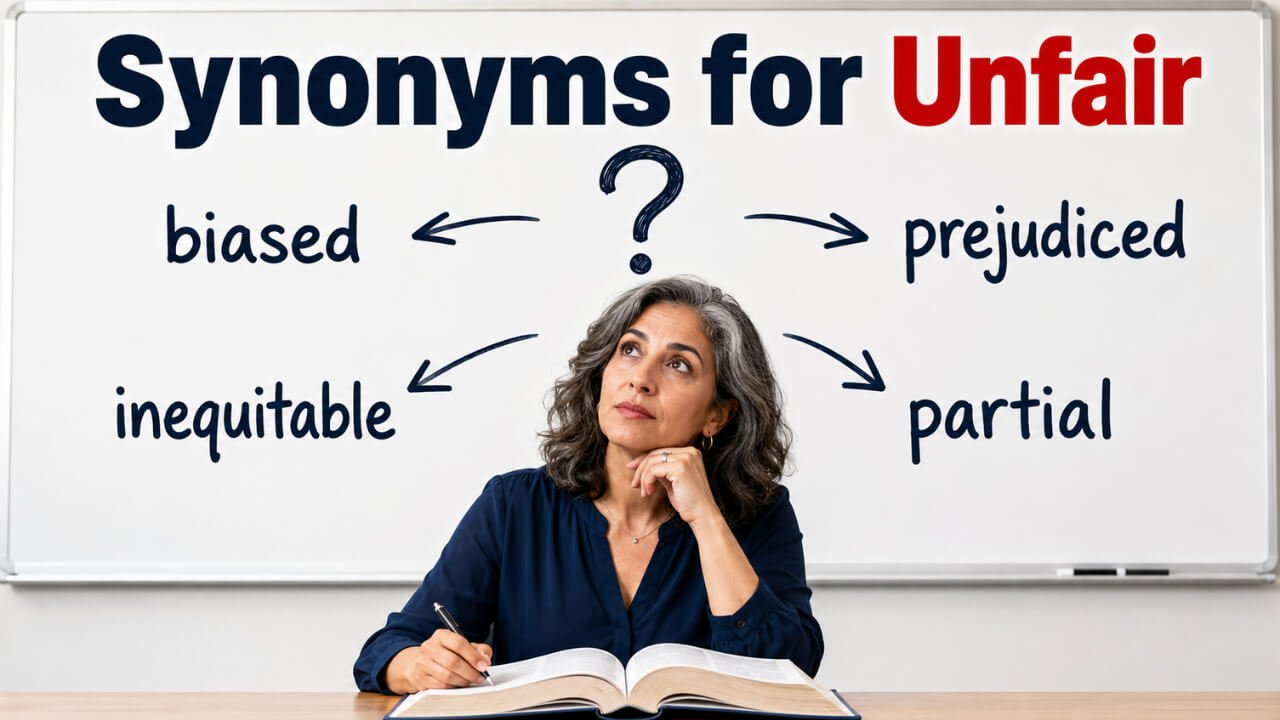
Quick Answer: Synonyms for unfair include unjust, biased, unequal, inequitable, partial, prejudiced, discriminatory, unreasonable, one sided, and corrupt. Use unjust for moral or legal wrongs, biased for opinions or decisions that favor one side, unequal for treatment or opportunity, inequitable for formal writing, and unreasonable when something feels harsh or not acceptable.
Pronunciation and Word Details
Word: Unfair
Pronunciation: /ʌnˈfer/
Part of Speech: Adjective
Meaning: Unfair means not just, equal, honest, or reasonable in the way someone or something is treated.
US Pronunciation:
UK Pronunciation:
What Does “Unfair” Mean?
Direct Answer: Unfair means not right, equal, honest, or just.
Unfair is an adjective used to describe treatment, rules, decisions, systems, opinions, criticism, or situations that do not give people equal or proper consideration. It often suggests that someone is being treated worse than they deserve, or that one person or group is being favored over another.
You can use unfair in everyday speech, school writing, workplace communication, essays, and formal discussion. For example, an unfair rule may hurt one group more than another. An unfair comment may judge someone without enough information. An unfair decision may ignore facts, effort, or equal opportunity.
Meaning, Tone, and Context of “Unfair”
Tone: Unfair is clear, common, and emotionally direct.
Formality: It is neutral enough for both casual and formal use.
Emotional Strength: It can sound mild or strong depending on context.
Common Use: It appears in conversations about justice, rules, competition, criticism, punishment, work, school, law, rights, and relationships.
In casual speech, unfair often expresses frustration. For example, “That is unfair” can mean someone feels hurt or mistreated. In formal writing, stronger synonyms such as unjust, inequitable, discriminatory, or biased may sound more precise. In legal, academic, or workplace contexts, unfair can be useful, but a more specific word often gives the sentence more authority.
When and How to Use “Unfair”
For Unequal Treatment: Use unfair when someone is not treated the same as others.
Example: It was unfair to give one student extra time and deny it to the others.
For Biased Decisions: Use unfair when a choice favors one person, group, or side without good reason.
Example: The judge made an unfair decision because he ignored important evidence.
For Harsh Criticism: Use unfair when someone is judged too strongly or without full context.
Example: Calling her lazy after one mistake was unfair.
For Rules and Policies: Use unfair when a rule creates unequal results.
Example: The new policy felt unfair to workers with family responsibilities.
For Moral Judgment: Use unfair when something feels wrong, unjust, or dishonest.
Example: It is unfair to blame one person for a team problem.
Best Synonyms for Unfair
Unjust: Not morally right or fair.
Example: The punishment was unjust because the student did not break the rule.
Biased: Influenced by personal preference instead of fairness.
Example: The review sounded biased because it ignored all the positive facts.
Unequal: Not the same in treatment, amount, status, or opportunity.
Example: The company was criticized for unequal pay.
Inequitable: Not fair or balanced, especially in formal or policy contexts.
Example: The plan created inequitable access to education.
Partial: Favoring one person or side over another.
Example: The referee seemed partial to the home team.
Prejudiced: Judging someone unfairly before knowing the facts.
Example: The decision was prejudiced and ignored the candidate’s skills.
Discriminatory: Treating people unfairly because of identity, background, or group.
Example: The rule was seen as discriminatory because it excluded qualified applicants.
Unreasonable: Not fair, sensible, or acceptable.
Example: The deadline was unreasonable for such a large project.
One Sided: Favoring only one side of a situation.
Example: The article gave a one sided view of the argument.
Corrupt: Dishonest and unfair because of misuse of power.
Example: The corrupt system gave benefits only to powerful people.
50 Synonyms for Unfair with Short Meanings
- Unjust: Not morally fair or right.
- Inequitable: Not fair or balanced in results.
- Biased: Favoring one side unfairly.
- Partial: Supporting one person or side more than another.
- Prejudiced: Judging unfairly before knowing the facts.
- Discriminatory: Treating people unfairly based on group or identity.
- One Sided: Showing only one side of an issue.
- Unequal: Not the same in treatment or opportunity.
- Uneven: Not balanced or equal.
- Unbalanced: Giving too much weight to one side.
- Unreasonable: Not fair, sensible, or acceptable.
- Improper: Not suitable, correct, or fair.
- Wrong: Morally or practically not right.
- Wrongful: Done in a way that is illegal, unjust, or unfair.
- Unjustified: Not supported by a good reason.
- Unethical: Not morally acceptable.
- Dishonest: Not truthful or fair.
- Corrupt: Using power in a dishonest or unfair way.
- Crooked: Dishonest and unfair.
- Rigged: Arranged secretly to produce an unfair result.
- Fixed: Dishonestly arranged in advance.
- Stacked: Arranged to favor one side.
- Slanted: Presented with unfair bias.
- Skewed: Distorted in a way that creates imbalance.
- Arbitrary: Based on personal choice rather than fair rules.
- Oppressive: Harsh and unfair toward people with less power.
- Exploitative: Taking unfair advantage of someone.
- Harsh: Too severe or strict.
- Severe: Stronger or stricter than necessary.
- Excessive: More than is fair or reasonable.
- Undeserved: Not earned or justified.
- Unmerited: Not deserved by action or effort.
- Unwarranted: Not justified by facts or need.
- Baseless: Without a fair reason or evidence.
- Unfounded: Not based on truth or proof.
- Illegitimate: Not acceptable, lawful, or fair.
- Invalid: Not supported by proper reason or authority.
- Unlawful: Against the law or legal fairness.
- Unacceptable: Not fair or proper enough to accept.
- Unjustifiable: Impossible to defend as fair or right.
- Disproportionate: Too large, strong, or severe for the situation.
- Unevenhanded: Not treating people equally.
- Partisan: Strongly favoring one side.
- Preferential: Giving special advantage to one person or group.
- Favoring One Side: Helping one side more than another.
- Biased Against: Unfairly opposed to someone or something.
- Underhanded: Secret, dishonest, and unfair.
- Manipulative: Controlling a situation unfairly for personal benefit.
- Abusive: Using power in a harmful and unfair way.
- Unprincipled: Acting without fairness, honesty, or moral standards.
Read Also:
Synonyms for Represent
Synonyms for Unfair by Context
When Unfair Means Not Just
Use these synonyms when something is morally wrong, legally wrong, or against basic fairness.
Useful Synonyms: Unjust, wrongful, unethical, unjustifiable, illegitimate.
Example: The decision was unjust because it ignored the evidence.
Example: The dismissal was wrongful and caused serious harm.
When Unfair Means Biased
Use these words when someone favors one person, group, opinion, or side.
Useful Synonyms: Biased, partial, prejudiced, partisan, slanted.
Example: The report was biased because it only included negative comments.
Example: The judge sounded partial during the debate.
When Unfair Means Unequal
Use these synonyms when people do not receive the same treatment, rights, access, or opportunities.
Useful Synonyms: Unequal, inequitable, uneven, unbalanced, unevenhanded.
Example: The rule created unequal chances for new applicants.
Example: The funding system was inequitable for smaller schools.
When Unfair Means Too Harsh
Use these words when a punishment, judgment, demand, or rule is stronger than it should be.
Useful Synonyms: Harsh, severe, excessive, unreasonable, disproportionate.
Example: The penalty was excessive for such a small mistake.
Example: The criticism felt harsh because she had already apologized.
When Unfair Means Dishonest
Use these synonyms when a result, contest, process, or system is secretly controlled or dishonest.
Useful Synonyms: Rigged, fixed, corrupt, crooked, underhanded.
Example: The contest felt rigged because the winner was chosen before voting ended.
Example: The corrupt process gave power to people who already had influence.
Another Word for Unfair
Best Single Replacement: Unjust is often the best single word for unfair because it clearly means not fair, not right, or not morally acceptable.
The best alternative depends on context. Use biased when the problem is favoritism. Use inequitable when writing formally about unequal systems. Use unreasonable when something is too harsh or not sensible. Use discriminatory when unfair treatment targets a specific group.
Original: The rule is unfair to new workers.
Better Option: The rule is inequitable for new workers.
Original: His comments were unfair to the team.
Better Option: His comments were unjust to the team.
Original: The report gave an unfair view of the issue.
Better Option: The report gave a biased view of the issue.
Original: The punishment was unfair for a minor mistake.
Better Option: The punishment was disproportionate for a minor mistake.
When Not to Use “Unfair”
Do not use unfair when a more exact synonym would explain the problem better. Unfair can sound too general in formal writing, reports, essays, and serious complaints. Words like biased, discriminatory, inequitable, unjust, or unreasonable often provide clearer meaning.
Weak: The hiring policy is unfair.
Better: The hiring policy is discriminatory.
Weak: The article is unfair.
Better: The article is biased.
Weak: The sentence was unfair.
Better: The sentence was excessive.
Weak: The system is unfair.
Better: The system is inequitable.
Weak: His claim was unfair.
Better: His claim was unfounded.
Words Commonly Confused With Unfair
Unfair vs Unjust: Unfair is a general word for unequal or improper treatment. Unjust is stronger and often suggests moral, legal, or ethical wrong.
Unfair vs Biased: Unfair describes the result or treatment. Biased describes the attitude, opinion, or decision process that causes unfairness.
Unfair vs Unequal: Unfair means not right or just. Unequal means not the same in amount, treatment, status, or opportunity.
Unfair vs Inequitable: Unfair is common and conversational. Inequitable is more formal and often used for systems, policies, resources, or access.
Unfair vs Discriminatory: Unfair can describe many kinds of bad treatment. Discriminatory specifically means unfair treatment based on group, identity, category, or protected status.
Unfair vs Unreasonable: Unfair focuses on justice or equality. Unreasonable focuses on what is not sensible, acceptable, or practical.
Which Synonym Should You Choose?
Choose unjust when writing about moral wrongs, legal problems, or serious unfair treatment.
Choose biased when an opinion, review, report, judge, or decision favors one side.
Choose inequitable when writing about policies, systems, resources, education, work, or public access.
Choose discriminatory when unfair treatment is connected to identity, background, group, or category.
Choose unequal when comparing treatment, pay, rights, chances, or opportunities.
Choose unreasonable when a demand, rule, expectation, or deadline is not sensible.
Choose disproportionate when a punishment or reaction is too strong for the situation.
Choose rigged when a contest, vote, game, or process is secretly controlled.
Choose harsh when criticism, punishment, or judgment feels too severe.
Choose one sided when a discussion, article, argument, or opinion ignores the other side.
Real Life Examples of “Unfair” in Sentences
Original: It was unfair to blame him for the whole problem.
Better Option: It was unjust to blame him for the whole problem.
Original: The teacher gave an unfair grade.
Better Option: The teacher gave a biased grade.
Original: The policy is unfair to small businesses.
Better Option: The policy is inequitable for small businesses.
Original: The punishment was unfair for a first mistake.
Better Option: The punishment was disproportionate for a first mistake.
Original: The article gave an unfair picture of the situation.
Better Option: The article gave a slanted picture of the situation.
Original: The contest seemed unfair from the start.
Better Option: The contest seemed rigged from the start.
Original: Her criticism was unfair and hurtful.
Better Option: Her criticism was harsh and hurtful.
Original: The company made an unfair decision.
Better Option: The company made an unreasonable decision.
Original: The rules were unfair to new players.
Better Option: The rules were unequal for new players.
Original: His statement was unfair because it lacked proof.
Better Option: His statement was unfounded because it lacked proof.
Synonym Groups and Usage Differences
Justice Group
Words in this group focus on right, wrong, morality, and fairness. Use them in essays, complaints, legal writing, and serious discussion.
Synonyms: Unjust, wrongful, unethical, unjustifiable.
Example: The decision was unjust because it punished the wrong person.
Bias Group
These synonyms describe favoritism, prejudice, or lack of balance. They work well for opinions, reports, reviews, decisions, and arguments.
Synonyms: Biased, partial, prejudiced, partisan, slanted.
Example: The review was biased because it ignored important facts.
Equality Group
This group focuses on equal treatment, equal access, and balanced opportunity.
Synonyms: Unequal, inequitable, uneven, unbalanced, unevenhanded.
Example: The system was inequitable because some students had fewer resources.
Severity Group
These words describe unfairness caused by punishment, criticism, pressure, or rules that are too strong.
Synonyms: Harsh, severe, excessive, unreasonable, disproportionate.
Example: The fine was excessive for such a minor issue.
Dishonesty Group
Use these words when unfairness comes from secret control, cheating, corruption, or dishonest power.
Synonyms: Rigged, fixed, corrupt, crooked, underhanded.
Example: The process was rigged to protect powerful people.
Antonyms of Unfair
Fair: Treating people equally and properly.
Just: Morally right and based on truth or fairness.
Equal: Giving the same treatment, rights, or chances.
Impartial: Not favoring one person or side.
Unbiased: Free from personal preference or prejudice.
Equitable: Fair and balanced, especially in systems or policies.
Reasonable: Sensible, fair, and acceptable.
Honest: Truthful and morally correct.
Proper: Correct, suitable, and fair in a situation.
Legitimate: Accepted as lawful, valid, or fair.
Comparison: Unfair vs Related Words
Unfair vs Unjust
Unfair is broad and common. Unjust is stronger and often sounds more serious, moral, or formal.
Example With Unfair: The rule was unfair to part time workers.
Example With Unjust: The sentence was unjust because the evidence was weak.
Unfair vs Biased
Unfair describes the treatment or result. Biased describes the attitude, opinion, or decision process behind it.
Example With Unfair: The result felt unfair to the losing team.
Example With Biased: The referee seemed biased toward the home team.
Unfair vs Inequitable
Unfair works in everyday writing. Inequitable is more formal and often used for policies, resources, systems, and social issues.
Example With Unfair: The schedule is unfair to night workers.
Example With Inequitable: The policy created inequitable access to health services.
Unfair vs Unequal
Unfair means not just or proper. Unequal means not the same in level, amount, rights, or opportunity.
Example With Unfair: It was unfair to ignore her effort.
Example With Unequal: The workers received unequal pay for the same job.
Unfair vs Discriminatory
Unfair is general. Discriminatory is specific and refers to unfair treatment based on a person’s group, identity, background, or category.
Example With Unfair: The rule seemed unfair to many applicants.
Example With Discriminatory: The rule was discriminatory because it excluded qualified people from one group.
Unfair vs Unreasonable
Unfair focuses on justice. Unreasonable focuses on what is not sensible, practical, or acceptable.
Example With Unfair: It was unfair to blame only one person.
Example With Unreasonable: The deadline was unreasonable for such a complex task.
Common Phrases and Expressions With Unfair
Unfair Treatment: Treatment that is not equal, just, or proper.
Unfair Advantage: A benefit that gives one person or side an improper lead.
Unfair Decision: A choice that is not based on justice, facts, or equal standards.
Unfair Rule: A rule that creates unequal or improper results.
Unfair Criticism: Negative judgment that is too harsh or not based on full facts.
Unfair Practice: A business, work, or social action that is dishonest or improper.
Unfair Punishment: A penalty that is too strong, undeserved, or wrongly given.
Unfair Comparison: A comparison that ignores important differences.
Unfair System: A structure that gives better chances to some people and worse chances to others.
Unfair Burden: A responsibility or pressure placed too heavily on one person or group.
Common Mistakes to Avoid
Using Unfair Too Often: Repeating unfair can make writing sound weak. Replace it with unjust, biased, inequitable, unreasonable, or discriminatory when the meaning is more specific.
Choosing the Wrong Synonym: Do not use discriminatory unless unfair treatment is linked to a group or identity. Do not use rigged unless a process was secretly controlled.
Ignoring Context: Unjust works better for moral wrongs. Biased works better for opinions. Unequal works better for comparison. Unreasonable works better for demands.
Using Vague Phrases: A sentence like “This is unfair” may need more detail. Explain who is affected and why the treatment is unfair.
Overusing Emotional Language: In formal writing, use precise words instead of only emotional words. Inequitable, unjustified, and disproportionate can sound clearer and more professional.
Conclusion
Synonyms for unfair help you describe injustice, bias, inequality, harsh treatment, and dishonest systems with more precision. Use unjust for serious moral wrongs, biased for favoritism, inequitable for formal policy issues, unequal for different treatment, and unreasonable for demands that are not sensible. The best synonym depends on what kind of unfairness you mean. Choosing the right word makes your writing clearer, stronger, and more accurate.
FAQs About Synonyms for Unfair
What are the best synonyms for unfair?
The best synonyms for unfair are unjust, biased, unequal, inequitable, partial, discriminatory, unreasonable, one sided, and corrupt.
What is another word for unfair in formal writing?
A strong formal word for unfair is inequitable. You can also use unjust, discriminatory, or unjustified depending on the context.
What is a stronger word than unfair?
Unjust is often stronger than unfair. Discriminatory, corrupt, and oppressive are also stronger when they match the situation.
What is a synonym for unfair treatment?
Synonyms for unfair treatment include injustice, discrimination, bias, unequal treatment, inequitable treatment, and partial treatment.
Is biased the same as unfair?
Biased and unfair are related, but not exactly the same. Biased means favoring one side, while unfair describes treatment or results that are not just.
What is the opposite of unfair?
The opposite of unfair is fair. Other antonyms include just, equal, impartial, unbiased, equitable, reasonable, honest, and proper.
Can unfair be used in professional writing?
Yes, unfair can be used in professional writing, but a more specific synonym is often better. Use inequitable for policies, biased for judgment, and unreasonable for demands.
