
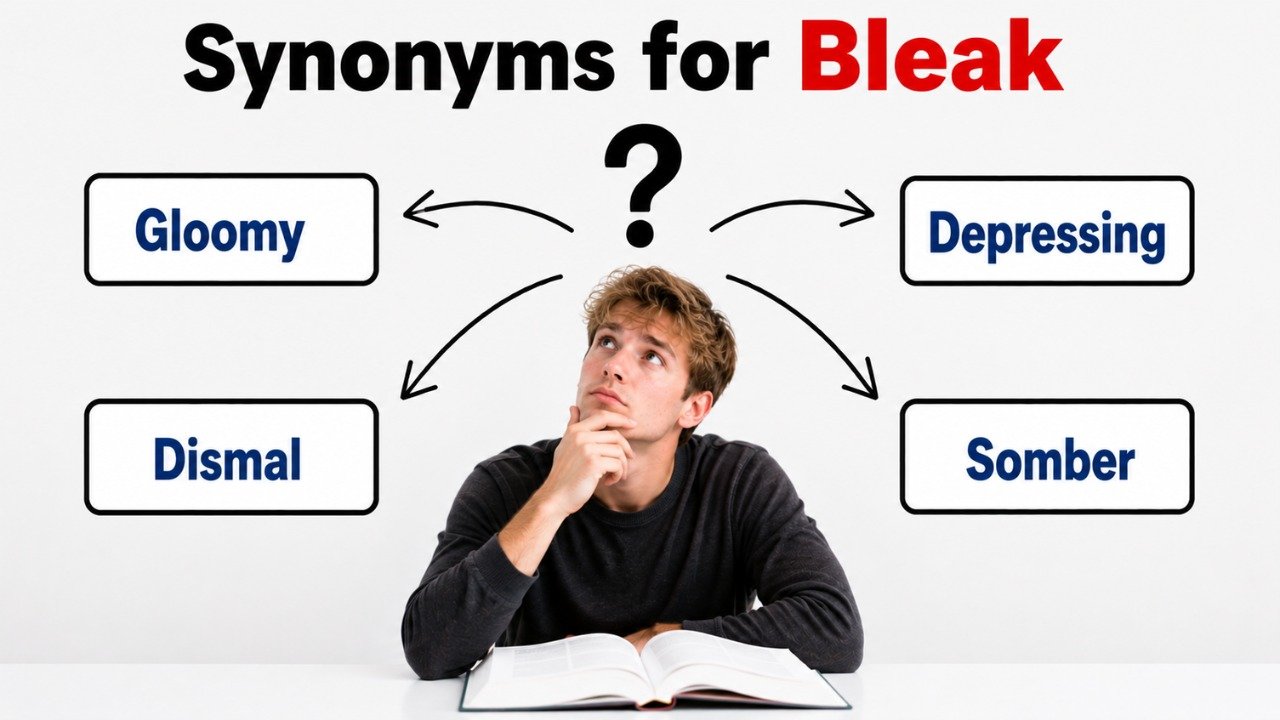
Quick Answer: The best synonyms for bleak include gloomy, grim, hopeless, dismal, dreary, desolate, barren, stark, harsh, and unpromising. Use gloomy for a sad mood or atmosphere, grim for a serious and troubling situation, hopeless for circumstances with little chance of improvement, and desolate or barren for empty landscapes. Stark suits a plain or severe appearance, while harsh works well for difficult weather or living conditions. The best choice depends on whether bleak describes emotions, prospects, surroundings, weather, or appearance.
Pronunciation and Word Details
Word: Bleak.
Pronunciation: /bliːk/
Part of Speech: Adjective.
Meaning: Cold, empty, depressing, or unlikely to improve.
US Pronunciation:
UK Pronunciation:
What Does “Bleak” Mean?
Bleak means cold, empty, depressing, or without much hope. It is an adjective used to describe situations, prospects, places, weather, appearances, and emotional atmospheres.
When bleak describes a situation, it suggests that the future looks difficult and improvement seems unlikely.
Example: The company faced a bleak financial future.
When it describes a place, bleak often means empty, exposed, barren, or lacking warmth and comfort.
Example: They crossed a bleak landscape covered with rocks.
Bleak can also describe weather that is cold, cloudy, and unpleasant.
Example: It was a bleak winter morning.
In descriptions of mood or appearance, bleak suggests sadness, severity, plainness, or emotional emptiness.
Example: The room had a bleak and colorless appearance.
The meaning changes slightly according to the noun it describes. A bleak outlook is hopeless, a bleak landscape is barren, and bleak weather is cold and cheerless.
Meaning, Tone, and Context of “Bleak”
Bleak has a strongly negative tone. It often communicates sadness, hopelessness, discomfort, emptiness, or severity.
The word is common in formal writing, journalism, literature, reports, essays, and serious conversation. It can describe both physical and abstract subjects.
In formal writing, bleak often describes economic conditions, future prospects, political situations, environmental damage, or social problems.
Example: The report presented a bleak assessment of regional employment.
In literature, bleak can create an atmosphere of isolation, despair, coldness, or emotional emptiness.
Example: The abandoned house stood beneath a bleak gray sky.
In everyday conversation, bleak may describe a situation that seems especially bad.
Example: Things are looking pretty bleak at the moment.
Bleak is stronger than words such as disappointing or unpleasant. It suggests that the problem is serious, the environment is severe, or the possibility of improvement is limited.
The word is not usually technical by itself, but it is often used in academic and analytical contexts when a writer wants to emphasize negative conditions.
When and How to Use “Bleak”
For Hopeless Prospects
Use: Choose bleak when a future outcome appears unlikely to improve.
Example: The team’s chances of reaching the final looked bleak.
For a Depressing Situation
Use: Bleak can describe circumstances that create sadness, worry, or discouragement.
Example: The families faced a bleak situation after losing their homes.
For an Empty Landscape
Use: Use bleak for land that appears barren, isolated, or without natural warmth.
Example: The travelers crossed a bleak plain with no trees in sight.
For Cold Weather
Use: Bleak can describe weather that is cold, cloudy, windy, and unpleasant.
Example: They arrived on a bleak November afternoon.
For a Severe Appearance
Use: The word may describe a room, building, image, or design that looks plain, bare, or unwelcoming.
Example: The office had a bleak interior with blank walls and harsh lighting.
For a Negative Report
Use: Bleak works in formal analysis when evidence suggests serious difficulty.
Example: The study offered a bleak forecast for water supplies.
For an Emotional Atmosphere
Use: Writers use bleak to create a feeling of loneliness, sadness, or despair.
Example: The final chapter leaves the reader with a bleak sense of loss.
For Economic Conditions
Use: Bleak can describe poor employment, business, or financial prospects.
Example: The economic outlook remained bleak throughout the region.
Best Synonyms for Bleak
Gloomy: Dark, sad, or lacking hope.
Example: The gloomy forecast made investors cautious.
Grim: Serious, unpleasant, and difficult to accept.
Example: Doctors delivered a grim assessment of the situation.
Hopeless: Having little or no chance of improvement or success.
Example: The residents feared that their position was hopeless.
Dismal: Very poor, depressing, or unsuccessful.
Example: Sales remained dismal during the winter months.
Dreary: Dull, depressing, and lacking interest or brightness.
Example: Rain fell throughout the dreary afternoon.
Desolate: Empty, abandoned, lonely, or without comfort.
Example: The road passed through a desolate valley.
Barren: Empty, unproductive, or unable to support much life.
Example: Very little could grow in the barren soil.
Stark: Plain, severe, and without decoration or comfort.
Example: The photographs revealed the stark reality of poverty.
Harsh: Severe, difficult, and unpleasant.
Example: The community struggled through harsh winter conditions.
Unpromising: Showing little possibility of success or improvement.
Example: The early results appeared unpromising.
50 Synonyms for Bleak With Short Meanings
- Gloomy: Dark, sad, or lacking hope.
- Grim: Serious, disturbing, and unpleasant.
- Hopeless: Having no clear chance of improvement.
- Dismal: Extremely poor or depressing.
- Dreary: Dull, lifeless, and depressing.
- Depressing: Causing sadness or discouragement.
- Desolate: Empty, lonely, and abandoned.
- Barren: Empty or unable to support growth.
- Stark: Plain, severe, and uncomfortable.
- Cheerless: Lacking happiness, warmth, or brightness.
- Somber: Serious, dark, and sad in tone.
- Dark: Troubling, sad, or threatening.
- Miserable: Extremely unhappy or uncomfortable.
- Forbidding: Unfriendly, threatening, or difficult to approach.
- Harsh: Severe, difficult, or unpleasant.
- Severe: Very serious, strict, or difficult.
- Cold: Lacking warmth, comfort, or friendliness.
- Wintry: Cold, gray, and characteristic of winter.
- Exposed: Unprotected from wind, cold, or danger.
- Windswept: Open and strongly affected by wind.
- Inhospitable: Difficult or unpleasant to live in.
- Lifeless: Lacking activity, energy, or vitality.
- Empty: Containing little life, comfort, or hope.
- Bare: Lacking covering, decoration, or vegetation.
- Austere: Plain, strict, and without comfort.
- Joyless: Lacking happiness or pleasure.
- Melancholy: Quietly sad and thoughtful.
- Sorrowful: Filled with sadness or grief.
- Pessimistic: Expecting negative results.
- Discouraging: Reducing hope or confidence.
- Unpromising: Showing little possibility of success.
- Dire: Extremely serious or urgent.
- Desperate: Very serious and almost without hope.
- Calamitous: Causing severe damage or suffering.
- Distressing: Causing anxiety, sadness, or pain.
- Ominous: Suggesting that something bad may happen.
- Threatening: Suggesting danger or harm.
- Colorless: Lacking brightness, interest, or character.
- Drab: Dull, plain, and unattractive.
- Dull: Lacking energy, brightness, or excitement.
- Gray: Gloomy, plain, or emotionally lifeless.
- Forlorn: Lonely, abandoned, and unhappy.
- Wretched: Extremely unpleasant or miserable.
- Comfortless: Lacking warmth, relief, or consolation.
- Demoralizing: Causing people to lose confidence or hope.
- Unwelcoming: Not pleasant, friendly, or inviting.
- Remote: Far away, isolated, and difficult to reach.
- Sterile: Empty, cold, or lacking life and creativity.
- Ruined: Severely damaged and left in poor condition.
- Disheartening: Causing a loss of hope or enthusiasm.
Read Also:
Synonyms for Contemporary
Synonyms for Bleak by Context
When Bleak Means Hopeless
Grim, hopeless, pessimistic, discouraging, unpromising, dire, desperate, and disheartening describe situations with little hope of improvement.
Example: The medical outlook remained grim despite continued treatment.
Hopeless is the strongest choice when success appears almost impossible. Unpromising is more measured and works well when early signs are poor but the result is not certain.
Dire suggests extreme seriousness. Disheartening focuses on the emotional effect of disappointing circumstances.
When Bleak Means Gloomy or Depressing
Gloomy, dismal, dreary, somber, melancholy, joyless, and depressing describe sad moods, atmospheres, or experiences.
Example: The empty halls created a gloomy atmosphere.
Gloomy can describe a mood, room, sky, or future. Dismal often suggests that something is both depressing and poor in quality. Dreary emphasizes dullness and repetition.
Somber is more serious and controlled. Melancholy suggests gentle or reflective sadness.
When Bleak Means Barren or Desolate
Desolate, barren, empty, bare, lifeless, windswept, remote, and ruined work for landscapes and abandoned places.
Example: The explorers moved across a barren stretch of land.
Barren usually describes land without vegetation or productivity. Desolate emphasizes loneliness and abandonment. Windswept describes open land exposed to strong wind.
Remote focuses on distance and isolation rather than sadness.
When Bleak Means Cold or Harsh
Harsh, severe, cold, wintry, exposed, inhospitable, and forbidding describe difficult weather or environments.
Example: Few plants survived the harsh climate.
Wintry is useful for cold conditions associated with winter. Inhospitable describes a place that is difficult for people, animals, or plants to live in.
Forbidding suggests that the environment appears threatening or unwelcoming.
When Bleak Means Plain or Stark
Stark, austere, bare, drab, colorless, dull, sterile, and unwelcoming describe appearances that lack warmth or decoration.
Example: The hospital corridor had a stark and sterile appearance.
Stark emphasizes sharp simplicity or severity. Austere suggests deliberate plainness. Drab and colorless describe a lack of visual interest.
Sterile often suggests that a place is clean but emotionally cold.
Another Word for Bleak
Grim is often the best single replacement for bleak when describing a serious, negative, or unpromising situation. Both words suggest that conditions are bad and that improvement may be difficult.
However, the best alternative depends on context. Use gloomy for mood, barren for land, harsh for weather, stark for appearance, and hopeless for prospects with almost no chance of improvement.
Original: The future looked bleak for the small business.
Better Option: The future looked grim for the small business.
Original: They walked across a bleak landscape.
Better Option: They walked across a barren landscape.
Original: The room felt bleak and uninviting.
Better Option: The room felt stark and uninviting.
Original: The weather remained bleak throughout the week.
Better Option: The weather remained cold and dreary throughout the week.
When Not to Use “Bleak”
Bleak is powerful, but it can become vague or exaggerated when a more precise word would communicate the meaning better.
When the Problem Is Mild
Do not use bleak for a minor inconvenience or a slightly disappointing result.
Weak: The lunch options looked bleak because my favorite meal was unavailable.
Better: The lunch options looked limited because my favorite meal was unavailable.
When You Mean Only Dark
A room can be dark without being emotionally depressing or hopeless.
Weak: The basement was bleak because the lights were off.
Better: The basement was dark because the lights were off.
When You Mean Financially Weak
In a formal report, specific words such as declining, unstable, poor, or unprofitable may provide more detail.
Weak: The company had a bleak quarter.
Better: The company reported declining revenue and rising costs during the quarter.
When Describing Ordinary Cold Weather
Bleak suggests more than low temperature. It often includes wind, gray skies, discomfort, or emotional dullness.
Weak: The afternoon was bleak because the temperature dropped slightly.
Better: The afternoon was cool because the temperature dropped slightly.
When Repeating the Word
Using bleak several times in one paragraph can weaken the description.
Weak: The bleak town had bleak streets beneath a bleak sky.
Better: The desolate town had empty streets beneath a gloomy sky.
When a Neutral Tone Is Required
Bleak may sound too emotional in a factual report.
Weak: The survey revealed a bleak level of customer satisfaction.
Better: The survey revealed a low level of customer satisfaction.
When the Place Is Simply Minimal
Minimal design is not necessarily bleak. A plain room may be calm, modern, or elegant.
Weak: The apartment had a bleak design with white walls and simple furniture.
Better: The apartment had a minimal design with white walls and simple furniture.
Words Commonly Confused With Bleak
Bleak vs Gloomy: Bleak often suggests hopelessness, coldness, or emptiness. Gloomy mainly describes darkness, sadness, or a low mood.
Bleak vs Grim: Bleak can describe places, weather, appearance, and prospects. Grim usually describes serious facts, expressions, or situations.
Bleak vs Barren: Bleak can be emotional or physical. Barren mainly describes land, soil, ideas, or conditions that produce little or nothing.
Bleak vs Stark: Bleak suggests sadness or lack of hope. Stark emphasizes plainness, severity, or a sharp contrast.
Bleak vs Desolate: Bleak may describe a difficult future or depressing atmosphere. Desolate focuses more strongly on emptiness, abandonment, and loneliness.
Bleak vs Dreary: Bleak is often more serious and hopeless. Dreary suggests dullness, boredom, grayness, or a lack of energy.
Bleak vs Somber: Bleak describes something depressing or unpromising. Somber describes a serious, dark, or respectfully sad tone.
Which Synonym Should You Choose?
Choose gloomy when describing a sad mood, dark room, cloudy sky, or pessimistic feeling.
Choose grim when the situation is serious, disturbing, or difficult to accept.
Choose hopeless when there appears to be almost no possibility of improvement.
Choose dismal when performance, results, conditions, or weather are both poor and depressing.
Choose dreary for dull weather, repetitive routines, gray surroundings, or boring experiences.
Choose desolate for abandoned buildings, empty roads, isolated regions, or lonely landscapes.
Choose barren for land without vegetation, unproductive soil, or an environment lacking growth.
Choose stark when describing plain design, severe facts, sharp contrasts, or an uncomfortable reality.
Choose harsh for difficult weather, living conditions, criticism, or treatment.
Choose unpromising in formal reports when early signs suggest a poor result without proving complete failure.
Choose dire for extreme danger, urgency, or serious need.
Choose pessimistic when describing a person, opinion, prediction, or attitude that expects a negative outcome.
Choose somber in essays and formal writing when the tone is serious and sad rather than completely hopeless.
Choose discouraging in emails or workplace communication when you want to discuss poor progress without sounding overly dramatic.
Choose drab or colorless for an unattractive appearance that lacks brightness or visual interest.
Choose inhospitable for environments where living conditions are difficult.
In casual conversation, gloomy, grim, rough, or depressing may sound more natural than bleak. In reports and essays, unpromising, severe, stark, dismal, and pessimistic can provide greater precision.
Real Life Examples of “Bleak” in Sentences
Original: The economic outlook is bleak.
Better Option: The economic outlook is unpromising.
Original: The village looked bleak after the storm.
Better Option: The village looked desolate after the storm.
Original: She gave a bleak description of the future.
Better Option: She gave a pessimistic description of the future.
Original: The team’s chances appeared bleak.
Better Option: The team’s chances appeared hopeless.
Original: They spent the night in a bleak building.
Better Option: They spent the night in a cold and unwelcoming building.
Original: The mountains looked bleak in winter.
Better Option: The mountains looked barren and windswept in winter.
Original: The report offered a bleak assessment.
Better Option: The report offered a grim assessment.
Original: The room had a bleak appearance.
Better Option: The room had a stark and colorless appearance.
Original: It was a bleak Monday morning.
Better Option: It was a dreary Monday morning.
Original: The refugees faced a bleak situation.
Better Option: The refugees faced a desperate situation.
Synonym Groups and Usage Differences
Hopelessness Group
Hopeless, grim, unpromising, pessimistic, dire, and desperate describe poor prospects or serious situations.
Hopeless suggests almost no chance of success. Grim communicates seriousness without always removing all hope. Unpromising is more cautious and analytical.
Example: The first test results were unpromising, but further research continued.
Sadness Group
Gloomy, somber, melancholy, sorrowful, depressing, and joyless relate to sadness and emotional heaviness.
Gloomy is broad and common. Somber is serious and controlled. Melancholy describes reflective sadness.
Example: A somber mood filled the room after the announcement.
Landscape Group
Barren, desolate, empty, remote, windswept, bare, and lifeless describe land or places with little warmth, growth, or human activity.
Barren emphasizes lack of growth. Desolate adds loneliness. Remote focuses on distance.
Example: The research station stood in a remote and windswept region.
Weather Group
Cold, wintry, harsh, severe, dreary, and inhospitable describe unpleasant climate and weather conditions.
Wintry is connected specifically with winter. Harsh and severe suggest difficult conditions with serious effects.
Example: The animals struggled to survive the severe winter.
Appearance Group
Stark, austere, drab, colorless, dull, sterile, and bare describe a plain or uninviting visual style.
Stark may be powerful or dramatic. Drab is usually unattractive. Austere can sound disciplined or intentionally simple.
Example: The room’s austere design contained only a bed and a wooden table.
Danger Group
Ominous, threatening, forbidding, dire, and dark suggest danger or trouble.
Ominous means that something bad may happen. Threatening suggests a more direct possibility of harm.
Example: Dark clouds created an ominous atmosphere above the valley.
Antonyms of Bleak
The opposite of bleak depends on whether the word describes hope, mood, landscape, weather, or appearance.
Hopeful: Showing confidence that conditions will improve.
Promising: Likely to produce a positive result.
Optimistic: Expecting favorable outcomes.
Cheerful: Bright, happy, and positive.
Joyful: Filled with happiness.
Bright: Full of light, color, or hope.
Lively: Full of energy and activity.
Welcoming: Pleasant, warm, and inviting.
Comfortable: Providing ease, warmth, or relief.
Mild: Gentle and not severe.
Fertile: Able to support healthy growth.
Lush: Rich in vegetation and natural beauty.
Prosperous: Successful and financially secure.
Encouraging: Giving confidence or hope.
Colorful: Full of strong colors and visual interest.
Comparison: Bleak vs Related Words
Bleak vs Gloomy
Bleak suggests severe sadness, emptiness, or little hope for improvement. Gloomy often describes a dark atmosphere, low mood, or pessimistic attitude.
Example With Bleak: The long term outlook for the damaged region was bleak.
Example With Gloomy: The cloudy weather made the room feel gloomy.
Bleak vs Grim
Bleak is broader and can describe weather, landscapes, interiors, or prospects. Grim mainly describes serious, unpleasant facts or situations.
Example With Bleak: The abandoned factory stood in a bleak industrial area.
Example With Grim: The investigation revealed a grim pattern of neglect.
Bleak vs Barren
Bleak may carry an emotional meaning, while barren mainly refers to lack of growth, productivity, or vegetation.
Example With Bleak: The refugees faced a bleak future.
Example With Barren: The seeds failed to grow in the barren soil.
Bleak vs Stark
Bleak suggests sadness or hopelessness. Stark emphasizes severity, plainness, or a strong and uncomfortable contrast.
Example With Bleak: The novel presents a bleak view of society.
Example With Stark: The chart shows a stark difference between the two regions.
Bleak vs Desolate
Bleak may describe negative prospects or unpleasant conditions. Desolate more specifically describes a place that is empty, abandoned, and lonely.
Example With Bleak: Employment prospects remained bleak.
Example With Desolate: The travelers found a desolate village with empty houses.
Bleak vs Dreary
Bleak is stronger and may suggest hopelessness. Dreary describes something dull, repetitive, gray, or lacking energy.
Example With Bleak: The country faced a bleak economic crisis.
Example With Dreary: The rain continued throughout the dreary afternoon.
Common Phrases and Expressions With Bleak
Bleak Future: A future with little hope of improvement.
Bleak Outlook: A negative expectation about what will happen.
Bleak Picture: A description showing serious problems or poor conditions.
Bleak Landscape: Empty, barren, or exposed land.
Bleak Winter: A cold, gray, and difficult winter.
Bleak Prospects: Very limited chances of success.
Bleak Reality: A harsh and unpleasant truth.
Bleak Assessment: A strongly negative evaluation.
Bleak Conditions: Severe, uncomfortable, or depressing circumstances.
Bleak Mood: An atmosphere of sadness or hopelessness.
Common Mistakes to Avoid
Using Bleak for Every Negative Situation
Bleak is stronger than bad, disappointing, or unpleasant. Reserve it for circumstances that are seriously depressing, harsh, empty, or unpromising.
Weak: The coffee tasted bleak.
Better: The coffee tasted bitter and unpleasant.
Confusing Bleak With Blank
Bleak means depressing, barren, or hopeless. Blank means empty of writing, expression, or detail.
Incorrect: She gave him a bleak stare with no emotion.
Better: She gave him a blank stare with no emotion.
Confusing Bleak With Barren
Barren is more precise when land cannot support growth.
Weak: The farmers could not grow crops in the bleak soil.
Better: The farmers could not grow crops in the barren soil.
Choosing an Overly Dramatic Synonym
Dire and hopeless are stronger than unpromising. Choose them only when the circumstances justify that intensity.
Weak: The weather forecast was dire because light rain was expected.
Better: The weather forecast was disappointing because light rain was expected.
Repeating Bleak Too Often
Use context specific alternatives to improve clarity and rhythm.
Weak: The bleak forecast described bleak conditions and a bleak future.
Better: The grim forecast described severe conditions and an unpromising future.
Using Bleak Without Explaining the Problem
Bleak can be vague in reports and analytical writing. Add evidence or a more specific description.
Vague: The business situation was bleak.
Clear: The business faced falling sales, increasing costs, and limited access to credit.
Using Bleak as an Adverb
Bleak is an adjective. The adverb is bleakly, although it is less common.
Incorrect: The wind blew bleak across the fields.
Correct: The wind blew bleakly across the fields.
Natural Option: A cold wind blew across the barren fields.
Ignoring Context When Replacing Bleak
Not every synonym fits every sentence. Gloomy describes mood, barren describes land, and unpromising describes prospects.
Incorrect: The barren financial outlook worried investors.
Correct: The unpromising financial outlook worried investors.
Conclusion
The most useful synonyms for bleak include gloomy, grim, hopeless, dismal, desolate, barren, stark, harsh, and unpromising. Choose grim or hopeless for difficult prospects, gloomy or dreary for mood and weather, barren or desolate for landscapes, and stark for a severe appearance. Bleak is a strong word, so the most accurate replacement depends on what makes the subject negative. A precise synonym helps readers understand whether you mean sadness, emptiness, coldness, danger, or lack of hope.
FAQs About Synonyms for Bleak
What Is the Best Synonym for Bleak?
Grim is a strong general synonym for bleak when describing a serious or unpromising situation.
What Is a Synonym for a Bleak Future?
Hopeless, grim, unpromising, pessimistic, and discouraging can describe a future with little chance of improvement.
What Is a Synonym for a Bleak Landscape?
Desolate, barren, windswept, empty, remote, and lifeless are useful alternatives for a bleak landscape.
Is Gloomy the Same as Bleak?
Not exactly. Gloomy mainly suggests sadness or darkness, while bleak can also mean hopeless, barren, cold, or severe.
Is Bleak a Strong Negative Word?
Yes. Bleak usually suggests serious sadness, harshness, emptiness, or a very limited possibility of improvement.
What Is the Opposite of Bleak?
Hopeful, promising, cheerful, bright, welcoming, lush, and optimistic are common opposites, depending on context.
Can Bleak Describe Weather?
Yes. Bleak weather is usually cold, cloudy, windy, gray, and unpleasant.
