
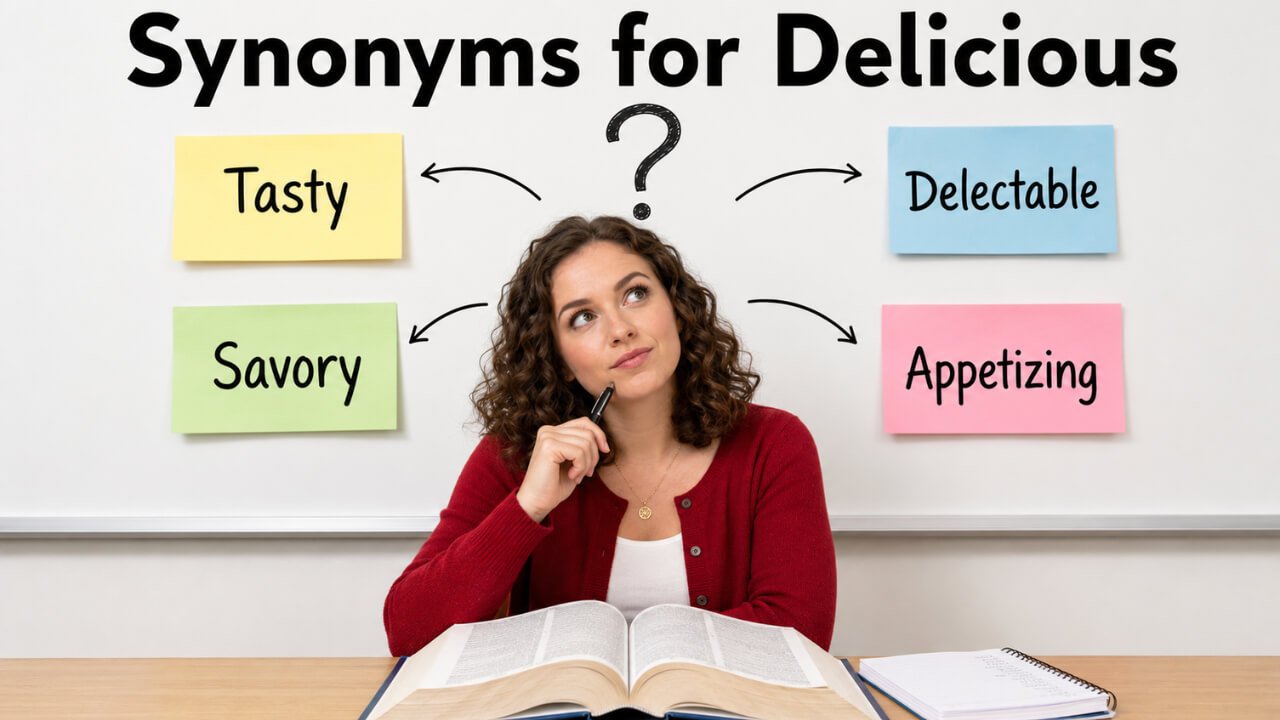
Quick Answer: Synonyms for delicious include tasty, flavorful, savory, appetizing, scrumptious, mouthwatering, delectable, yummy, palatable, and delightful. Use flavorful when describing rich taste, appetizing when food looks or smells good, savory for salty or seasoned dishes, delectable for polished writing, and yummy for casual speech. The best synonym depends on whether you mean pleasant taste, strong flavor, tempting appearance, or emotional enjoyment.
Pronunciation and Word Details
Word: Delicious.
Pronunciation: /dɪˈlɪʃəs/.
Part of Speech: Adjective.
Meaning: Very pleasant to taste or smell.
US Pronunciation:
UK Pronunciation:
What Does “Delicious” Mean?
Direct Answer: “Delicious” means very pleasing to the taste, smell, or senses.
“Delicious” is an adjective used mainly for food and drinks, but it can also describe something highly enjoyable in a figurative way. You can say a meal is delicious, a dessert tastes delicious, or a soup smells delicious. In casual and descriptive writing, it helps express enjoyment, pleasure, and strong approval.
The word works before a noun, after a linking verb, and in comparison. For example, you can write “a delicious cake,” “the meal was delicious,” or “this sauce is more delicious than the last one.”
Meaning, Tone, and Context of “Delicious”
“Delicious” has a positive, warm, and expressive tone. It is common in everyday speech, food reviews, recipes, menus, personal comments, and descriptive writing. The word is not too formal and not too casual, which makes it useful in many situations.
It often describes taste, aroma, texture, and overall eating experience. In a more emotional or figurative context, “delicious” can describe something deeply enjoyable, such as a delicious moment of silence or a delicious sense of victory. That use is more literary and less common in basic conversation.
When and How to Use “Delicious”
For Food Taste: Use “delicious” when food has a very pleasant flavor.
Example: The pasta was delicious with fresh herbs and creamy sauce.
For Drinks: Use it when a drink tastes refreshing, rich, sweet, smooth, or satisfying.
Example: The mango smoothie was delicious after a long warm day.
For Smell: Use it when the aroma makes food seem enjoyable before tasting it.
Example: The bread smelled delicious as it came out of the oven.
For Praise: Use it when giving a simple and polite compliment about a meal.
Example: Thank you for dinner. Everything was delicious.
For Descriptive Writing: Use it when you want readers to imagine taste and pleasure clearly.
Example: She served a delicious stew filled with vegetables and spices.
For Figurative Enjoyment: Use it carefully when describing something pleasing beyond food.
Example: He enjoyed a delicious feeling of relief after finishing the task.
Best Synonyms for Delicious
Tasty: Pleasant and enjoyable to eat.
Example: The rice was tasty with a mild spice blend.
Flavorful: Full of rich, noticeable taste.
Example: The soup was flavorful because of the fresh garlic and herbs.
Savory: Pleasantly salty, seasoned, or not sweet.
Example: The savory pie was filled with cheese and vegetables.
Appetizing: Looking or smelling good enough to make someone want to eat.
Example: The fresh salad looked appetizing on the plate.
Scrumptious: Very delicious in a cheerful and informal way.
Example: The chocolate pudding was absolutely scrumptious.
Mouthwatering: So tempting that it makes someone want to eat immediately.
Example: The mouthwatering aroma of grilled vegetables filled the kitchen.
Delectable: Extremely pleasing to the taste, often used in polished writing.
Example: The chef prepared a delectable fruit tart.
Yummy: Delicious in a casual, friendly, or childlike way.
Example: These cookies are warm, soft, and yummy.
Palatable: Pleasant or acceptable to taste, often more neutral than emotional.
Example: The sauce was simple but very palatable.
Delightful: Pleasant and enjoyable, especially when taste and experience both matter.
Example: The meal was delightful from the first bite to the last.
50 Synonyms for Delicious with Short Meanings
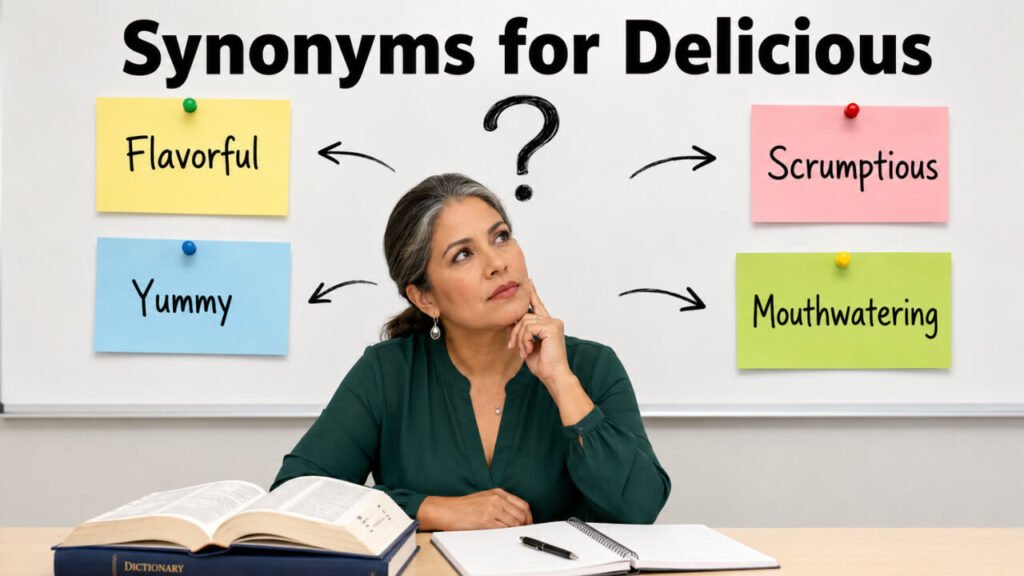
- Tasty: Pleasant to eat.
- Flavorful: Full of strong or rich taste.
- Savory: Salty, seasoned, and pleasing.
- Appetizing: Attractive enough to make someone want food.
- Scrumptious: Very delicious and enjoyable.
- Mouthwatering: Extremely tempting to eat.
- Delectable: Highly pleasing in taste.
- Yummy: Informal word for delicious.
- Palatable: Pleasant or acceptable to taste.
- Delightful: Very pleasant and enjoyable.
- Toothsome: Pleasant in taste and texture.
- Luscious: Rich, sweet, and pleasing.
- Rich: Full, deep, and satisfying in flavor.
- Tantalizing: Tempting and exciting to the senses.
- Heavenly: Extremely enjoyable in taste.
- Divine: Wonderfully delicious or pleasing.
- Exquisite: Finely made and very pleasing.
- Enjoyable: Pleasant to taste or experience.
- Pleasant: Mildly good and agreeable.
- Satisfying: Giving pleasure and fullness.
- Tempting: Making someone want to eat.
- Inviting: Appealing in appearance or smell.
- Aromatic: Having a pleasant, noticeable smell.
- Fragrant: Sweet or pleasing in smell.
- Succulent: Juicy, tender, and tasty.
- Juicy: Full of pleasant liquid or flavor.
- Tender: Soft and easy to chew.
- Fresh: Clean, natural, and pleasant tasting.
- Zesty: Bright, lively, and sharp in flavor.
- Spicy: Having strong spice flavor.
- Tangy: Pleasantly sharp or slightly sour.
- Sweet: Pleasant with sugary flavor.
- Sugary: Very sweet in taste.
- Creamy: Smooth, rich, and soft in texture.
- Buttery: Smooth and rich like butter.
- Nutty: Having a flavor like nuts.
- Earthy: Deep, natural, and grounded in taste.
- Smoky: Having a pleasant smoke flavor.
- Peppery: Sharp and spicy like pepper.
- Herby: Having the fresh taste of herbs.
- Robust: Strong and full in flavor.
- Bold: Strong, clear, and noticeable in taste.
- Delicate: Light, refined, and pleasant.
- Mellow: Smooth, gentle, and balanced.
- Ripe: Fully developed in flavor.
- Wholesome: Pleasant, healthy, and satisfying.
- Moreish: So tasty that you want more.
- Irresistible: Too tempting to refuse.
- Lip smacking: Very tasty and enjoyable.
- Full bodied: Rich, deep, and complete in flavor.
Read Also:
Synonyms for Meeting Place

Synonyms for Delicious by Context
When Delicious Means Tasty
Use these words when the main idea is simple food enjoyment.
Useful Synonyms: Tasty, yummy, enjoyable, pleasant, palatable.
Example: The noodles were tasty with a light garlic sauce.
Example: The warm muffins were yummy and soft.
When Delicious Means Full of Flavor
Use these words when food has rich, strong, or noticeable taste.
Useful Synonyms: Flavorful, robust, bold, rich, full bodied.
Example: The curry was flavorful with balanced spices.
Example: The stew had a robust taste after slow cooking.
When Delicious Means Tempting
Use these words when food looks or smells so good that someone wants to eat it.
Useful Synonyms: Appetizing, mouthwatering, tempting, inviting, tantalizing.
Example: The roasted vegetables looked appetizing on the serving dish.
Example: The smell of fresh bread was mouthwatering.
When Delicious Means Sweet and Rich
Use these words for desserts, fruit, cream, chocolate, and sweet treats.
Useful Synonyms: Luscious, sweet, sugary, creamy, heavenly.
Example: The ripe strawberries tasted luscious.
Example: The creamy custard was heavenly.
When Delicious Means Elegant or Refined
Use these words in polished writing, food descriptions, or formal praise.
Useful Synonyms: Delectable, exquisite, delightful, divine, delicate.
Example: The restaurant served a delectable mushroom tart.
Example: The dessert had an exquisite balance of fruit and cream.
When Delicious Means Juicy or Tender
Use these words when texture is an important part of the eating experience.
Useful Synonyms: Succulent, juicy, tender, fresh, ripe.
Example: The grilled vegetables were tender and full of flavor.
Example: The ripe peach was juicy and sweet.
Another Word for Delicious
Another word for delicious is tasty. It is the simplest and most natural replacement in everyday speech. However, the best alternative depends on context. Choose flavorful for rich taste, appetizing for appearance or smell, delectable for refined writing, and mouthwatering for strong temptation.
Original: The chicken was delicious.
Better Option: The chicken was flavorful and tender.
Original: The cake looked delicious.
Better Option: The cake looked appetizing with its smooth cream topping.
Original: The soup smelled delicious.
Better Option: The soup smelled mouthwatering as it simmered.
Original: The dessert was delicious.
Better Option: The dessert was delectable and beautifully balanced.
When Not to Use “Delicious”
Do not use “delicious” too many times in the same paragraph. Repetition can make food writing sound basic. Also avoid it when a more exact word gives better meaning. For example, “savory” is better for salty dishes, “sweet” is better for sugary taste, and “tangy” is better for sharp flavor.
Weak: The delicious food had a delicious smell and a delicious sauce.
Better: The flavorful food had a mouthwatering smell and a rich sauce.
Weak: The lemon dressing was delicious.
Better: The lemon dressing was tangy and refreshing.
Weak: The grilled mushrooms were delicious.
Better: The grilled mushrooms were smoky, tender, and savory.
Weak: The dessert was very very delicious.
Better: The dessert was luscious, creamy, and satisfying.
Words Commonly Confused With Delicious
Delicious vs Tasty: “Delicious” is stronger and more expressive, while “tasty” is simpler and more casual.
Delicious vs Flavorful: “Delicious” means very pleasant to eat, while “flavorful” means full of noticeable taste.
Delicious vs Appetizing: “Delicious” describes taste, while “appetizing” often describes appearance or smell before eating.
Delicious vs Savory: “Delicious” can describe any pleasant food, while “savory” usually means salty, seasoned, or not sweet.
Delicious vs Palatable: “Delicious” is strongly positive, while “palatable” means acceptable or pleasant enough.
Delicious vs Delectable: “Delicious” is common and flexible, while “delectable” sounds more elegant and polished.
Delicious vs Sweet: “Delicious” describes general enjoyment, while “sweet” describes a specific sugary flavor.
Which Synonym Should You Choose?
Choose tasty when you need a simple everyday word for good food.
Choose flavorful when writing about rich taste, spices, herbs, sauces, or seasoning.
Choose savory when describing salty, seasoned, meaty, cheesy, or vegetable based food.
Choose appetizing when food looks or smells attractive before someone tastes it.
Choose mouthwatering when food feels strongly tempting and exciting.
Choose delectable when writing in a polished, elegant, or descriptive style.
Choose yummy when speaking casually, warmly, or simply.
Choose palatable when the meaning is acceptable or pleasant enough, not extremely delicious.
Choose luscious when describing rich desserts, ripe fruit, or sweet creamy food.
Choose succulent when describing juicy, tender food with pleasing texture.
Real Life Examples of “Delicious” in Sentences
Original: The pizza was delicious.
Better Option: The pizza was savory, cheesy, and full of flavor.
Original: The soup tasted delicious.
Better Option: The soup tasted rich and flavorful.
Original: The cake was delicious.
Better Option: The cake was moist, sweet, and luscious.
Original: The salad looked delicious.
Better Option: The salad looked fresh and appetizing.
Original: The grilled fish smelled delicious.
Better Option: The grilled fish smelled mouthwatering with lemon and herbs.
Original: The sauce was delicious.
Better Option: The sauce was tangy, creamy, and well balanced.
Original: The fruit was delicious.
Better Option: The fruit was ripe, juicy, and sweet.
Original: The dinner was delicious.
Better Option: The dinner was satisfying from the first bite to the last.
Original: The sandwich was delicious.
Better Option: The sandwich was tasty, fresh, and filling.
Original: The dessert was delicious.
Better Option: The dessert was delectable with a smooth chocolate finish.
Synonym Groups and Usage Differences
Taste Group
This group focuses on general pleasant flavor. Words like tasty, yummy, and palatable are useful when you want a simple description.
Example: The pasta was tasty with a light tomato sauce.
Flavor Strength Group
This group describes food with deeper, richer, or stronger taste. Words like flavorful, robust, bold, and rich work well for sauces, soups, spices, and slow cooked meals.
Example: The stew was robust after hours of cooking.
Temptation Group
This group describes food that makes someone want to eat it. Words like mouthwatering, appetizing, tempting, and irresistible are useful for appearance and aroma.
Example: The fresh bread was irresistible when it came out warm.
Sweetness Group
This group works best for desserts, fruit, and sweet drinks. Words like luscious, sweet, creamy, and heavenly describe richness and pleasure.
Example: The creamy pudding tasted heavenly.
Texture Group
This group describes how food feels when eaten. Words like succulent, juicy, tender, and crisp can be better than “delicious” when texture matters.
Example: The roasted carrots were tender and slightly sweet.
Elegant Praise Group
This group works well in refined descriptions. Words like delectable, exquisite, divine, and delightful sound more polished.
Example: The chef served a delectable lemon tart.
Antonyms of Delicious
Tasteless: Having little or no flavor.
Bland: Lacking strong or interesting taste.
Unappetizing: Not attractive or tempting to eat.
Disgusting: Very unpleasant to taste, smell, or see.
Repulsive: Strongly unpleasant and difficult to accept.
Stale: No longer fresh in taste or smell.
Sour: Sharp in an unpleasant way when not intended.
Bitter: Harsh or unpleasant in taste.
Overcooked: Cooked too much and unpleasant in texture or flavor.
Flavorless: Having no clear taste.
Comparison: Delicious vs Related Words
Delicious vs Tasty
“Delicious” is stronger than “tasty.” Use “tasty” for simple praise and “delicious” when the food is very enjoyable.
Example With Delicious: The homemade lasagna was delicious.
Example With Tasty: The snack was tasty and easy to make.
Delicious vs Flavorful
“Delicious” describes enjoyment, while “flavorful” describes the strength or richness of taste.
Example With Delicious: The meal was delicious.
Example With Flavorful: The meal was flavorful because of the spices.
Delicious vs Appetizing
“Delicious” usually comes after tasting food. “Appetizing” often describes how food looks or smells before eating.
Example With Delicious: The curry was delicious.
Example With Appetizing: The curry looked appetizing in the bowl.
Delicious vs Savory
“Delicious” can describe sweet or salty food. “Savory” usually describes salty, seasoned, or non sweet food.
Example With Delicious: The dessert was delicious.
Example With Savory: The vegetable pie was savory and warm.
Delicious vs Delectable
“Delicious” is common in daily speech. “Delectable” sounds more polished, elegant, and descriptive.
Example With Delicious: The cookies were delicious.
Example With Delectable: The bakery offered a delectable almond tart.
Delicious vs Palatable
“Delicious” means very pleasing. “Palatable” can simply mean acceptable or pleasant enough.
Example With Delicious: The sauce was delicious.
Example With Palatable: The plain soup was palatable but not exciting.
Common Phrases and Expressions With Delicious
Delicious Food: Food that tastes very good.
Delicious Meal: A full meal that is pleasant and satisfying.
Delicious Taste: A very enjoyable flavor.
Delicious Smell: An aroma that makes food seem tempting.
Absolutely Delicious: Strong praise for something very tasty.
Truly Delicious: A sincere way to say something tastes excellent.
Looks Delicious: Used when food appears attractive and tempting.
Smells Delicious: Used when food has a pleasant aroma.
Delicious Dessert: A sweet dish that tastes very good.
Delicious Flavor: A pleasing and memorable taste.
Common Mistakes to Avoid
One common mistake is using “delicious” for every food description. Better writing uses specific words like savory, tangy, creamy, juicy, or flavorful when those details are more accurate.
Another mistake is using a synonym that does not fit the food type. For example, “savory” is not suitable for a sweet cake, and “sugary” is not suitable for a salty soup.
Avoid vague praise when detail would help the reader. Instead of saying “The dish was delicious,” explain whether it was rich, spicy, fresh, smoky, tender, sweet, or creamy.
Also avoid unnatural phrases like “very mouthwatering taste.” A smoother phrase is “a mouthwatering aroma” or “a mouthwatering dish.”
Conclusion
Synonyms for delicious help you describe food with more accuracy, feeling, and variety. Use tasty for simple everyday praise, flavorful for rich taste, appetizing for tempting appearance, mouthwatering for strong desire, and delectable for elegant writing. Words like savory, luscious, succulent, and tangy add clearer detail when taste, texture, or flavor type matters. Choosing the right synonym makes your writing more natural, useful, and expressive.
FAQs About Synonyms for Delicious
What is the best synonym for delicious?
The best synonym for delicious is tasty for everyday use. For richer description, use flavorful, mouthwatering, delectable, or appetizing depending on context.
What is a formal synonym for delicious?
A formal synonym for delicious is delectable. You can also use exquisite, delightful, or divine in polished descriptive writing.
What is a casual synonym for delicious?
A casual synonym for delicious is yummy. It works well in friendly speech, simple comments, and relaxed conversations.
What is another word for very delicious?
Another word for very delicious is mouthwatering. You can also use scrumptious, heavenly, irresistible, or delectable.
Is flavorful the same as delicious?
Flavorful and delicious are related, but they are not exactly the same. Flavorful means full of taste, while delicious means very pleasant to eat.
Can delicious describe smell?
Yes, delicious can describe smell when the aroma is pleasant and makes food seem tasty. For example, fresh bread can smell delicious.
What is the opposite of delicious?
The opposite of delicious can be tasteless, bland, unappetizing, stale, or disgusting, depending on the exact meaning.
