
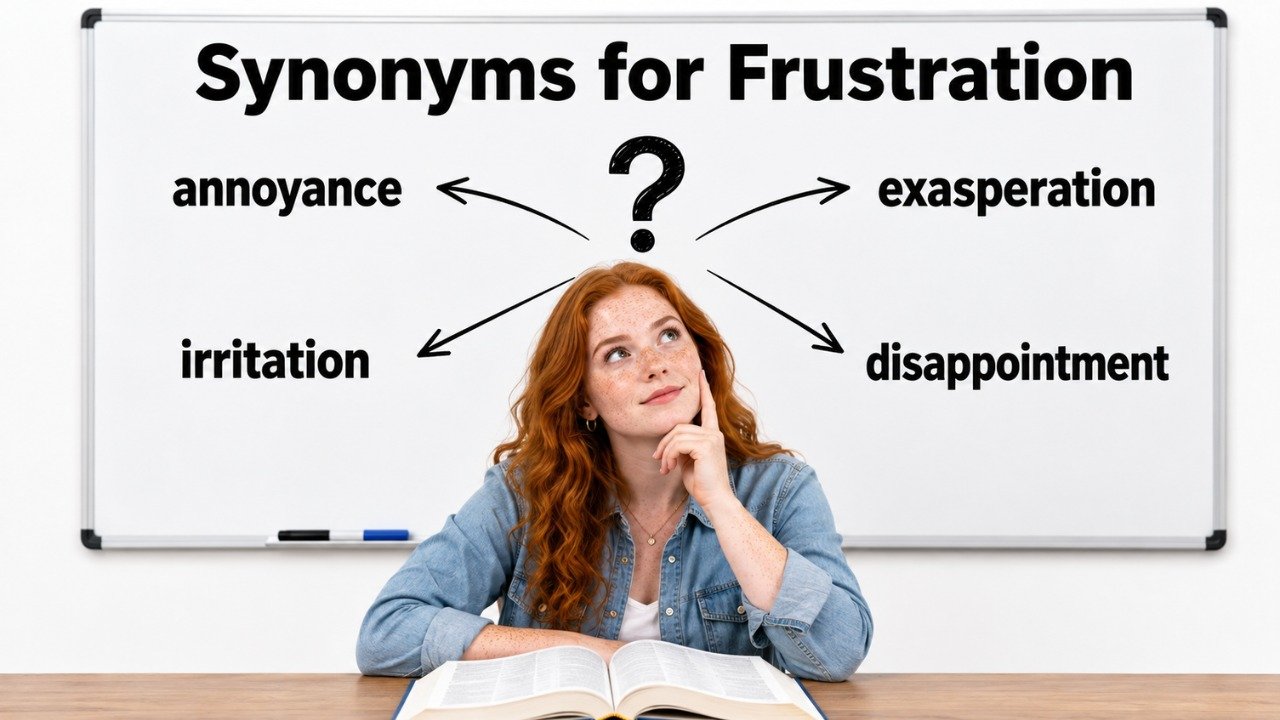
Quick Answer: The best synonyms for frustration include annoyance, irritation, disappointment, exasperation, aggravation, discouragement, dissatisfaction, resentment, impatience, and distress. Use annoyance for mild frustration, irritation for an ongoing bothersome feeling, exasperation for strong frustration after repeated problems, disappointment when expectations are not met, and discouragement when frustration reduces confidence or motivation. Aggravation works well in everyday conversation, while dissatisfaction is often more suitable for formal or professional contexts.
Pronunciation and Word Details
Word: Frustration.
Pronunciation: /frʌˈstreɪʃən/
Part of Speech: Noun.
Meaning: A feeling of annoyance, disappointment, or discouragement caused by being unable to achieve something or solve a problem.
US Pronunciation:
UK Pronunciation:
What Does “Frustration” Mean?
Frustration means a feeling of annoyance, disappointment, or emotional tension that occurs when something prevents a person from reaching a goal, solving a problem, or getting the result they expected.
As a noun, frustration can describe both the emotional feeling itself and the situation that causes that feeling.
Emotional Feeling: Frustration grew as he tried repeatedly to fix the problem.
Blocked Goal: The constant delays became a major source of frustration.
Disappointment: She felt frustration when months of preparation produced little progress.
Everyday Difficulty: Waiting for an unclear answer caused unnecessary frustration.
The word can describe mild irritation, strong exasperation, disappointment, discouragement, or emotional strain depending on the situation.
Meaning, Tone, and Context of “Frustration”
Frustration is a common and generally neutral word, although the emotion it describes is negative. It can appear naturally in casual conversation, professional communication, academic writing, personal descriptions, and formal reports.
Neutral Use: Frustration can describe an emotional response without making the situation sound dramatic.
Emotional Use: It can express stronger feelings when someone repeatedly faces obstacles or failure.
Professional Use: Frustration may describe difficulties involving communication, procedures, performance, or expectations.
Academic Use: The word can describe emotional responses to barriers, limitations, failure, or unmet goals.
Conversational Use: People commonly use frustration to describe irritating situations in work, study, relationships, travel, technology, and everyday responsibilities.
The exact synonym depends largely on the strength and cause of the emotion. Annoyance is usually milder, exasperation is stronger, disappointment emphasizes unmet expectations, and discouragement focuses on lost motivation.
When and How to Use “Frustration”
For Repeated Problems: Use frustration when difficulties continue and prevent progress.
Example: His frustration increased after the same error appeared several times.
For Blocked Goals: Use frustration when someone cannot achieve an intended result.
Example: She expressed frustration at being unable to complete the project on schedule.
For Unmet Expectations: Use frustration when reality does not match what someone hoped would happen.
Example: The lack of improvement caused considerable frustration.
For Difficult Communication: Use frustration when unclear information or misunderstanding creates emotional tension.
Example: Repeated misunderstandings created frustration between the two colleagues.
For Delays: Frustration works naturally when waiting prevents progress.
Example: Long delays caused frustration among everyone involved.
For Personal Struggles: Use the word when describing difficulty learning, improving, or solving something.
Example: He experienced frustration while learning the complicated process.
Best Synonyms for Frustration
Annoyance: A mild feeling of displeasure or irritation.
Example: Her annoyance grew as the interruptions continued.
Irritation: A feeling of being bothered, disturbed, or slightly angry.
Example: He could not hide his irritation with the repeated questions.
Exasperation: Strong frustration caused by repeated difficulties or irritating behavior.
Example: She sighed in exasperation after explaining the instructions again.
Aggravation: Annoyance or frustration caused by a troublesome situation.
Example: The unexpected delay caused considerable aggravation.
Disappointment: Sadness or frustration because expectations were not fulfilled.
Example: The result brought disappointment after weeks of preparation.
Discouragement: A loss of confidence, hope, or motivation caused by difficulty.
Example: Several unsuccessful attempts led to discouragement.
Dissatisfaction: A feeling that something is not good enough or does not meet expectations.
Example: Customers expressed dissatisfaction with the confusing procedure.
Impatience: Annoyance caused by waiting or slow progress.
Example: His impatience became obvious as the meeting continued.
Resentment: Lasting anger or bitterness caused by unfair treatment or disappointment.
Example: Years of being overlooked created resentment.
Distress: Strong emotional discomfort, worry, or unhappiness.
Example: The uncertainty caused considerable distress.
50 Synonyms for Frustration With Short Meanings
- Annoyance: Mild displeasure caused by something bothersome.
- Irritation: A feeling of being repeatedly bothered or disturbed.
- Exasperation: Strong annoyance caused by repeated difficulties.
- Aggravation: Frustration resulting from an irritating situation.
- Disappointment: Sadness because expectations were not fulfilled.
- Discouragement: Loss of confidence or motivation after difficulty.
- Dissatisfaction: Unhappiness because something does not meet expectations.
- Impatience: Annoyance caused by waiting or slow progress.
- Resentment: Lasting bitterness caused by unfairness or disappointment.
- Distress: Strong emotional discomfort or unhappiness.
- Displeasure: A general feeling of dissatisfaction or annoyance.
- Discontent: Unhappiness with an existing situation.
- Discontentment: A state of being unsatisfied with circumstances.
- Vexation: Annoyance caused by difficulty or inconvenience.
- Disappointment: Emotional dissatisfaction after an unfavorable result.
- Disillusionment: Disappointment after discovering reality is less positive than expected.
- Despair: A strong feeling that improvement may be impossible.
- Desperation: Extreme distress caused by a difficult situation.
- Anger: A strong feeling of displeasure.
- Rage: Very intense anger.
- Fury: Extreme anger or emotional intensity.
- Indignation: Anger caused by something considered unfair.
- Disgruntlement: Dissatisfaction accompanied by annoyance.
- Unease: Mild emotional discomfort or dissatisfaction.
- Discomfort: An unpleasant emotional or mental feeling.
- Stress: Mental pressure caused by demands or difficulties.
- Tension: Emotional strain caused by pressure or conflict.
- Strain: Mental or emotional pressure created by difficulty.
- Anxiety: Worry or nervousness caused by uncertainty.
- Upset: Emotional disturbance caused by an unpleasant situation.
- Disquiet: A feeling of worry or uneasiness.
- Trouble: Emotional difficulty or concern.
- Dismay: Distress caused by an unexpected negative development.
- Dejection: Low spirits caused by disappointment or failure.
- Defeat: A feeling of having been overcome by difficulty.
- Helplessness: A feeling of being unable to improve a situation.
- Powerlessness: The feeling of lacking control or influence.
- Impotence: A sense of being unable to change or affect something.
- Demoralization: Loss of confidence, enthusiasm, or hope.
- Disheartenment: Reduced courage or motivation after difficulty.
- Weariness: Mental or emotional tiredness caused by continued difficulty.
- Fatigue: Exhaustion that may result from prolonged effort or stress.
- Bother: Mild annoyance or inconvenience.
- Troublesomeness: The quality of causing difficulty or irritation.
- Provocation: Something that causes irritation or anger.
- Bitterness: Lasting resentment following disappointment or unfairness.
- Unhappiness: A general state of emotional dissatisfaction.
- Dissatisfaction: Lack of contentment with a result or situation.
- Disillusion: A feeling of disappointment after losing an idealized belief.
- Heartache: Emotional pain caused by disappointment or difficulty.
Read Also:
Synonyms for Customer Service

Synonyms for Frustration by Context
When Frustration Means Mild Annoyance
When frustration describes a relatively small inconvenience, words such as annoyance, irritation, bother, displeasure, and vexation may sound more precise.
Annoyance: Best for a mild negative reaction.
Example: The constant notifications became an annoyance.
Irritation: Best when something repeatedly bothers someone.
Example: His irritation increased whenever the mistake happened again.
Bother: Useful in casual speech for minor frustration.
Example: The additional paperwork was more of a bother than a serious problem.
Vexation: Useful for annoyance caused by difficulty or inconvenience.
Example: To her vexation, the issue returned the following morning.
When Frustration Means Strong Annoyance
Strong frustration is often better expressed with exasperation, aggravation, anger, fury, or desperation.
Exasperation: Best when someone has reached the limit of their patience.
Example: He raised his hands in exasperation after another failed attempt.
Aggravation: Suitable for troublesome situations that create significant annoyance.
Example: The repeated delays caused unnecessary aggravation.
Anger: Appropriate when frustration becomes a stronger emotional reaction.
Example: Her frustration eventually turned into anger.
When Frustration Means Disappointment
When frustration comes from expectations not being met, disappointment, dissatisfaction, disillusionment, and dismay are useful alternatives.
Disappointment: Best when a hoped for result does not happen.
Example: The final result was a major disappointment.
Dissatisfaction: Best when something fails to meet expected standards.
Example: The team expressed dissatisfaction with the outcome.
Disillusionment: Best when someone loses faith in an idea, person, or situation.
Example: Repeated failures created growing disillusionment.
Dismay: Best for sudden disappointment combined with concern.
Example: She reacted with dismay when she saw the final figures.
When Frustration Means Loss of Motivation
Frustration can sometimes make a person lose confidence or hope. In these situations, discouragement, demoralization, dejection, and disheartenment may be more accurate.
Discouragement: Describes reduced motivation after difficulty.
Example: The early failures caused temporary discouragement.
Demoralization: Describes a serious loss of confidence or enthusiasm.
Example: Constant criticism resulted in demoralization.
Dejection: Emphasizes sadness and low spirits.
Example: He returned home in dejection after another rejection.
When Frustration Comes From Waiting
Impatience is often the strongest replacement when frustration results mainly from waiting, delays, or slow progress.
Impatience: Annoyance caused by waiting longer than expected.
Example: Her impatience increased as the minutes passed.
Restlessness: Difficulty remaining calm while waiting.
Example: The long delay produced visible restlessness.
When Frustration Comes From Lack of Control
Helplessness, powerlessness, and desperation can describe frustration caused by being unable to change a situation.
Helplessness: Feeling unable to solve or influence a problem.
Example: He felt helplessness as the situation became more complicated.
Powerlessness: A lack of control or authority.
Example: The uncertainty created a sense of powerlessness.
Desperation: Extreme emotional pressure when options appear limited.
Example: Months of unsuccessful efforts led to desperation.
Another Word for Frustration
Another word for frustration is annoyance, especially when the emotion is mild or moderate. However, the best alternative depends on why the person feels frustrated and how strong the emotion is.
Use irritation for repeated bothersome situations, exasperation for intense frustration, disappointment for unmet expectations, and discouragement when difficulty reduces motivation.
Original: She felt frustration because the computer kept producing the same error.
Better Option: She felt irritation because the computer kept producing the same error.
Original: His frustration was obvious after explaining the issue five times.
Better Option: His exasperation was obvious after explaining the issue five times.
Original: The poor outcome caused frustration among the participants.
Better Option: The poor outcome caused disappointment among the participants.
Original: Months without progress created frustration.
Better Option: Months without progress created discouragement.
When Not to Use “Frustration”
Frustration is useful, but another word may communicate the exact emotion more clearly.
Avoid using frustration repeatedly when the feeling changes in intensity or meaning. A more specific synonym can make the sentence clearer.
Weak: She felt frustration when the meeting started five minutes late.
Better: She felt mild annoyance when the meeting started five minutes late.
Use disappointment when the main issue is an unmet expectation rather than an obstacle.
Weak: He felt frustration when he did not receive the award.
Better: He felt disappointment when he did not receive the award.
Use exasperation when someone has endured the same irritating situation repeatedly.
Weak: Her frustration showed after answering the same question for the tenth time.
Better: Her exasperation showed after answering the same question for the tenth time.
Use impatience when the problem specifically involves waiting.
Weak: The passengers showed frustration as the delay continued.
Better: The passengers showed impatience as the delay continued.
Use dissatisfaction when discussing formal evaluations, standards, services, or performance.
Weak: The report describes widespread frustration with the results.
Better: The report describes widespread dissatisfaction with the results.
Words Commonly Confused With Frustration
Frustration vs Anger: Frustration often develops because a goal is blocked or a problem cannot be solved. Anger is a broader and usually stronger emotional response to something upsetting, unfair, or offensive.
Frustration vs Annoyance: Annoyance is generally milder. Frustration often involves a barrier, repeated failure, or inability to make progress.
Frustration vs Irritation: Irritation usually describes being bothered by something. Frustration often involves difficulty achieving a desired result.
Frustration vs Disappointment: Disappointment focuses on an outcome failing to meet expectations. Frustration emphasizes difficulty, obstacles, or blocked progress.
Frustration vs Exasperation: Exasperation is usually stronger than frustration and often develops after repeated irritation or failed attempts.
Frustration vs Discouragement: Frustration describes emotional tension caused by difficulty. Discouragement describes the resulting loss of confidence, motivation, or hope.
Frustration vs Dissatisfaction: Dissatisfaction means something does not meet expectations or standards. Frustration often involves active difficulty trying to change or accomplish something.
Frustration vs Resentment: Frustration may be temporary, while resentment is usually longer lasting and often connected to perceived unfairness.
Which Synonym Should You Choose?
Choose annoyance when describing mild frustration in everyday situations.
Choose irritation when something repeatedly bothers or inconveniences someone.
Choose exasperation when repeated problems have exhausted someone’s patience.
Choose aggravation in conversational writing when describing a troublesome or irritating situation.
Choose disappointment when expectations are not fulfilled.
Choose discouragement when difficulties reduce confidence, enthusiasm, or motivation.
Choose dissatisfaction in reports, evaluations, professional communication, and formal discussions about standards or performance.
Choose impatience when frustration results mainly from waiting or slow progress.
Choose resentment when frustration develops into lasting bitterness because of perceived unfairness.
Choose distress when the emotional experience is serious and involves worry or suffering.
For essays and reports, dissatisfaction, disappointment, discouragement, or exasperation may provide greater precision depending on the context. In casual conversation, annoyance, irritation, and aggravation often sound more natural.
Real Life Examples of “Frustration” in Sentences
Original: She expressed frustration about the repeated delays.
Better Option: She expressed irritation about the repeated delays.
Original: His frustration increased after the third unsuccessful attempt.
Better Option: His exasperation increased after the third unsuccessful attempt.
Original: The students experienced frustration when the instructions were unclear.
Better Option: The students experienced confusion and annoyance when the instructions were unclear.
Original: Her frustration was caused by the disappointing result.
Better Option: Her disappointment was caused by the unfavorable result.
Original: The long waiting period created frustration.
Better Option: The long waiting period created impatience.
Original: Continued failure led to frustration.
Better Option: Continued failure led to discouragement.
Original: Employees expressed frustration with the new procedure.
Better Option: Employees expressed dissatisfaction with the new procedure.
Original: His frustration eventually became difficult to hide.
Better Option: His irritation eventually became difficult to hide.
Original: She felt frustration because she could not influence the decision.
Better Option: She felt powerless because she could not influence the decision.
Original: Years of unfair treatment caused frustration.
Better Option: Years of unfair treatment caused resentment.
Synonym Groups and Usage Differences
Mild Annoyance Group
Annoyance, irritation, bother, displeasure, and vexation describe relatively mild forms of frustration. They work best when the problem is inconvenient rather than emotionally overwhelming.
Example: His irritation grew as the interruptions continued.
Strong Frustration Group
Exasperation, aggravation, anger, desperation, and fury describe stronger emotional reactions. Exasperation is particularly useful for frustration caused by repeated problems.
Example: She closed the document in exasperation after another error appeared.
Disappointment Group
Disappointment, dissatisfaction, disillusionment, dismay, and discontent describe frustration connected with unmet expectations.
Example: There was widespread dissatisfaction with the final outcome.
Discouragement Group
Discouragement, demoralization, disheartenment, dejection, and despair emphasize declining confidence or hope.
Example: Several unsuccessful applications led to discouragement.
Emotional Pressure Group
Distress, stress, tension, strain, and anxiety describe emotional pressure that can accompany frustration.
Example: The continued uncertainty created significant stress.
Lack of Control Group
Helplessness, powerlessness, impotence, and desperation describe frustration caused by an inability to influence events.
Example: The sudden change left him with a sense of powerlessness.
Antonyms of Frustration
The opposite of frustration depends on whether frustration refers to annoyance, disappointment, difficulty, or blocked progress.
Satisfaction: A feeling that expectations or needs have been fulfilled.
Contentment: A peaceful feeling of being satisfied with a situation.
Fulfillment: Satisfaction gained from achieving something meaningful.
Pleasure: A feeling of enjoyment or happiness.
Delight: Strong happiness or satisfaction.
Relief: Comfort that follows the removal of difficulty or worry.
Calmness: A state without agitation or emotional tension.
Patience: The ability to wait or handle difficulty without becoming annoyed.
Encouragement: Support or confidence that increases motivation.
Success: Achievement of an intended result.
Achievement: Successful completion of a goal.
Ease: Freedom from difficulty, effort, or stress.
Comparison: Frustration vs Related Words
Frustration vs Annoyance
Frustration usually involves being prevented from achieving something. Annoyance can result from almost any bothersome experience and is normally milder.
Example With Frustration: She felt frustration because every attempt to submit the form failed.
Example With Annoyance: She felt annoyance when her phone rang during dinner.
Frustration vs Irritation
Irritation emphasizes being bothered. Frustration emphasizes obstacles and lack of progress.
Example With Frustration: His frustration grew because he could not solve the problem.
Example With Irritation: His irritation grew because someone kept interrupting him.
Frustration vs Exasperation
Exasperation is usually a stronger form of frustration caused by repeated problems or irritating behavior.
Example With Frustration: She felt frustration after the first failed attempt.
Example With Exasperation: She sighed in exasperation after the tenth failed attempt.
Frustration vs Disappointment
Frustration focuses on obstacles or difficulty achieving something. Disappointment focuses on an outcome being worse than expected.
Example With Frustration: He experienced frustration while trying to complete the complicated task.
Example With Disappointment: He experienced disappointment when his final score was lower than expected.
Frustration vs Discouragement
Frustration is an emotional reaction to difficulty. Discouragement is the loss of motivation that difficulty may produce.
Example With Frustration: The repeated errors caused frustration.
Example With Discouragement: The repeated errors caused him to lose confidence and feel discouragement.
Frustration vs Dissatisfaction
Frustration often includes an active struggle against a problem. Dissatisfaction simply means something does not meet expectations.
Example With Frustration: The complicated process created frustration.
Example With Dissatisfaction: The disappointing quality created dissatisfaction.
Frustration vs Anger
Frustration can develop into anger, but the two feelings are not identical. Frustration usually begins with difficulty or blocked goals, while anger can have many causes.
Example With Frustration: He felt frustration because the task could not be completed.
Example With Anger: He felt anger because someone had deliberately damaged his work.
Frustration vs Resentment
Frustration can be temporary, but resentment usually develops over time and involves bitterness about unfairness or mistreatment.
Example With Frustration: The delayed response caused temporary frustration.
Example With Resentment: Years of being ignored created lasting resentment.
Common Phrases and Expressions With Frustration
Express Frustration: To communicate feelings of annoyance or disappointment.
Example: Several employees expressed frustration about the delays.
Feel Frustration: To experience annoyance because progress is difficult.
Example: It is normal to feel frustration when learning something challenging.
Growing Frustration: Frustration that becomes stronger over time.
Example: Growing frustration became obvious as the discussion continued.
Deep Frustration: A strong feeling caused by serious or persistent obstacles.
Example: She spoke with deep frustration about the lack of progress.
Source of Frustration: Something that repeatedly causes annoyance or difficulty.
Example: The unclear instructions became a major source of frustration.
Sense of Frustration: The general feeling of being unable to make progress.
Example: A sense of frustration spread through the group.
Out of Frustration: Acting because frustration has become emotionally difficult.
Example: He closed the document out of frustration.
Frustration Builds: Frustration gradually becomes stronger.
Example: Frustration builds when problems remain unresolved.
Frustration Over Something: Annoyance or disappointment regarding a particular issue.
Example: She expressed frustration over the repeated changes.
Frustration With Something: Difficulty or annoyance caused by a particular person, process, or situation.
Example: His frustration with the complicated system continued to grow.
Common Mistakes to Avoid
One common mistake is using frustration for every negative emotion. Frustration has a specific connection to blocked goals, repeated difficulty, obstacles, unmet expectations, or lack of progress.
Repetition: Avoid repeating frustration several times in one paragraph when a more precise synonym would improve clarity.
Weak: Her frustration increased, and the frustration affected her motivation because the frustration continued for weeks.
Better: Her frustration increased, and the continued discouragement eventually affected her motivation.
Wrong Intensity: Do not use a very strong synonym such as fury when the situation involves only mild inconvenience.
Weak: He felt fury because the page loaded slowly.
Better: He felt irritation because the page loaded slowly.
Wrong Meaning: Do not automatically replace frustration with disappointment. The two words overlap, but disappointment focuses more strongly on unmet expectations.
Weak: She experienced disappointment while trying repeatedly to unlock the door.
Better: She experienced frustration while trying repeatedly to unlock the door.
Unnatural Phrasing: Choose expressions that sound natural in the sentence.
Weak: He performed frustration about the delay.
Better: He expressed frustration about the delay.
Vague Usage: Explain the cause when the context does not make it obvious.
Weak: There was considerable frustration.
Better: There was considerable frustration because repeated technical problems prevented the team from completing the task.
Confusing Irritation and Frustration: Irritation describes being bothered, while frustration commonly involves unsuccessful effort or blocked progress.
Practical Advice: Select the synonym that identifies both the cause and intensity of the emotion rather than simply choosing another negative word.
Conclusion
Understanding synonyms for frustration helps you describe emotions with greater precision. Annoyance and irritation work well for mild problems, while exasperation and aggravation express stronger reactions to repeated difficulty. Disappointment fits unmet expectations, discouragement describes lost motivation, impatience suits delays, and dissatisfaction works well in formal contexts. Choosing the right alternative depends on what caused the frustration, how intense the feeling is, and whether you are writing for conversation, professional communication, or a more formal setting.
FAQs About Synonyms for Frustration
What Is the Best Synonym for Frustration?
The best general synonym is annoyance, but irritation, exasperation, disappointment, and aggravation may be more accurate depending on the situation.
What Is a Stronger Word for Frustration?
Exasperation is often stronger than frustration because it suggests that repeated problems have pushed someone close to the limit of their patience.
What Is a Formal Synonym for Frustration?
Dissatisfaction is useful in formal reports and professional writing, particularly when discussing results, performance, procedures, or expectations.
Is Irritation the Same as Frustration?
Not exactly. Irritation means being bothered or annoyed, while frustration usually involves difficulty making progress or achieving a desired goal.
What Is Another Word for Emotional Frustration?
Depending on the intensity, emotional frustration can be described as distress, discouragement, exasperation, disappointment, or resentment.
What Word Describes Frustration From Waiting?
Impatience is usually the best choice when frustration is specifically caused by waiting, delays, or slow progress.
What Is the Difference Between Frustration and Disappointment?
Frustration usually results from obstacles or difficulty achieving something. Disappointment occurs when an outcome fails to meet expectations.
