
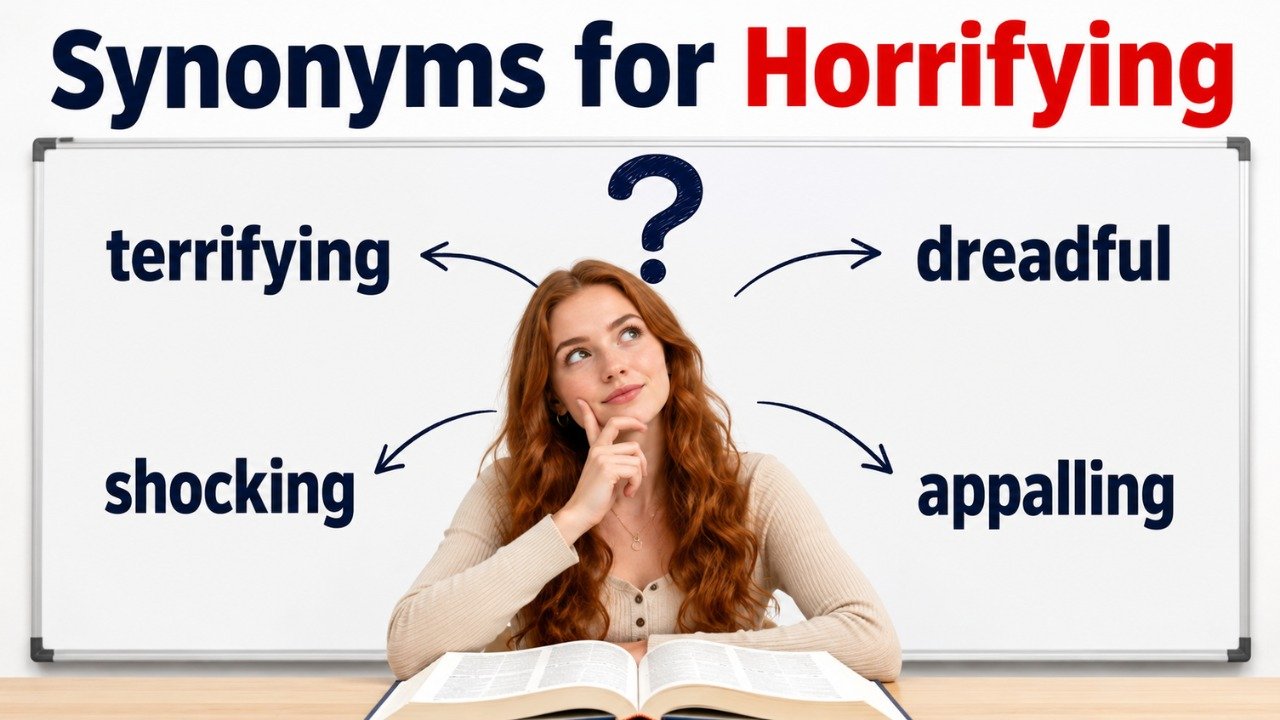
Quick Answer: Synonyms for horrifying include terrifying, frightening, horrific, appalling, shocking, dreadful, gruesome, ghastly, harrowing, and nightmarish. Use terrifying when something causes intense fear, appalling when an action causes moral shock or disgust, gruesome for graphic injury or death, harrowing for an emotionally painful experience, and horrific for an extremely severe event. The best synonym depends on whether you want to describe fear, shock, suffering, violence, disgust, or emotional distress.
Pronunciation and Word Details
Word: Horrifying.
Pronunciation: /ˈhɔːrəfaɪɪŋ/.
Part of Speech: Adjective.
Meaning: Causing intense fear, shock, disgust, or emotional distress.
US Pronunciation:
UK Pronunciation:
What Does “Horrifying” Mean?
Horrifying means causing extreme fear, shock, disgust, or emotional distress. It is mainly used as an adjective to describe an event, sight, discovery, experience, action, or piece of information that deeply upsets or frightens someone.
The word comes from the verb horrify, which means to fill someone with horror. Horrifying can describe something physically frightening, morally shocking, emotionally painful, or visually disturbing.
Physical Fear: A horrifying creature may make someone feel terrified.
Moral Shock: A horrifying act may cause anger and disgust because it is cruel or unacceptable.
Emotional Distress: A horrifying experience may leave someone deeply shaken.
Graphic Detail: A horrifying scene may contain disturbing injuries, destruction, or violence.
The exact meaning changes slightly according to the noun it describes. A horrifying sound creates fear, while a horrifying truth causes shock. A horrifying accident may involve severe damage or suffering, while horrifying behavior may be cruel or morally unacceptable.
Meaning, Tone, and Context of “Horrifying”
Horrifying has a strong, emotional, and negative tone. It is much more intense than words such as unpleasant, worrying, or bad. It suggests that something produces a powerful reaction of fear, horror, disgust, or distress.
Emotional Tone: Horrifying expresses a strong personal reaction.
Formality: It is suitable for both formal and conversational writing.
Strength: It describes something extremely disturbing rather than mildly uncomfortable.
Common Context: It often appears with words such as event, accident, scene, experience, discovery, truth, crime, injury, conditions, and consequences.
In formal reports, horrifying may be replaced with more precise terms such as severe, disturbing, appalling, or traumatic. In stories and conversation, horrifying creates a vivid emotional effect.
The word is commonly used when describing frightening experiences, cruel behavior, shocking discoveries, serious accidents, graphic scenes, dangerous conditions, and emotionally painful events.
When and How to Use “Horrifying”
For Intense Fear
Use horrifying when something creates a powerful feeling of fear or horror.
Example: The hikers heard a horrifying scream coming from the forest.
For Shocking Discoveries
Use horrifying when new information causes extreme shock or disbelief.
Example: The investigators made a horrifying discovery inside the abandoned building.
For Cruel Behavior
Use horrifying when an action is so cruel or immoral that it causes disgust.
Example: The witness described the horrifying treatment of the animals.
For Graphic Scenes
Use horrifying when a sight contains disturbing injury, destruction, or violence.
Example: The emergency workers arrived at a horrifying scene.
For Emotional Experiences
Use horrifying when an experience causes lasting fear, pain, or emotional distress.
Example: Being trapped during the storm was a horrifying experience.
For Severe Consequences
Use horrifying when the results of an action are extremely damaging or disturbing.
Example: Ignoring the warning signs could have horrifying consequences.
For Disturbing Information
Use horrifying when facts or details are difficult to accept because they reveal suffering or danger.
Example: The report contained horrifying details about the unsafe conditions.
For Dramatic Storytelling
Use horrifying to create a powerful emotional response in a story or description.
Example: A horrifying figure appeared at the end of the dark hallway.
Best Synonyms for Horrifying
Terrifying
Synonym: Causing extreme fear.
Example: The violent storm was terrifying for everyone inside the house.
Frightening
Synonym: Making someone feel afraid.
Example: The sudden movement in the shadows was frightening.
Horrific
Synonym: Extremely shocking, terrible, or disturbing.
Example: The town struggled to recover after the horrific accident.
Appalling
Synonym: Causing strong shock, anger, or disgust.
Example: The workers were living in appalling conditions.
Shocking
Synonym: Causing sudden surprise, alarm, or disbelief.
Example: The investigation revealed shocking evidence.
Dreadful
Synonym: Extremely bad, unpleasant, or frightening.
Example: They received dreadful news early in the morning.
Gruesome
Synonym: Disturbing because of graphic injury, death, or violence.
Example: The story included several gruesome details.
Ghastly
Synonym: Extremely unpleasant, frightening, or shocking.
Example: A ghastly sight greeted them when they entered the room.
Harrowing
Synonym: Extremely painful, distressing, or emotionally difficult.
Example: She shared a harrowing account of her escape.
Nightmarish
Synonym: So frightening or unpleasant that it resembles a nightmare.
Example: The journey became a nightmarish struggle for survival.
50 Synonyms for Horrifying with Short Meanings
- Terrifying: Causing extreme fear.
- Frightening: Making someone feel afraid.
- Scary: Causing fear in a common or conversational way.
- Alarming: Causing sudden concern or fear.
- Shocking: Producing intense surprise or distress.
- Appalling: Causing strong disgust or moral outrage.
- Dreadful: Extremely bad or frightening.
- Awful: Very unpleasant, disturbing, or severe.
- Horrific: Extremely shocking or terrible.
- Ghastly: Shockingly unpleasant or frightening.
- Gruesome: Disturbing because of graphic violence or injury.
- Grisly: Causing horror through disturbing physical details.
- Macabre: Connected with death in a disturbing way.
- Harrowing: Causing deep emotional suffering.
- Chilling: Producing fear or nervousness.
- Spine Chilling: Causing an intense feeling of fear.
- Hair Raising: Extremely frightening or exciting.
- Nightmarish: Resembling a frightening nightmare.
- Bloodcurdling: Causing sudden and intense terror.
- Fearsome: Inspiring great fear or respect.
- Petrifying: Making someone feel unable to move from fear.
- Unnerving: Causing anxiety or loss of confidence.
- Disturbing: Causing worry, discomfort, or emotional upset.
- Distressing: Producing sadness, anxiety, or pain.
- Upsetting: Making someone emotionally troubled.
- Sickening: Causing strong disgust or emotional revulsion.
- Revolting: Extremely disgusting or offensive.
- Repulsive: Creating a strong desire to avoid something.
- Hideous: Extremely ugly, unpleasant, or shocking.
- Monstrous: Shockingly cruel, evil, or unnatural.
- Atrocious: Extremely cruel, wicked, or unacceptable.
- Abominable: Deserving strong disgust or hatred.
- Dire: Extremely serious, dangerous, or urgent.
- Grim: Gloomy, severe, and disturbing.
- Bleak: Without hope and emotionally depressing.
- Sinister: Suggesting danger, evil, or harm.
- Menacing: Appearing likely to cause danger or injury.
- Ominous: Suggesting that something bad will happen.
- Terrible: Extremely bad, severe, or frightening.
- Frightful: Very unpleasant or frightening.
- Horrible: Causing horror, disgust, or strong dislike.
- Horrendous: Extremely unpleasant, shocking, or frightening.
- Bone Chilling: Producing a deep and powerful fear.
- Creepy: Causing an uncomfortable feeling of fear.
- Eerie: Strange and frightening in a mysterious way.
- Traumatic: Causing serious emotional or psychological distress.
- Devastating: Causing extreme damage, sadness, or shock.
- Brutal: Extremely violent, cruel, or severe.
- Savage: Fiercely violent, cruel, or uncontrolled.
- Catastrophic: Causing enormous damage or suffering.
Read Also:
Synonyms for Accident

Synonyms for Horrifying by Context
When Horrifying Means Extremely Frightening
The best choices are terrifying, frightening, petrifying, bloodcurdling, spine chilling, bone chilling, and fearsome. These words focus mainly on fear.
Example: The sound coming from the empty house was terrifying.
Example: The passengers faced a petrifying moment when the aircraft suddenly dropped.
Example: A bloodcurdling scream echoed through the tunnel.
Terrifying is stronger than frightening. Petrifying suggests that fear is so intense that a person feels frozen. Bloodcurdling is highly dramatic and is often used for screams, stories, or sudden moments of terror.
When Horrifying Means Shocking or Unacceptable
Useful synonyms include appalling, shocking, atrocious, abominable, monstrous, and horrific. These words often describe cruelty, injustice, neglect, or unacceptable behavior.
Example: The investigation uncovered appalling working conditions.
Example: The community condemned the atrocious act.
Example: The witness gave a shocking account of the incident.
Appalling is especially effective when something causes moral outrage. Atrocious suggests extreme cruelty or wickedness. Shocking is broader and may describe unexpected information as well as unacceptable behavior.
When Horrifying Describes Graphic Details
The most suitable choices are gruesome, grisly, ghastly, macabre, sickening, and horrific. These words are commonly associated with injury, death, violence, or disturbing visual details.
Example: The novel contains several gruesome scenes.
Example: The rescue team encountered a grisly sight.
Example: The documentary avoided showing the most graphic and sickening details.
Gruesome and grisly are more specific than horrifying because they usually involve physical injury, death, or violence. Macabre often refers to an artistic or unusual fascination with death.
When Horrifying Means Emotionally Painful
Choose harrowing, distressing, traumatic, devastating, disturbing, or upsetting. These alternatives focus on emotional suffering rather than direct physical fear.
Example: Survivors shared harrowing stories of the disaster.
Example: The experience was deeply traumatic for the children.
Example: The sudden loss was devastating for the family.
Harrowing is effective for a difficult experience or personal account. Traumatic suggests lasting emotional harm. Devastating emphasizes severe emotional damage or loss.
When Horrifying Describes Danger
Good alternatives include alarming, dire, ominous, menacing, sinister, and catastrophic. These words emphasize warning signs, threats, or dangerous consequences.
Example: The latest results revealed an alarming increase in risk.
Example: Dark clouds created an ominous atmosphere.
Example: A failure in the system could have catastrophic consequences.
Alarming is useful for reports and data. Ominous suggests that something bad may happen soon. Catastrophic describes consequences involving extreme damage or loss.
When Horrifying Means Strange and Uncomfortable
Choose creepy, eerie, unnerving, chilling, or sinister. These synonyms create fear through mystery, uncertainty, or an unsettling atmosphere.
Example: The empty playground looked eerie after dark.
Example: His calm reaction to the event was unnerving.
Example: A chilling silence filled the building.
Creepy is common in casual speech. Eerie is useful for strange places, sounds, and situations. Unnerving describes something that weakens a person’s sense of confidence or safety.
Another Word for Horrifying
Terrifying is often the best general replacement for horrifying when the main meaning is intense fear. However, the best alternative depends on the exact context. Use appalling for unacceptable behavior, gruesome for graphic details, harrowing for emotional suffering, and horrific for extremely severe events.
Original: The noise from outside was horrifying.
Better Option: The noise from outside was terrifying.
Original: The report described horrifying living conditions.
Better Option: The report described appalling living conditions.
Original: The witness remembered the horrifying details of the crash.
Better Option: The witness remembered the gruesome details of the crash.
Original: She told us about her horrifying journey through the mountains.
Better Option: She told us about her harrowing journey through the mountains.
When Not to Use “Horrifying”
Do not use horrifying for minor inconveniences or ordinary disappointments. The word is very strong and can sound exaggerated when the situation is only slightly unpleasant.
Weak: The restaurant served a horrifying cup of tea.
Better: The restaurant served a disappointing cup of tea.
Avoid horrifying when a more precise word explains the type of reaction more clearly.
Weak: The medical report contained horrifying information.
Better: The medical report contained alarming information.
Do not use horrifying repeatedly in the same paragraph. Repetition reduces its emotional force.
Weak: It was a horrifying night with horrifying noises and a horrifying discovery.
Better: It was a terrifying night filled with eerie noises and a shocking discovery.
Avoid using horrifying when describing graphic content if gruesome or grisly would be more accurate.
Weak: The book contains horrifying descriptions of physical injuries.
Better: The book contains gruesome descriptions of physical injuries.
Do not use horrifying in neutral technical writing unless an emotional description is necessary.
Weak: The machine produced a horrifying reduction in efficiency.
Better: The machine produced a severe reduction in efficiency.
Avoid horrifying when the intended meaning is simply surprising.
Weak: Her unexpected arrival was horrifying.
Better: Her unexpected arrival was surprising.
Words Commonly Confused With Horrifying
Horrifying vs Horrific: Horrifying describes something that causes horror. Horrific describes something extremely terrible or shocking. A horrifying sight produces a reaction, while a horrific accident emphasizes the seriousness of the event.
Horrifying vs Terrifying: Horrifying may involve fear, disgust, shock, or moral outrage. Terrifying mainly focuses on intense fear.
Horrifying vs Frightening: Horrifying is stronger and more emotionally intense. Frightening can describe anything that causes fear, even when the fear is not extreme.
Horrifying vs Shocking: Horrifying suggests horror or deep distress. Shocking emphasizes surprise, disbelief, or sudden emotional impact.
Horrifying vs Gruesome: Horrifying has a broad meaning. Gruesome specifically describes disturbing details involving violence, injury, or death.
Horrifying vs Appalling: Horrifying can describe fear or disgust. Appalling usually describes behavior, conditions, or actions that cause moral outrage.
Horrifying vs Harrowing: Horrifying describes the quality of something that causes horror. Harrowing focuses on an experience that is emotionally painful and difficult to endure.
Horrifying vs Disturbing: Horrifying is much stronger. Disturbing may describe something troubling or uncomfortable without creating extreme fear.
Which Synonym Should You Choose?
Choose terrifying when describing something that causes intense fear.
Choose frightening when you need a common and slightly less intense word.
Choose horrific when writing about an extremely severe accident, event, injury, or disaster.
Choose appalling when describing unacceptable behavior, cruelty, neglect, or poor conditions.
Choose shocking when the main reaction is surprise, disbelief, or sudden alarm.
Choose gruesome when describing graphic details involving injury, violence, or death.
Choose grisly when the physical details are especially unpleasant or disturbing.
Choose harrowing when describing an emotionally painful journey, memory, escape, or personal account.
Choose traumatic when an event causes serious and lasting emotional distress.
Choose alarming when discussing dangerous trends, reports, statistics, or warning signs.
Choose catastrophic when describing consequences involving massive damage or loss.
Choose creepy in casual conversation when something creates mild fear or discomfort.
Choose eerie when a place, sound, or atmosphere feels strange and mysteriously frightening.
Choose ominous when something appears to warn of future danger.
Choose disturbing in formal writing when horrifying sounds too emotional or dramatic.
Choose atrocious when describing extreme cruelty or morally unacceptable behavior.
For reports and essays, appalling, alarming, disturbing, traumatic, and catastrophic are often more precise than horrifying. For conversation and storytelling, terrifying, creepy, nightmarish, chilling, and horrifying create a stronger emotional effect.
Real Life Examples of “Horrifying” in Sentences
Original: The family had a horrifying experience during the flood.
Better Option: The family had a terrifying experience during the flood.
Original: The report revealed horrifying conditions inside the facility.
Better Option: The report revealed appalling conditions inside the facility.
Original: She heard a horrifying sound outside her window.
Better Option: She heard a bloodcurdling sound outside her window.
Original: The rescue workers witnessed a horrifying scene.
Better Option: The rescue workers witnessed a gruesome scene.
Original: He shared a horrifying account of his escape.
Better Option: He shared a harrowing account of his escape.
Original: The investigation uncovered a horrifying truth.
Better Option: The investigation uncovered a shocking truth.
Original: The mistake could have horrifying consequences.
Better Option: The mistake could have catastrophic consequences.
Original: The old building had a horrifying atmosphere.
Better Option: The old building had an eerie atmosphere.
Original: The children were frightened by the horrifying figure.
Better Option: The children were frightened by the menacing figure.
Original: The documentary included horrifying descriptions of the event.
Better Option: The documentary included disturbing descriptions of the event.
Synonym Groups and Usage Differences
Fear Group
This group includes terrifying, frightening, petrifying, fearsome, bloodcurdling, and spine chilling. These words describe situations that create direct and intense fear.
Example: The passengers endured a terrifying journey through the storm.
Terrifying is the strongest general choice. Frightening is less intense. Petrifying suggests being frozen with fear.
Shock and Disgust Group
This group includes appalling, shocking, sickening, revolting, repulsive, atrocious, and abominable. These words describe reactions to cruelty, injustice, offensive behavior, or disgusting conditions.
Example: The inspection revealed appalling levels of neglect.
Appalling is useful for moral criticism. Sickening emphasizes disgust. Atrocious suggests extreme cruelty or unacceptable conduct.
Graphic Detail Group
This group includes gruesome, grisly, ghastly, macabre, and horrific. These words are suitable for descriptions involving injury, death, violence, or disturbing physical details.
Example: The witness avoided describing the gruesome injuries.
Gruesome and grisly are direct and graphic. Macabre often connects death with art, stories, or unusual curiosity.
Emotional Suffering Group
This group includes harrowing, traumatic, distressing, devastating, disturbing, and upsetting. These words emphasize psychological pain, sadness, fear, or emotional damage.
Example: The survivors gave harrowing accounts of their experiences.
Harrowing describes a deeply difficult experience. Traumatic suggests lasting emotional effects. Distressing is more formal and less dramatic.
Danger and Warning Group
This group includes alarming, ominous, dire, sinister, menacing, and catastrophic. These words communicate threats, warning signs, or severe possible outcomes.
Example: The experts described the situation as increasingly alarming.
Alarming is effective for reports. Ominous suggests approaching trouble. Dire indicates a serious and urgent condition.
Mysterious Fear Group
This group includes eerie, creepy, chilling, unnerving, and sinister. These words describe fear created by mystery, silence, strange behavior, or an unusual atmosphere.
Example: An eerie light appeared behind the trees.
Eerie is atmospheric. Creepy is more conversational. Unnerving emphasizes discomfort and loss of confidence.
Antonyms of Horrifying
The opposite of horrifying depends on whether the word refers to fear, disgust, emotional pain, or danger. Something that is not horrifying may feel safe, pleasant, comforting, harmless, or reassuring.
Comforting: Making someone feel less worried or afraid.
Reassuring: Restoring confidence and reducing anxiety.
Calming: Helping someone become peaceful and relaxed.
Pleasant: Enjoyable and agreeable.
Delightful: Highly enjoyable or charming.
Beautiful: Pleasing to see, hear, or experience.
Appealing: Attractive or interesting in a positive way.
Harmless: Unable or unlikely to cause injury or fear.
Safe: Protected from danger or harm.
Encouraging: Giving hope, confidence, or support.
Uplifting: Improving someone’s mood or emotional state.
Wonderful: Extremely good or enjoyable.
Peaceful: Free from fear, violence, or disturbance.
Ordinary: Normal and not unusually frightening.
Inspiring: Producing admiration, hope, or motivation.
Comparison: Horrifying vs Related Words
Horrifying vs Terrifying
Horrifying can produce fear, shock, disgust, or moral outrage. Terrifying focuses mainly on extreme fear.
Example With Horrifying: The investigators uncovered horrifying evidence of cruelty.
Example With Terrifying: The climber faced a terrifying fall from the cliff.
Horrifying vs Horrific
Horrifying describes something that causes horror. Horrific describes something that is extremely terrible or severe.
Example With Horrifying: The horrifying image stayed in her mind for weeks.
Example With Horrific: Several people were injured in the horrific crash.
Horrifying vs Frightening
Horrifying is stronger and may include disgust or shock. Frightening simply means causing fear.
Example With Horrifying: The report revealed horrifying acts of violence.
Example With Frightening: The sudden noise was frightening.
Horrifying vs Gruesome
Horrifying is broad and can describe any source of intense horror. Gruesome is mainly used for disturbing physical details involving violence, injury, or death.
Example With Horrifying: The children heard a horrifying story.
Example With Gruesome: The witness described the gruesome injuries.
Horrifying vs Appalling
Horrifying may relate to fear, danger, or disgust. Appalling mainly expresses strong disapproval, shock, or moral outrage.
Example With Horrifying: A horrifying figure appeared in the doorway.
Example With Appalling: The residents were living in appalling conditions.
Horrifying vs Shocking
Horrifying creates a sense of horror or deep distress. Shocking emphasizes surprise or disbelief.
Example With Horrifying: The rescue team entered a horrifying scene.
Example With Shocking: The announcement contained shocking information.
Horrifying vs Harrowing
Horrifying describes something that causes horror. Harrowing describes an experience that is extremely painful or emotionally difficult.
Example With Horrifying: The building contained a horrifying collection of evidence.
Example With Harrowing: She gave a harrowing account of her survival.
Horrifying vs Disturbing
Horrifying is stronger and more dramatic. Disturbing describes something that causes concern, discomfort, or emotional unease.
Example With Horrifying: The attack had horrifying consequences.
Example With Disturbing: The report revealed a disturbing pattern of behavior.
Common Phrases and Expressions With Horrifying
Horrifying Experience: An event that causes intense fear or emotional distress.
Horrifying Sight: Something extremely frightening or disturbing to see.
Horrifying Discovery: Information or an object that produces shock and horror.
Horrifying Truth: A deeply disturbing fact that was previously unknown.
Horrifying Accident: A severe event involving serious injury, damage, or loss.
Horrifying Scene: A place or situation that causes fear, shock, or disgust.
Horrifying Details: Disturbing information about an event or action.
Horrifying Story: A narrative that creates fear, shock, or emotional distress.
Horrifying Consequences: Extremely serious or damaging results.
Horrifying Conditions: Dangerous, cruel, unhealthy, or unacceptable circumstances.
Common Mistakes to Avoid
Using Horrifying for Minor Problems
Horrifying is too strong for small inconveniences, mild disappointments, or ordinary mistakes.
Incorrect: The slow internet connection was horrifying.
Better: The slow internet connection was frustrating.
Confusing Horrifying With Horrific
Horrifying often focuses on the reaction something causes. Horrific often describes the severity of the event itself.
Incorrect: Several people were hurt in a horrifying collision.
Better: Several people were hurt in a horrific collision.
The original sentence is not grammatically wrong, but horrific is often more precise when describing a severe accident.
Repeating Horrifying Too Often
Using the same emotional adjective repeatedly makes writing sound limited.
Repetitive: The horrifying storm caused horrifying damage and created horrifying conditions.
Better: The terrifying storm caused devastating damage and created dangerous conditions.
Choosing a Weak Synonym
Not every synonym has the same level of intensity. Creepy is usually weaker than horrifying, while catastrophic focuses on damage rather than fear.
Weak Choice: The major disaster had creepy consequences.
Better: The major disaster had catastrophic consequences.
Using Gruesome Without Graphic Details
Gruesome is most appropriate when physical injury, violence, or death is involved.
Incorrect: She received gruesome financial news.
Better: She received devastating financial news.
Using Appalling for Simple Fear
Appalling usually expresses moral disgust or strong disapproval rather than direct physical fear.
Incorrect: The barking dog was appalling.
Better: The barking dog was frightening.
Creating Unnatural Phrases
Some nouns do not naturally pair with horrifying unless the context is extreme.
Unnatural: He wore a horrifyingly ordinary shirt.
Better: He wore an extremely ordinary shirt.
Using Vague Emotional Language
Horrifying may be less useful than a precise synonym when the reader needs to understand the exact problem.
Vague: The results were horrifying.
Better: The results showed an alarming increase in serious injuries.
Conclusion
Synonyms for horrifying allow you to describe different kinds of fear, shock, disgust, danger, and emotional suffering more precisely. Terrifying works best for intense fear, appalling for unacceptable behavior, gruesome for graphic details, harrowing for painful experiences, and horrific for severe events. Words such as alarming, traumatic, eerie, shocking, and catastrophic are useful in more specific contexts. Choosing the right synonym makes descriptions clearer, avoids repetition, and helps readers understand exactly why a person, event, sight, or experience feels so disturbing.
FAQs About Synonyms for Horrifying
What Is the Best Synonym for Horrifying?
Terrifying is the best general synonym when something causes extreme fear. Horrific, appalling, gruesome, or harrowing may be better in specific contexts.
Is Horrific the Same as Horrifying?
They are closely related but not identical. Horrifying means causing horror, while horrific usually means extremely terrible, severe, or shocking.
What Is a Formal Synonym for Horrifying?
Appalling, disturbing, alarming, traumatic, atrocious, and horrific are suitable choices for formal writing, depending on the context.
What Is a Stronger Word Than Frightening?
Terrifying, horrifying, petrifying, and bloodcurdling are stronger than frightening.
Can Gruesome Replace Horrifying?
Gruesome can replace horrifying when the subject includes graphic injury, death, violence, or disturbing physical details. It is not suitable for every context.
What Is a Synonym for a Horrifying Experience?
A harrowing experience, traumatic experience, terrifying experience, or nightmarish experience can express a similar meaning.
What Is the Opposite of Horrifying?
Comforting, reassuring, pleasant, calming, harmless, safe, and delightful are common opposites, depending on the sentence.
