
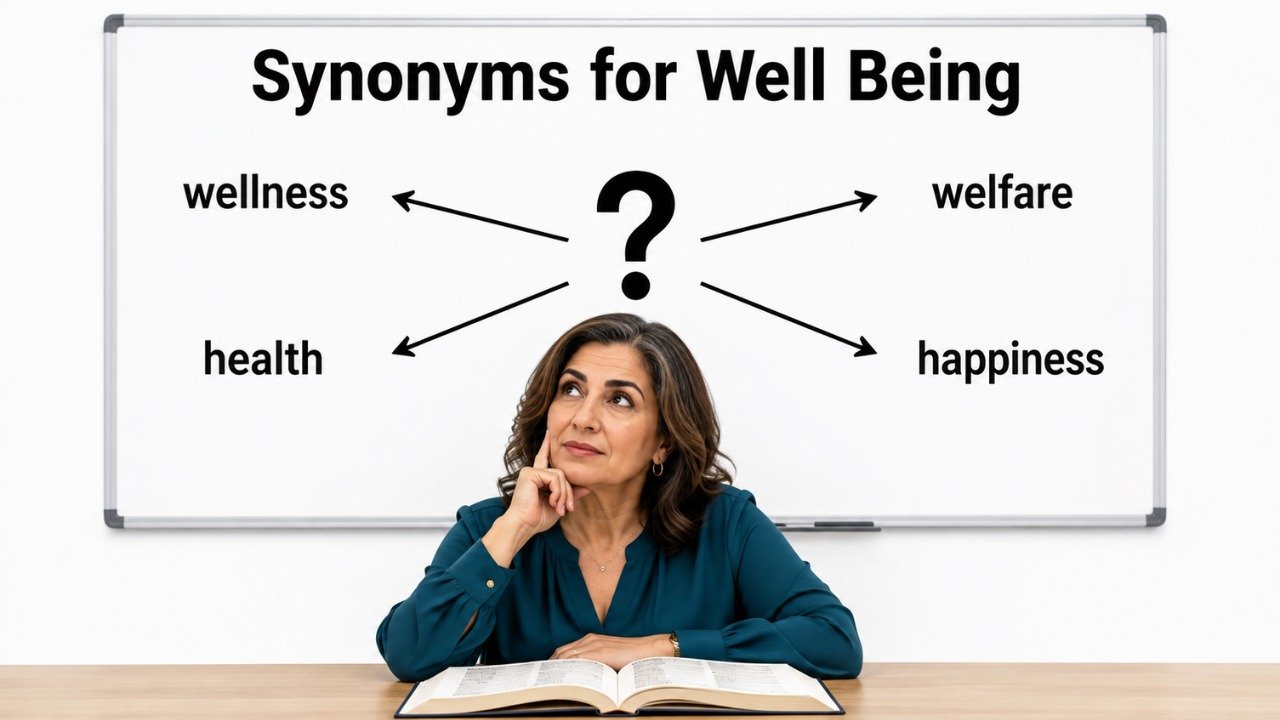
Quick Answer: The best synonyms for well being include wellness, welfare, health, happiness, flourishing, contentment, prosperity, fulfillment, vitality, and quality of life. Among these synonyms for well being, wellness is the most flexible choice for general health, welfare works well in formal writing, flourishing emphasizes positive growth, contentment focuses on emotional satisfaction, prosperity relates to favorable life conditions, and quality of life is useful when discussing a person’s overall physical, emotional, and social condition.
Pronunciation and Word Details
Word: Well being.
Pronunciation: /ˌwel ˈbiːɪŋ/
Part of Speech: Noun.
Meaning: The state of being healthy, comfortable, happy, secure, and generally satisfied with life.
US Pronunciation:
UK Pronunciation:
What Does “Well Being” Mean?
Well being means a person’s overall state of health, happiness, comfort, security, and life satisfaction.
As a noun, well being describes how well someone is doing physically, mentally, emotionally, and socially. It can refer to one part of life or to a person’s complete condition.
Physical Context: Well being may refer to health, energy, fitness, and freedom from physical problems.
Emotional Context: It can describe happiness, calm, confidence, satisfaction, and emotional balance.
Mental Context: Well being may involve psychological health, resilience, stability, and the ability to handle stress.
Social Context: It can include supportive relationships, belonging, safety, and positive interaction with other people.
General Context: The word often describes overall quality of life rather than one specific feeling or condition.
Because well being has a broad meaning, the best synonym depends on whether the sentence focuses on health, happiness, comfort, prosperity, emotional balance, security, or personal growth.
Meaning, Tone, and Context of “Well Being”
Well being has a positive, neutral, and widely applicable tone. It is suitable for formal writing, everyday conversation, educational material, professional communication, essays, and discussions about health or quality of life.
The expression is broader than happiness because someone can experience temporary sadness while still having strong overall well being.
It is also broader than health because well being can include emotional satisfaction, financial stability, social connection, safety, purpose, and comfort.
In formal writing, welfare, wellness, flourishing, quality of life, and life satisfaction may provide more specific alternatives.
In everyday conversation, health, happiness, comfort, peace, and balance often sound natural.
In discussions about personal development, flourishing, fulfillment, resilience, harmony, and thriving may better communicate positive growth.
The word itself is generally supportive and positive rather than dramatic or emotional.
When and How to Use “Well Being”
For Overall Health: Use well being when referring to a person’s complete physical and mental condition.
Example: Regular rest can contribute to overall well being.
For Emotional Health: Use it when discussing emotional balance, happiness, and the ability to manage difficult feelings.
Example: Supportive friendships can improve emotional well being.
For Physical Health: The expression can describe bodily comfort, strength, fitness, and healthy daily habits.
Example: Adequate sleep is important for physical well being.
For Mental Health: Use well being when discussing psychological balance, resilience, calm, and healthy thinking.
Example: Taking regular breaks can support mental well being.
For Life Satisfaction: Well being works when the focus is on whether someone feels secure, comfortable, and satisfied with life.
Example: A strong sense of purpose can contribute to personal well being.
For Social Life: Use it when discussing relationships, belonging, support, and connection.
Example: Positive relationships are important for social well being.
For Formal Writing: Well being can summarize several aspects of a person’s condition without focusing on only one factor.
Example: The report examined factors that influence community well being.
Best Synonyms for Well Being
Wellness: A healthy and balanced state of body and mind.
Example: Daily movement can support long term wellness.
Welfare: A person’s health, safety, comfort, and general interests.
Example: The decision was made with the children’s welfare in mind.
Health: The condition of the body and mind.
Example: Good sleep plays an important role in overall health.
Happiness: A state of pleasure, satisfaction, or positive emotion.
Example: Strong relationships contributed greatly to her happiness.
Flourishing: A state of healthy growth, fulfillment, and positive functioning.
Example: A supportive environment can encourage personal flourishing.
Contentment: A peaceful feeling of satisfaction with one’s circumstances.
Example: He found contentment in a simple and balanced routine.
Prosperity: A favorable condition involving success, security, and material comfort.
Example: Stable communities can create greater prosperity for families.
Fulfillment: A feeling of satisfaction created by achieving meaningful goals or living with purpose.
Example: Teaching gave her a strong sense of fulfillment.
Vitality: Physical or mental energy, strength, and liveliness.
Example: Regular exercise helped restore his vitality.
Quality of Life: The overall level of health, comfort, happiness, and satisfaction a person experiences.
Example: Access to safe outdoor spaces can improve quality of life.
50 Synonyms for Well Being with Short Meanings
- Wellness: A balanced state of good health.
- Welfare: Health, safety, comfort, and general good.
- Health: A sound condition of body and mind.
- Happiness: A state of positive emotion and satisfaction.
- Flourishing: Healthy growth and successful functioning.
- Contentment: Peaceful satisfaction with life or circumstances.
- Prosperity: A condition of success, security, and favorable circumstances.
- Fulfillment: Satisfaction gained from meaningful achievement or purpose.
- Vitality: Physical and mental energy.
- Fitness: A healthy and capable physical condition.
- Comfort: A state of physical or emotional ease.
- Security: Freedom from serious danger, fear, or uncertainty.
- Balance: A stable and healthy arrangement of different life needs.
- Harmony: A peaceful and well balanced condition.
- Peace: A state of calm and freedom from disturbance.
- Serenity: Deep calm and emotional peace.
- Satisfaction: A feeling that needs or expectations have been met.
- Thriving: Doing well and developing positively.
- Wholeness: A complete and integrated state of health or balance.
- Soundness: A healthy, stable, or reliable condition.
- Healthiness: The quality of being healthy.
- Life Satisfaction: A positive evaluation of one’s life overall.
- Quality of Life: Overall comfort, health, happiness, and life satisfaction.
- Emotional Wellness: Healthy emotional functioning and balance.
- Mental Wellness: A positive and stable mental state.
- Physical Wellness: Good bodily health and healthy functioning.
- Social Wellness: Healthy relationships and supportive social connection.
- Psychological Wellness: Healthy mental and emotional functioning.
- Resilience: The ability to recover from stress or difficulty.
- Stability: A secure and steady condition.
- Safety: Freedom from danger or serious risk.
- Ease: A condition of comfort without strain or difficulty.
- Calm: A peaceful emotional state.
- Joy: A strong feeling of happiness.
- Pleasure: A feeling of enjoyment or satisfaction.
- Cheerfulness: A positive and happy emotional state.
- Optimism: A hopeful and positive outlook.
- Good Health: A sound physical and mental condition.
- Sound Health: A strong and healthy condition.
- Vigor: Physical strength, energy, and enthusiasm.
- Strength: Physical or emotional capacity and stability.
- Energy: Physical or mental power for activity.
- Buoyancy: Emotional liveliness and the ability to remain positive.
- Felicity: A state of happiness or contentment.
- Eudaimonia: A state of meaningful human flourishing and fulfillment.
- Self Fulfillment: Satisfaction from realizing personal abilities and goals.
- Inner Peace: A calm and emotionally settled state.
- Emotional Balance: A stable and manageable emotional condition.
- Personal Welfare: A person’s overall health, safety, and good.
- Personal Flourishing: Positive growth across important areas of life.
Read Also:
Synonyms for Separate

Synonyms for Well Being by Context
When Well Being Means Health
Health, wellness, fitness, soundness, healthiness, vitality, and good health are useful when well being refers mainly to physical or mental condition.
Health: The broadest everyday alternative for physical and mental condition.
Example: Regular movement can improve overall health.
Wellness: A broader term that often includes healthy habits, balance, and positive functioning.
Example: Rest is an important part of personal wellness.
Vitality: Best when the emphasis is on energy and strength.
Example: Better sleep restored her sense of vitality.
Fitness: Best when referring specifically to physical capacity.
Example: Walking regularly helped improve his fitness.
When Well Being Means Happiness and Satisfaction
Happiness, contentment, satisfaction, joy, pleasure, felicity, and life satisfaction work when emotional experience is the main focus.
Happiness: Best for general positive emotion.
Example: Spending time with family brought her happiness.
Contentment: Suggests peaceful satisfaction rather than excitement.
Example: He experienced contentment after simplifying his routine.
Life Satisfaction: Useful when evaluating how positively someone views life overall.
Example: Meaningful relationships can increase life satisfaction.
Joy: Stronger and more emotional than general well being.
Example: The reunion filled everyone with joy.
When Well Being Means Positive Growth
Flourishing, thriving, fulfillment, self fulfillment, personal flourishing, and eudaimonia emphasize meaningful growth and successful living.
Flourishing: Suggests doing well across several areas of life.
Example: Supportive relationships can encourage human flourishing.
Thriving: Emphasizes active success and positive development.
Example: The children were thriving in their new environment.
Fulfillment: Best when meaning and personal satisfaction are central.
Example: Creative work gave her a sense of fulfillment.
Self Fulfillment: Focuses on reaching personal potential and meaningful goals.
Example: Learning new skills contributed to his self fulfillment.
When Well Being Means Peace and Emotional Balance
Peace, serenity, calm, inner peace, harmony, balance, and emotional balance are useful for emotional stability.
Serenity: Suggests deep and lasting calm.
Example: The quiet garden gave her a feeling of serenity.
Calm: A simple everyday word for freedom from emotional disturbance.
Example: A few quiet minutes helped restore his calm.
Balance: Useful when different needs or responsibilities are managed successfully.
Example: She wanted greater balance between work and rest.
Inner Peace: Focuses on emotional and mental calm.
Example: Reflection helped him regain a sense of inner peace.
When Well Being Means Safety and Security
Welfare, security, safety, stability, comfort, and personal welfare fit situations where protection and favorable conditions matter most.
Welfare: A formal word covering health, safety, and general good.
Example: The policy was designed to protect public welfare.
Security: Best when freedom from uncertainty or danger is important.
Example: Stable housing gave the family greater security.
Safety: Focuses directly on freedom from physical danger or serious risk.
Example: The changes were introduced to improve worker safety.
Stability: Suggests dependable and steady conditions.
Example: Financial stability reduced much of their stress.
Another Word for Well Being
Another word for well being is wellness when the sentence refers broadly to physical, mental, and emotional health. However, no single alternative works equally well in every context.
Use welfare when health and safety are important, flourishing when discussing positive growth, contentment for peaceful satisfaction, and quality of life when evaluating overall living conditions.
Original: Regular exercise supports your well being.
Better Option: Regular exercise supports your wellness.
Original: The organization focused on the well being of its members.
Better Option: The organization focused on the welfare of its members.
Original: Strong relationships contributed to her well being.
Better Option: Strong relationships contributed to her happiness and fulfillment.
Original: Safe housing can improve community well being.
Better Option: Safe housing can improve community quality of life.
When Not to Use “Well Being”
Well being is broad, so it may sound vague when a sentence needs a more specific word.
If you mean physical condition, health may be clearer. If you mean emotional satisfaction, happiness or contentment may be more precise. If you mean protection and safety, welfare may be stronger.
Weak: Exercise improves well being by strengthening the heart.
Better: Exercise improves physical health by strengthening the heart.
The better sentence identifies the specific type of benefit.
Weak: She felt a sense of well being after hearing the good news.
Better: She felt a sense of happiness after hearing the good news.
Happiness is more precise because the sentence describes an immediate positive emotion.
Weak: Officials were responsible for the well being of the children.
Better: Officials were responsible for the welfare of the children.
Welfare sounds more precise when responsibility for health, safety, and protection is involved.
Weak: His career gave him well being.
Better: His career gave him a sense of fulfillment.
Fulfillment better expresses satisfaction gained from meaningful work.
Words Commonly Confused With Well Being
Well Being vs Wellness: Well being describes someone’s overall state of health, happiness, security, and satisfaction. Wellness often emphasizes maintaining good health through balanced habits and positive choices.
Well Being vs Welfare: Well being is broad and personal, while welfare often emphasizes health, safety, protection, and material conditions.
Well Being vs Happiness: Happiness is mainly an emotional state. Well being is broader and can include health, relationships, security, purpose, and life satisfaction.
Well Being vs Health: Health focuses mainly on physical and mental condition. Well being can include health but also covers comfort, relationships, security, and fulfillment.
Well Being vs Quality of Life: Well being describes a person’s positive overall condition. Quality of life often refers to the broader circumstances affecting health, comfort, satisfaction, independence, and daily living.
Well Being vs Flourishing: Well being can mean simply being healthy and satisfied, while flourishing suggests actively growing, functioning well, and reaching positive potential.
Well Being vs Contentment: Contentment describes peaceful satisfaction. Well being includes contentment but may also involve health, safety, vitality, and social connection.
Which Synonym Should You Choose?
Choose wellness when you need a broad and modern alternative related to physical, mental, and emotional health.
Choose welfare in formal writing when discussing a person’s health, safety, protection, or general interests.
Choose health when the sentence focuses mainly on physical or mental condition.
Choose happiness for emotional pleasure and positive feelings.
Choose contentment when the person feels peacefully satisfied with life.
Choose flourishing in essays and formal discussions about positive human growth and successful functioning.
Choose fulfillment when meaning, purpose, achievement, or personal satisfaction matters most.
Choose vitality when the sentence emphasizes energy and strength.
Choose quality of life when discussing overall living conditions, comfort, independence, health, and satisfaction.
Choose life satisfaction when evaluating how positively someone views life as a whole.
Choose security when freedom from danger, uncertainty, or instability is central.
Choose balance when the emphasis is on managing different needs or responsibilities successfully.
Choose serenity or inner peace when describing emotional calm.
Choose thriving when emphasizing active success and healthy development.
Real Life Examples of “Well Being” in Sentences
Original: Regular sleep is important for your well being.
Better Option: Regular sleep is important for your health.
Original: The program was created to improve employee well being.
Better Option: The program was created to improve employee wellness.
Original: Teachers were concerned about the children’s well being.
Better Option: Teachers were concerned about the children’s welfare.
Original: Time outdoors had a positive effect on her well being.
Better Option: Time outdoors had a positive effect on her emotional wellness.
Original: Strong friendships support personal well being.
Better Option: Strong friendships support happiness and social wellness.
Original: Stable housing improved the family’s well being.
Better Option: Stable housing improved the family’s security and quality of life.
Original: Meaningful work contributed to his well being.
Better Option: Meaningful work contributed to his fulfillment.
Original: Rest helped restore her sense of well being.
Better Option: Rest helped restore her balance and vitality.
Original: A supportive environment can strengthen student well being.
Better Option: A supportive environment can encourage student flourishing.
Original: Financial pressure had affected his well being.
Better Option: Financial pressure had affected his emotional stability.
Synonym Groups and Usage Differences
Health Group
Health, wellness, fitness, vitality, healthiness, and soundness relate to the physical or mental condition of a person.
Health is the broadest direct term. Wellness often suggests active maintenance of a healthy life, while vitality emphasizes energy.
Example: Better sleep improved both her health and vitality.
Happiness Group
Happiness, joy, contentment, pleasure, satisfaction, and felicity describe positive emotional experiences.
Happiness is broad, contentment is calmer, and joy is usually more intense.
Example: A peaceful routine gave him lasting contentment.
Flourishing Group
Flourishing, thriving, fulfillment, self fulfillment, eudaimonia, and personal flourishing focus on meaningful growth and positive functioning.
These alternatives work particularly well when well being involves purpose, progress, relationships, and personal development.
Example: Supportive surroundings encouraged her personal flourishing.
Stability Group
Security, safety, stability, welfare, comfort, and ease describe favorable conditions that protect people from danger, uncertainty, or hardship.
Welfare is particularly useful when someone’s overall interests and protection are involved.
Example: Reliable housing gave the family greater stability.
Peace Group
Peace, serenity, calm, inner peace, balance, harmony, and emotional balance focus on a settled emotional condition.
These terms are more specific than well being because they mainly describe emotional or mental calm.
Example: Quiet reflection gave her a sense of inner peace.
Life Quality Group
Quality of life, life satisfaction, personal welfare, prosperity, comfort, and fulfillment describe how favorable or satisfying someone’s overall circumstances are.
Quality of life works particularly well when several aspects of daily living are being considered together.
Example: Better transportation improved the community’s quality of life.
Antonyms of Well Being
The opposite of well being depends on whether the intended meaning involves health, happiness, safety, balance, or positive living.
Illness: A state of poor physical or mental health.
Sickness: The condition of being unwell.
Distress: Serious emotional or physical discomfort.
Misery: A state of great unhappiness or suffering.
Suffering: Physical or emotional pain and hardship.
Discomfort: A lack of physical or emotional ease.
Instability: A condition that is uncertain or insecure.
Insecurity: Lack of safety, confidence, or stability.
Unhappiness: A state of sadness or dissatisfaction.
Dissatisfaction: A feeling that needs or expectations are not being met.
Stress: Mental or emotional pressure and strain.
Hardship: Difficult circumstances that cause discomfort or suffering.
Imbalance: A lack of healthy proportion or stability.
Poor Health: An unhealthy physical or mental condition.
Languishing: A state of low functioning, reduced vitality, or lack of positive growth.
Comparison: Well Being vs Related Words
Well Being vs Wellness
Well being describes a person’s overall positive condition. Wellness often refers more specifically to maintaining physical, mental, and emotional health.
Example With Well Being: Supportive relationships contribute to her overall well being.
Example With Wellness: She follows a routine designed to improve her wellness.
Well Being vs Welfare
Well being covers happiness, health, comfort, and satisfaction. Welfare often places greater emphasis on health, safety, protection, and basic needs.
Example With Well Being: Creative activities supported the children’s well being.
Example With Welfare: The guardian was responsible for the children’s welfare.
Well Being vs Happiness
Well being is broader than happiness because it includes health, security, relationships, comfort, and satisfaction.
Example With Well Being: Stable housing improved his overall well being.
Example With Happiness: Spending the weekend with friends brought him happiness.
Well Being vs Health
Health mainly describes physical and mental condition, while well being includes other parts of a satisfying life.
Example With Well Being: Strong relationships are important for overall well being.
Example With Health: Regular physical activity can improve heart health.
Well Being vs Flourishing
Well being describes a generally positive condition. Flourishing goes further by suggesting growth, purpose, positive relationships, and successful functioning.
Example With Well Being: Adequate rest supports student well being.
Example With Flourishing: A supportive learning environment encourages student flourishing.
Well Being vs Contentment
Well being includes several areas of life, while contentment specifically describes peaceful satisfaction.
Example With Well Being: Financial stability contributed to her well being.
Example With Contentment: She felt deep contentment with her quiet lifestyle.
Well Being vs Quality of Life
Well being focuses on a person’s positive state, while quality of life often evaluates broader living conditions and everyday experiences.
Example With Well Being: Regular contact with friends supported his well being.
Example With Quality of Life: Better mobility greatly improved his quality of life.
Common Phrases and Expressions With Well Being
Overall Well Being: A person’s complete physical, mental, emotional, and social condition.
Mental Well Being: The state of a person’s psychological and emotional health.
Emotional Well Being: The ability to experience, understand, and manage emotions in a healthy way.
Physical Well Being: A person’s bodily health, comfort, energy, and functioning.
Social Well Being: Healthy relationships, connection, support, and belonging.
Personal Well Being: An individual’s overall health, happiness, comfort, and satisfaction.
Community Well Being: The overall health, safety, stability, and quality of life within a community.
Promote Well Being: To encourage conditions that support health, happiness, and positive functioning.
Support Well Being: To help maintain or improve someone’s physical, emotional, mental, or social condition.
Sense of Well Being: A general feeling of health, comfort, satisfaction, and positive functioning.
Common Mistakes to Avoid
One common mistake is assuming that every synonym for well being has exactly the same meaning.
Wellness, welfare, happiness, health, flourishing, and fulfillment overlap, but each highlights a different aspect of a person’s life.
Avoid replacing well being with happiness when the sentence also refers to physical health, safety, stability, or social connection.
Unclear: Good housing improves people’s happiness by giving them safety and stability.
Better: Good housing improves people’s well being by giving them safety and stability.
Do not use health when the intended meaning includes several areas beyond physical or mental condition.
Too Narrow: Strong friendships improve physical health.
Better: Strong friendships can improve overall well being.
Avoid using flourishing for situations that involve only temporary comfort or happiness. Flourishing suggests broader positive development.
Do not use welfare when you simply mean a pleasant emotional feeling. Welfare usually relates more strongly to overall interests, safety, health, and protection.
Another mistake is repeating well being too often in the same paragraph.
Repetitive: Sleep supports well being, while exercise improves well being and friendships also strengthen well being.
Better: Sleep supports well being, while exercise improves health and strong friendships encourage emotional balance.
Choose the synonym that matches the specific idea instead of changing words only to avoid repetition.
Writers should also be consistent with the spelling they choose throughout a document. In this article, well being is used consistently to match the target keyword.
Conclusion
The best synonyms for well being depend on the part of life you want to describe. Wellness and health work well for physical and mental condition, welfare emphasizes safety and general interests, and happiness or contentment suit emotional satisfaction. Flourishing and thriving describe positive growth, while fulfillment highlights purpose and achievement. Quality of life is useful for overall living conditions. Understanding these differences makes synonyms for well being easier to choose naturally and helps create clearer, more precise writing.
FAQs About Synonyms for Well Being
What is the best synonym for well being?
Wellness is one of the best general synonyms for well being, especially when discussing physical, mental, and emotional health. Welfare may be better when safety and protection are important.
What is another word for well being?
Another word for well being is wellness. Other useful alternatives include welfare, health, happiness, flourishing, contentment, fulfillment, and quality of life.
Is wellness the same as well being?
They are closely related but not always identical. Well being describes a person’s overall positive condition, while wellness often emphasizes healthy habits and balanced physical, mental, and emotional functioning.
Is happiness a synonym for well being?
Yes, but happiness is narrower. Happiness mainly describes positive emotion, while well being can also include health, safety, relationships, stability, comfort, and life satisfaction.
What is a formal synonym for well being?
Welfare, flourishing, quality of life, life satisfaction, and psychological wellness can work in formal writing depending on the context.
What is a synonym for emotional well being?
Emotional wellness, emotional balance, contentment, inner peace, serenity, and psychological wellness are useful alternatives depending on the intended meaning.
What word describes a high level of well being?
Flourishing and thriving are strong choices. Both suggest that someone is not simply healthy or comfortable but is developing positively and functioning well across important areas of life.
