
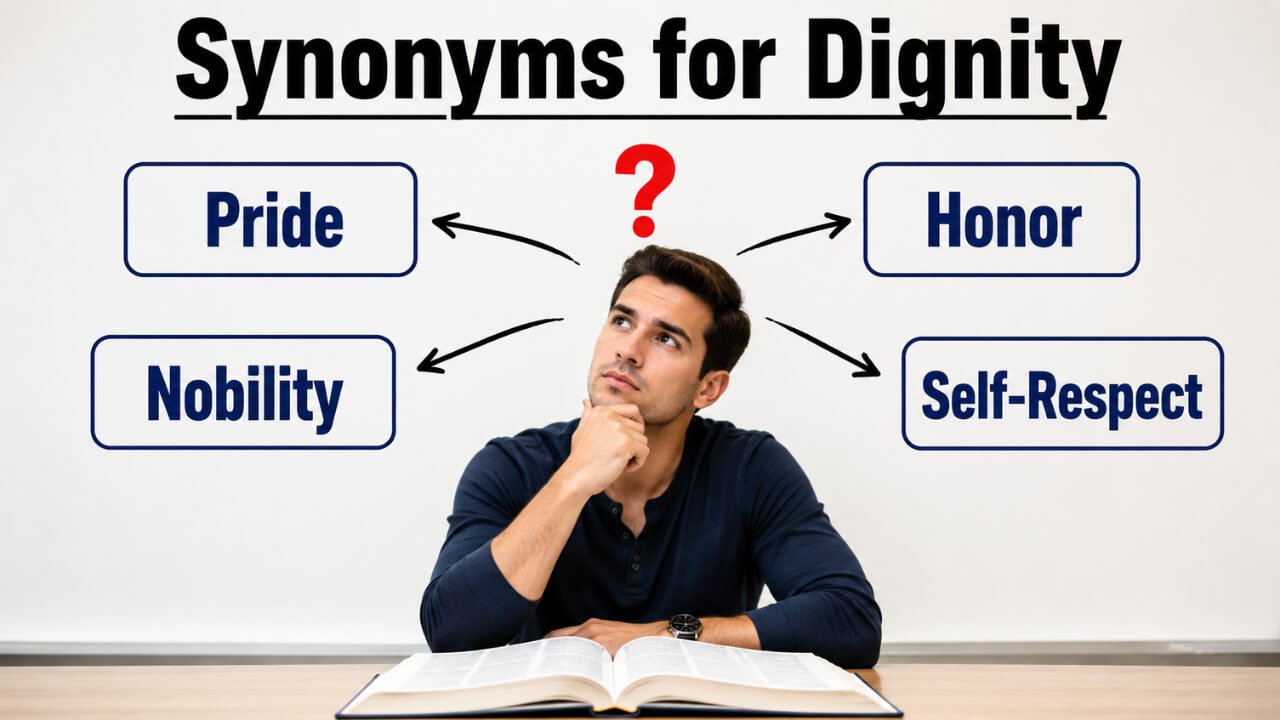
Quick Answer: The best synonyms for dignity include self respect, honor, nobility, poise, composure, decorum, prestige, stature, gravitas, and worth. Use self respect for personal value, honor for moral reputation, poise for calm behavior, decorum for socially appropriate conduct, and gravitas for serious authority. Prestige and stature fit formal discussions about social position, while nobility describes admirable character. The most suitable choice depends on whether you mean personal worth, respectful behavior, moral excellence, calmness, or importance.
Pronunciation and Word Details
Word: Dignity.
Pronunciation: /ˈdɪɡ.nə.ti/
Part of Speech: Noun.
Meaning: The quality of being worthy of respect or behaving in a calm, honorable, and controlled way.
US Pronunciation:
UK Pronunciation:
What Does “Dignity” Mean?
Dignity means the quality of deserving respect and recognizing the value of oneself or another person. It is a noun commonly connected with self worth, honorable behavior, personal rights, and calm conduct.
The word can describe a person who remains composed during a difficult experience. It can also refer to the basic value that every human being possesses.
In a sentence about behavior, dignity often means calmness and self control.
Example: She accepted the disappointing result with dignity.
In a sentence about human value, it means the right to receive respectful and fair treatment.
Example: Every patient should be treated with dignity.
In a social or professional context, dignity can also suggest importance, seriousness, or elevated status.
Example: The judge brought dignity to the position.
Meaning, Tone, and Context of “Dignity”
Dignity has a positive, respectful, and generally formal tone. It is often used in discussions about human rights, personal character, professional conduct, aging, illness, leadership, and respectful treatment.
The word can carry emotional meaning when someone faces pain, embarrassment, loss, or unfair treatment without losing self respect. In these situations, dignity suggests inner strength rather than emotional coldness.
In academic and professional writing, dignity often refers to the inherent worth of human beings. In everyday conversation, it may describe someone who stays calm and does not behave desperately or improperly.
Dignity can also express formality or importance. A person with dignity may appear serious, controlled, and worthy of admiration.
When and How to Use “Dignity”
For Personal Worth: Use dignity when discussing a person’s belief that they deserve respect.
Example: He refused to sacrifice his dignity for approval.
For Respectful Treatment: Use dignity when explaining how people should be treated fairly and humanely.
Example: The residents deserve privacy, comfort, and dignity.
For Calm Behavior: Use dignity when someone remains controlled during an emotional or embarrassing situation.
Example: She responded to the criticism with dignity.
For Moral Character: Use dignity to describe honorable and principled behavior.
Example: His honesty gave him a natural sense of dignity.
For Formal Importance: Use dignity when a person, role, or event carries seriousness and authority.
Example: The ceremony was conducted with dignity.
For Self Respect: Use dignity when someone protects personal boundaries or refuses degrading treatment.
Example: Leaving the unhealthy situation helped her regain her dignity.
Best Synonyms for Dignity
Self respect: A sense of personal value and the belief that one deserves proper treatment.
Example: She maintained her self respect by refusing the unfair offer.
Honor: A quality connected with moral goodness, honesty, and a respected reputation.
Example: He considered it an honor to represent his community.
Nobility: Admirable moral character, generosity, or greatness of spirit.
Example: Her willingness to forgive revealed her nobility.
Poise: Calm, graceful, and confident behavior, especially under pressure.
Example: The speaker answered every difficult question with poise.
Composure: Emotional control during a stressful or upsetting situation.
Example: He kept his composure despite the harsh criticism.
Decorum: Proper, polite, and socially appropriate behavior.
Example: Everyone was expected to observe decorum during the ceremony.
Prestige: Respect and admiration gained through achievement or social position.
Example: The award added to the institution’s prestige.
Stature: A high level of importance, influence, or public respect.
Example: Her work increased her stature within the profession.
Gravitas: Seriousness, authority, and impressive dignity.
Example: His calm voice gave the announcement greater gravitas.
Worth: The value or importance of a person, action, or thing.
Example: A person’s worth should not depend on wealth or status.
50 Synonyms for Dignity with Short Meanings
- Self respect: Confidence in one’s own value and principles.
- Honor: Moral respect earned through good character.
- Nobility: Greatness of character or admirable conduct.
- Poise: Calm and graceful self control.
- Composure: Control over emotions and reactions.
- Decorum: Proper and socially acceptable behavior.
- Prestige: Respect gained from status or achievement.
- Stature: Recognized importance or social standing.
- Gravitas: Seriousness that creates respect and authority.
- Worth: The value or importance of a person.
- Self worth: A sense of personal value.
- Respectability: The quality of being socially or morally acceptable.
- Distinction: Excellence that earns recognition and respect.
- Esteem: High respect or admiration.
- Pride: Satisfaction in one’s identity, conduct, or achievements.
- Integrity: Strong moral principles and honesty.
- Decency: Respectable, fair, and morally acceptable behavior.
- Propriety: Correct and appropriate social conduct.
- Refinement: Polished manners and cultured behavior.
- Grace: Calm, courteous, and attractive conduct.
- Elegance: Graceful and dignified style or behavior.
- Bearing: The way a person carries and presents themselves.
- Presence: An impressive or noticeable personal quality.
- Solemnity: Serious and respectful behavior.
- Majesty: Impressive greatness and dignified authority.
- Grandeur: Splendor, greatness, or impressive importance.
- Eminence: High rank, achievement, or reputation.
- Importance: The quality of having value or influence.
- Rank: An official level of social or professional position.
- Status: A person’s recognized social or professional position.
- Standing: Reputation or position within a group.
- Reputation: The general opinion others hold about someone.
- Honorability: The quality of being morally deserving of respect.
- Virtue: Moral goodness and admirable character.
- Moral strength: The courage to follow ethical principles.
- Uprightness: Honest and morally correct behavior.
- Seriousness: A thoughtful and responsible manner.
- Restraint: Control over emotions, words, or actions.
- Calmness: A peaceful and controlled state.
- Assurance: Quiet confidence in oneself.
- Confidence: Belief in one’s abilities and value.
- Self possession: Calm control over feelings and behavior.
- Reserve: Controlled and restrained personal behavior.
- Courtesy: Polite and respectful treatment of others.
- Civility: Formal politeness and respectful behavior.
- Respect: Consideration for someone’s value or rights.
- Worthiness: The quality of deserving respect or recognition.
- Nobleness: Honorable and admirable character.
- Seemliness: Behavior that is proper and appropriate.
- Honorable standing: A respected position based on good character.
Read Also:
Synonyms for Annoyed
Synonyms for Dignity by Context
When Dignity Means Personal Worth
Self respect, self worth, worthiness, pride, and confidence are useful when dignity refers to how people value themselves.
Example: She protected her self respect by establishing clear boundaries.
Self respect is usually the strongest choice when someone refuses humiliating or unfair treatment. Self worth focuses more on inner value, while pride may describe satisfaction in identity or achievement.
When Dignity Means Calm Behavior
Poise, composure, restraint, calmness, self possession, and grace describe controlled behavior during pressure or difficulty.
Example: He maintained his composure throughout the tense discussion.
Poise suggests graceful confidence. Composure emphasizes emotional control. Restraint refers to avoiding an uncontrolled reaction, while grace combines calmness with kindness.
When Dignity Means Moral Character
Honor, integrity, nobility, virtue, decency, uprightness, and moral strength are suitable when dignity refers to ethical character.
Example: Her integrity earned the trust of everyone on the team.
Honor is connected with reputation and moral conduct. Integrity means consistently following strong principles. Nobility often describes generosity, courage, or greatness of spirit.
When Dignity Means Social Importance
Prestige, stature, eminence, status, standing, distinction, and rank work when dignity refers to recognition or position.
Example: Years of public service increased his professional stature.
Prestige describes admiration attached to achievement or position. Stature refers to importance or influence. Rank and status are more directly connected with an official or social position.
When Dignity Means Formal Seriousness
Gravitas, solemnity, majesty, presence, grandeur, and seriousness are suitable for people, events, offices, and occasions.
Example: The speaker’s measured delivery gave the occasion greater gravitas.
Gravitas is especially useful for serious authority. Solemnity describes a respectful mood, while majesty and grandeur suggest impressive greatness.
Another Word for Dignity
The best general replacement for dignity is self respect when the sentence concerns personal value. However, the best alternative depends on the intended meaning.
Use composure for emotional control, honor for moral reputation, poise for graceful conduct, and prestige for respected social position.
Original: She refused to give up her dignity.
Better Option: She refused to give up her self respect.
Original: He faced the difficult questions with dignity.
Better Option: He faced the difficult questions with composure.
Original: The leader spoke with dignity and authority.
Better Option: The leader spoke with gravitas and authority.
Original: The position carried considerable dignity.
Better Option: The position carried considerable prestige.
When Not to Use “Dignity”
Do not use dignity when a more precise word would make the meaning clearer. Dignity can refer to personal worth, calm behavior, moral character, or social importance. Readers may become uncertain when the context does not reveal the intended meaning.
Use composure when you specifically mean emotional control. Use decorum when discussing proper behavior. Use prestige when describing social admiration, and use self respect when referring to personal boundaries.
Weak: She showed dignity when she did not become angry.
Better: She showed composure when she did not become angry.
Weak: The guests behaved with dignity at dinner.
Better: The guests observed proper decorum at dinner.
Weak: The profession has great dignity in the community.
Better: The profession has great prestige in the community.
Weak: He protected his dignity by refusing the insult.
Better: He protected his self respect by refusing to accept the insult.
Avoid using dignity repeatedly in nearby sentences. Repetition can make otherwise thoughtful writing feel vague or heavy.
Words Commonly Confused With Dignity
Dignity vs Respect: Dignity is the quality of being worthy of respect, while respect is the positive consideration shown toward someone.
Dignity vs Self Respect: Dignity can refer to personal worth, behavior, or status. Self respect specifically refers to how a person values and protects themselves.
Dignity vs Honor: Dignity concerns worth and composed conduct. Honor is more closely connected with moral reputation, duty, and recognition.
Dignity vs Pride: Dignity is calm awareness of personal value. Pride can be healthy satisfaction, but it may also suggest arrogance when excessive.
Dignity vs Poise: Dignity is a broad quality of worthiness or honorable conduct. Poise describes calm, graceful confidence in behavior.
Dignity vs Decorum: Dignity is an inner or outward quality that inspires respect. Decorum is compliance with accepted standards of proper behavior.
Dignity vs Prestige: Dignity may exist regardless of status or achievement. Prestige is admiration connected with success, position, or reputation.
Which Synonym Should You Choose?
Choose self respect when discussing personal boundaries, independence, or a refusal to accept degrading treatment.
Choose self worth when emphasizing a person’s inner value and emotional wellbeing.
Choose honor when writing about moral reputation, duty, or ethical conduct.
Choose integrity when describing honesty and consistent moral principles.
Choose poise when someone appears calm, confident, and graceful.
Choose composure when someone controls their emotions during stress or conflict.
Choose decorum when discussing formal manners, etiquette, or appropriate public behavior.
Choose prestige when describing admiration connected with a profession, institution, position, or achievement.
Choose stature when emphasizing importance, influence, or professional recognition.
Choose gravitas when a person or statement has serious authority.
Choose dignity in formal writing about human value, rights, respectful care, and honorable treatment.
In casual conversation, self respect, calmness, pride, or respect may sound more natural, depending on the intended meaning.
Real Life Examples of “Dignity” in Sentences
Original: She walked away from the argument with dignity.
Better Option: She walked away from the argument with composure.
Original: Everyone deserves to be treated with dignity.
Better Option: Everyone deserves to be treated with respect.
Original: He protected his dignity by refusing to beg for approval.
Better Option: He protected his self respect by refusing to beg for approval.
Original: The director brought dignity to the role.
Better Option: The director brought gravitas to the role.
Original: She handled the public criticism with dignity.
Better Option: She handled the public criticism with poise.
Original: The position gave him dignity within the community.
Better Option: The position gave him prestige within the community.
Original: His dignity prevented him from responding cruelly.
Better Option: His restraint prevented him from responding cruelly.
Original: The ceremony was conducted with dignity.
Better Option: The ceremony was conducted with solemnity.
Original: She recovered her dignity after leaving the harmful relationship.
Better Option: She recovered her self worth after leaving the harmful relationship.
Original: His quiet dignity impressed everyone in the room.
Better Option: His quiet nobility impressed everyone in the room.
Synonym Groups and Usage Differences
Personal Worth Group
Self respect, self worth, worthiness, pride, and confidence describe a person’s awareness of their own value.
Self respect is connected with personal boundaries and standards. Self worth is more emotional and internal. Healthy pride may come from identity, effort, or achievement.
Example: Her self respect helped her reject the disrespectful proposal.
Moral Character Group
Honor, integrity, virtue, nobility, uprightness, and decency describe ethical qualities that make a person worthy of respect.
Integrity emphasizes consistency between values and actions. Honor relates to moral reputation. Nobility suggests exceptional generosity or courage.
Example: His integrity remained firm even when dishonesty offered an easier path.
Calm Conduct Group
Poise, composure, restraint, self possession, grace, and calmness describe controlled behavior.
Poise includes confidence and elegance. Composure focuses on controlling emotion. Grace often includes kindness and courtesy.
Example: She responded to the unexpected accusation with remarkable poise.
Social Position Group
Prestige, stature, standing, status, rank, eminence, and distinction refer to recognition or importance.
Prestige is admiration gained through achievement. Stature means influence or significance. Rank is an official level within an organization or social structure.
Example: The discovery increased her stature among other researchers.
Formal Presence Group
Gravitas, solemnity, majesty, grandeur, bearing, and presence describe seriousness or impressive authority.
Gravitas is useful for leaders and speakers. Solemnity is appropriate for serious occasions. Presence describes the noticeable effect someone has when entering or addressing a room.
Example: His thoughtful manner gave the speech a sense of gravitas.
Antonyms of Dignity
The opposite of dignity depends on whether the word refers to personal worth, honorable behavior, calmness, or respectful treatment.
Indignity: Treatment or an experience that causes humiliation.
Humiliation: A painful loss of pride or self respect.
Disgrace: A loss of respect caused by shameful behavior.
Dishonor: Damage to a person’s moral reputation.
Shame: A painful feeling caused by wrongdoing or embarrassment.
Degradation: Treatment that reduces someone’s status or human value.
Disrespect: Lack of proper consideration or regard.
Abasement: The act of lowering someone’s dignity or position.
Vulgarity: Crude or socially offensive behavior.
Impropriety: Conduct that violates accepted standards.
Indecency: Behavior considered morally or socially unacceptable.
Arrogance: An exaggerated sense of superiority rather than quiet self respect.
Comparison: Dignity vs Related Words
Dignity vs Self Respect
Dignity is a broad concept involving personal worth, respectful treatment, calm conduct, or formal importance. Self respect focuses specifically on how people value themselves and protect their principles.
Example With Dignity: Every person should receive care that protects their dignity.
Example With Self Respect: Her self respect would not allow her to accept repeated insults.
Dignity vs Honor
Dignity is an inherent or demonstrated quality that deserves respect. Honor is connected more strongly with ethical conduct, reputation, duty, and public recognition.
Example With Dignity: He accepted defeat with dignity.
Example With Honor: He acted with honor even when no one was watching.
Dignity vs Respect
Dignity belongs to the person or quality being valued. Respect is the consideration, admiration, or polite treatment that others give.
Example With Dignity: The policy was designed to protect the dignity of patients.
Example With Respect: The staff treated every patient with respect.
Dignity vs Pride
Dignity is a calm and balanced awareness of worth. Pride may mean healthy satisfaction, but it can also become excessive and turn into arrogance.
Example With Dignity: She maintained her dignity during the uncomfortable interview.
Example With Pride: He felt pride in completing the demanding project.
Dignity vs Poise
Dignity may describe moral worth, respectful treatment, or serious importance. Poise specifically describes graceful confidence and emotional control.
Example With Dignity: The leader spoke about protecting human dignity.
Example With Poise: The leader answered the hostile questions with poise.
Dignity vs Decorum
Dignity is a quality that inspires respect. Decorum refers to the rules and standards of proper conduct in a particular setting.
Example With Dignity: She carried herself with dignity throughout the event.
Example With Decorum: Guests were asked to observe proper decorum during the event.
Dignity vs Prestige
Dignity may be inherent in every person and does not require success or rank. Prestige is admiration earned through achievement, reputation, or position.
Example With Dignity: Wealth does not determine a person’s dignity.
Example With Prestige: The appointment brought him professional prestige.
Common Phrases and Expressions With Dignity
Human Dignity: The basic value and worth possessed by every human being.
Personal Dignity: A person’s sense of worth and right to respectful treatment.
Inherent Dignity: Worth that naturally belongs to someone and does not need to be earned.
Maintain Your Dignity: Continue behaving with self respect and control.
Preserve Someone’s Dignity: Protect a person from humiliation or degrading treatment.
Lose Your Dignity: Behave or be treated in a way that damages self respect.
Treat Someone With Dignity: Give someone respectful, fair, and humane treatment.
A Sense of Dignity: An awareness of personal worth and respectable conduct.
Quiet Dignity: Calm and modest behavior that naturally inspires respect.
Dignity of Work: The idea that honest work has value and deserves respect.
Common Mistakes to Avoid
One common mistake is treating every synonym for dignity as interchangeable. Self respect, composure, prestige, and decorum express different ideas. Choose the word that matches the intended context.
Avoid using dignity when the sentence needs a more specific emotional word.
Unclear: He maintained his dignity during the emergency.
Clearer: He maintained his composure during the emergency.
Do not confuse dignity with pride. Dignity usually suggests balanced self worth, while pride may describe satisfaction or excessive self importance.
Avoid awkward phrases such as “he did the task dignified.” Dignified is an adjective and dignifiedly is rare and unnatural in everyday writing.
Incorrect: She responded dignity.
Correct: She responded with dignity.
Correct: She gave a dignified response.
Dignity is usually uncountable when it refers to personal worth or respectable conduct.
Unnatural: She showed many dignities during the discussion.
Natural: She showed great dignity during the discussion.
Do not repeat dignity several times in one paragraph. Replace it with a precise alternative such as self respect, poise, honor, or gravitas when the meaning remains clear.
Conclusion
Understanding synonyms for dignity helps you express personal worth, moral character, calm behavior, and social importance more precisely. Self respect is best for personal boundaries, composure and poise describe controlled behavior, and honor or integrity suit moral character. Prestige and stature work well for respected positions, while gravitas conveys serious authority. Although these words are related, they are not always interchangeable. Choose the synonym that reflects whether you mean inner value, respectful treatment, proper conduct, ethical strength, or formal importance.
FAQs About Synonyms for Dignity
What is the closest synonym for dignity?
Self respect is the closest general synonym when dignity refers to personal value. Honor, poise, and worth may be better in other contexts.
What is a formal synonym for dignity?
Gravitas is a formal synonym when dignity means serious authority. Prestige, stature, and nobility are also suitable in formal writing.
What word describes behaving with dignity?
Poise describes calm and graceful behavior. Composure is better when the person controls strong emotions during a difficult situation.
Are dignity and respect the same?
No. Dignity is the quality of being worthy of respect, while respect is the consideration or admiration shown toward someone.
Is pride a synonym for dignity?
Pride can be a synonym when it means healthy self respect. However, pride may also imply arrogance, so it is not suitable in every context.
What is the opposite of dignity?
Common opposites include humiliation, indignity, disgrace, degradation, dishonor, and disrespect. The best antonym depends on the sentence.
Can dignity describe a position or profession?
Yes. Dignity can describe the seriousness or importance associated with a role, profession, office, or responsibility.
